

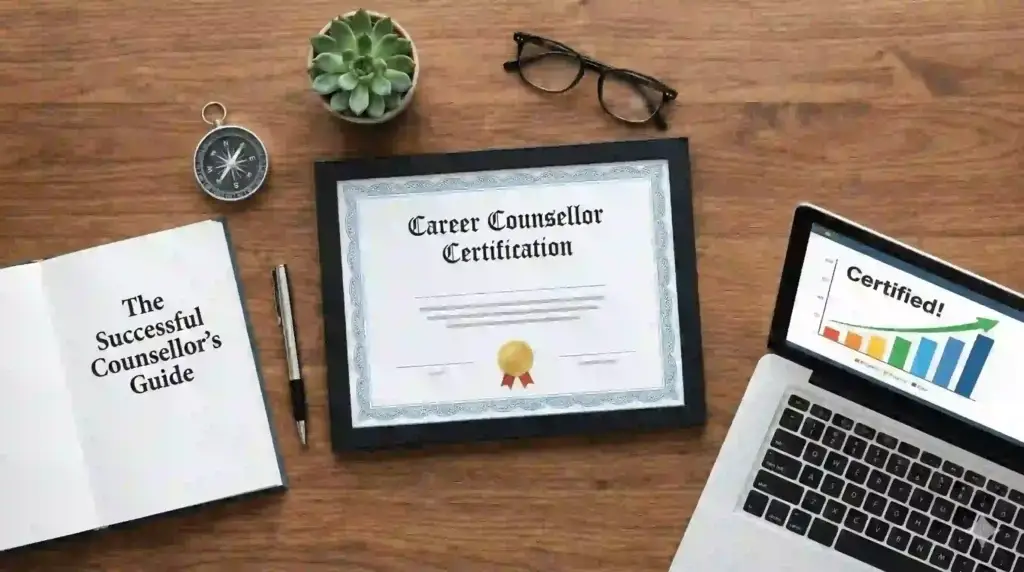
Career counsellor certification is increasingly being explored by educators, working professionals, trainers, HR leaders, coaches, and mid-career individuals who want to build meaningful impact along with sustainable professional growth. As career confusion rises among students and young professionals, there is a growing need for trained, ethical, and well-prepared career counsellors who can guide individuals toward informed career decisions.
For many professionals, this field offers more than just a new qualification. A career counsellor certification can help create a parallel income stream, enable the building of a trusted personal brand, and allow professionals to develop their own mentoring ecosystem over time. It also offers deep personal satisfaction—the opportunity to share hard-earned knowledge, experience, and insights to help others discover their strengths and achieve their best possible career outcomes. However, with many programs available, confusion often exists about eligibility, credibility, and long-term value. This guide will help you understand what career counsellor certification truly involves, how to choose the right program, and how to become genuinely effective—not just “certified”.
What Is Career Counselling & Why Career counsellor certification Matters Today?
Career counselling is a structured process that helps individuals understand themselves—strengths, interests, personality, values, and aspirations—and align these with suitable education and career pathways. Good counselling is not motivational talk and not random advice. It is structured decision support.
In India, the “career problem” has become more complex because of three realities:
- Too many options, too little clarity. Students and parents are overwhelmed by courses, colleges, entrance exams, and emerging fields.
- The job market changes faster than syllabi. Skills become outdated quickly, and roles evolve.
- Social pressure drives poor decisions. Many students pick careers to “fit in” rather than to fit their strengths.
A trained career counsellor sits at the intersection of psychology, education, and labour-market awareness—and helps people make choices they can sustain.
Role of Career Counselling in Modern Education and Employment
Career counselling matters because it reduces costly mistakes:
- wrong stream selection after Class 10
- wrong course choice after Class 12
- random graduation decisions with no career direction
- mid-career stagnation or panic switches without planning
A counsellor’s job is not to predict the future. It is to help the learner build a decision framework—so they can keep adapting as the world changes.
Difference Between Career Counselling, Coaching, and Mentoring
- Career counselling: clarity + direction + decision-making using structured tools
- Coaching: performance + goals + habits
- Mentoring: long-term guidance based on lived experience and networks
In real practice, counsellors may use elements of all three, but certification ensures the counsellor understands boundaries, ethics, and process.
Why Career Counsellor Certification Is Important
Risks of Unstructured Career Guidance
Career guidance influences life outcomes. When guidance is unstructured, three risks appear:
- Overconfidence without competence: people advise based on their own story (“I did engineering, so you should too”).
- Bias and myths: “Arts has no scope”, “Only IIT matters”, “Psychology has no jobs”.
- Trust damage: one wrong recommendation can harm a student’s confidence and parent’s trust.
Certification is not a magic badge. But done properly, it gives a counsellor:
- a structured counselling methodology
- assessment literacy (how to interpret reports responsibly)
- ethical grounding
- practice confidence
- language to communicate with parents and institutions
Career Counselling as a Purpose-Driven and Scalable Profession
Professionals often enter this field for mixed reasons:
- purpose and impact
- parallel income
- independence (own practice)
- personal brand and visibility
- legacy building through mentoring
- satisfaction of sharing hard-earned experience
All of these are valid—if the professional is also committed to competence and ethics.
Who Should Consider a Career Counsellor Certification?
This field is not only for psychologists. Strong counsellors come from diverse backgrounds because career decisions involve education, industry, and life context.
Educators and Academic Professionals
Teachers, principals, coordinators, trainers—already have access to students and parents. Certification helps them guide beyond marks and exams.
Working Professionals and Mid-Career Individuals
Engineers, managers, IT professionals, finance professionals, healthcare workers, entrepreneurs—bring real industry exposure. Certification helps them convert that into structured guidance.
Coaches, Trainers, HR Professionals, and Mentors
HR and L&D professionals understand skill frameworks and employability. Coaches understand behaviour change. With certification, they can deliver structured career clarity.
Eligibility Criteria for Career Counsellor Certification
Most certifications in India are inclusive. Common patterns:
Educational Qualifications
Many programs accept graduates from any stream. Some advanced programs may prefer postgraduate qualifications, but rigid restrictions are not the norm.
Is Psychology Mandatory?
Not mandatory in most cases. Psychology is an advantage, but strong certifications teach relevant fundamentals: behavioural styles, motivation, learning patterns, decision biases, and counselling basics.
Personal Skills Needed
Certification gives knowledge, but success needs traits:
- listening without judgement
- empathy without emotional over-involvement
- structured thinking
- ethical discipline
- ability to handle parents calmly
- patience with confused students
Types of Career Counsellor Certification Programs
Understanding types prevents wrong selection.
Short-Term vs Comprehensive
- Short-term: introduction, basic frameworks, light practice
- Comprehensive: deeper theory + assessment interpretation + supervised practice + casework
If your goal is “serious practice + credibility,” comprehensive is safer.
Online vs Classroom vs Blended
- Online: flexible, requires self-discipline
- Classroom: immersive, location-bound
- Blended: theory online + live practice sessions (often best for working professionals)
Academic vs Industry-Aligned
- Academic: theory-heavy, research orientation
- Industry-aligned: practice-heavy, client handling, case simulations
For building a practice and helping real students quickly, industry-aligned models often feel more “ready-to-apply”.
What You Learn in a Career Counsellor Certification Program
A quality certification typically builds competence across five pillars:
1) Foundations of Career Development
You learn how career choices evolve by age and life stage, and why “one-time counselling” is often insufficient. You also learn common decision traps—like choosing based on social pressure or short-term salary hype.
2) Self-Discovery Tools and Frameworks
You learn how to map:
- strengths and abilities
- interests and preferences
- personality/behavioural patterns
- values and lifestyle needs
- learning style and environment fit
This is where counselling becomes personalised instead of generic.
3) Psychometric Assessments and Interpretation
This is crucial. Many people “use tests” without understanding them.
A trained counsellor learns:
- What a test measures (and what it doesn’t)
- Triangulate results (test + interview + observation) – Learn How it is done ?
- Communicate outcomes without labelling the student – Learn Effective Communication
- How to avoid deterministic statements (“you must become X”)
4) Career Mapping and Pathway Planning
A counsellor learns how to convert insights into a plan:
- short-term academic decisions
- skill development plan
- portfolio building (where relevant)
- exposure strategy (projects, internships, competitions)
- backup pathways and alternatives
5) Counselling Practice and Ethics
This is what separates a professional from a content creator.
You learn:
- session structure
- rapport building
- handling anxious parents
- managing unrealistic expectations
- confidentiality and boundaries
- documentation and follow-up
How to Choose the Right Career Counsellor Certification
This section protects you from wasting money and time.
1) Depth of Curriculum
Ask: Does the program cover assessments + interpretation + counselling practice? Or is it mostly theory and marketing?
2) Practical Exposure
Look for:
- case discussions
- supervised practice
- role plays
- feedback on your counselling approach
3) Faculty and Mentoring Support
A certification without mentoring often leaves beginners stuck after completion.
4) Ethical Standards
Avoid programs that encourage manipulative selling or promise unrealistic earnings. Ethical credibility is your long-term asset.
5) Post-Certification Ecosystem
Strong programs often provide:
- community
- continuous learning
- referral ecosystem or practice guidance
- templates and session resources
Red Flags (Don’t Ignore)
- “Become a counsellor in 2 days” claims
- no mention of practice or supervision
- vague curriculum
- unrealistic promises of income
- heavy focus on “certification” but no skill-building clarity
A Practical Roadmap: How to Become a Successful Career Counsellor
Many people complete a certification but don’t succeed because they skip the “practice-building” stage. Use this roadmap.
Stage 1: Learn + Observe (Weeks 1–4)
- build your counselling vocabulary
- understand session structure
- observe sample sessions (if available)
- practice note-making and question framing
Stage 2: Practice on Real Cases (Weeks 4–10)
- start with guided sessions (family/friends with consent)
- document each case
- refine your questions and clarity approach
Stage 3: Build a Repeatable Session Framework (Ongoing)
A simple, effective counselling session flow:
- Pre-session form (basic data + expectations)
- Discovery conversation (strengths, interests, concerns)
- Assessment interpretation (if used)
- Career direction shortlist (2–4 pathways)
- Action plan (skills, exposure, academic plan)
- Parent alignment (if student is in school)
- Follow-up checkpoints (30/60/90 days)
Repeatability is what enables scale and quality.
Career Opportunities After Career Counsellor Certification
Working with Schools and Institutions
Schools increasingly want structured career guidance—webinars, student counselling, parent sessions, career days, and assessments.
Independent Practice
Many counsellors build private practice:
- student counselling
- parent counselling
- college admission direction support (informational)
- young professional direction setting
- mid-career clarity sessions
Corporate and Employability Ecosystem
Some counsellors collaborate with training institutes, coaching centres, skilling organisations, and employability platforms.
Building a Personal Brand and Mentoring Ecosystem
This is where your “legacy” idea becomes real:
- publish content regularly (blogs, LinkedIn, YouTube short explainers)
- build credibility through case-based insights
- create workshops
- build a community
- eventually mentor other aspiring counsellors
A strong personal brand is not loud marketing. It is consistent, helpful clarity.
Income Potential and Growth Path After Career counsellor certification
Income depends on:
- Niche (school, college, working professionals)
- Positioning (generalist vs specialist)
- Session quality and outcomes
- Visibility and Trust
- Partnerships and Referrals
A practical growth strategy is:
- Start part-time alongside your job
- Build case credibility
- Create structured offerings (session + report + follow-up)
- Gradually increase pricing as competence and outcomes rise
Many professionals prefer career counselling because it can start as a parallel stream and later become a primary path.
Challenges and Responsibilities of Career Counsellors
Ethical Responsibility
Your words can influence life decisions. Avoid:
- absolute statements
- fear-based guidance
- forcing “prestige careers”
- bias against certain streams
Handling Parents and Social Pressure
Parents may push for specific careers. A counsellor’s role is to bring:
- clarity
- realistic outcomes
- alignment with student strengths
- calm communication
Staying Updated
Career options evolve. A successful counsellor stays updated by:
- tracking emerging roles and skill trends
- understanding admissions and pathways at a high level
- learning how AI tools affect careers
- continuously improving counselling skills
Future of Career Counselling: AI + Human Insight
AI tools can help with:
- Job-market signals
- Course discovery
- Resume and portfolio guidance
- Skill roadmap suggestions
But AI cannot replace:
- Empathy
- Ethical judgement
- Parent-student conflict handling
- Deep context understanding
- Motivation and emotional alignment
The future belongs to counsellors who use technology as support, while keeping the counselling relationship human.
Common FAQs on Career Counsellor Certification
How long does a career counsellor certification take?
It depends on depth. Some are short introductions, while comprehensive programs take longer due to practice and supervised components.
Is Career counsellor certification mandatory to become a career counsellor?
Not legally in many cases, but it is strongly recommended for credibility, competence, and ethical practice.
Can working professionals pursue Career counsellor certification courses, part-time?
Yes. Many start part-time and transition gradually as confidence and practice grow.
What skills are most important?
Listening, empathy, structured thinking, and ethical discipline are foundational.
Is career counselling sustainable in India?
Yes. As career complexity grows, demand for structured guidance increases. Sustainability depends on competence and trust-building.
How can beginners gain experience?
Start with supervised practice, structured case documentation, and continuous feedback. Consistency builds confidence.
Conclusion
A career counsellor certification is not just a certificate—it is a commitment to guide people responsibly in moments when their confidence is fragile and their choices feel heavy. If you approach this field with humility, structure, and ethical intent, it can become one of the most meaningful and future-relevant professional identities you build—along with a powerful personal brand, a mentoring ecosystem, and a legacy of impact.
Useful Resources & Links for further research on Career counsellor certification
– https://www.oecd.org/education/career-readiness
– https://www.weforum.org/publications/the-future-of-jobs-report-2023
– https://www.apa.org/education-career/career-development
– https://www.ncs.gov.in
Your future begins with making the right choice today. Start Now!
GlobalCareerLabs.com
Your Partner in Career Success
Related Resources for Career counsellor certification:
– What to Do After 12th: Your Ultimate Guide to Successful Careers
– Courses After 12th: 100+ Best Options for Bright Future
– NEET Preparation 2026: Your Complete Strategy & Planning For Success
– JEE Main Preparation 2026: Proven Strategy for Sure Success
– Career Counselling in India: Complete Guide for Students
– Career Options After 10th: Successful Career Paths for Students
– Courses After 12th: 100+ Best Options for Bright Future
– What to Do After 12th: Your Ultimate Guide to Successful Careers
– Best Colleges in India: Your Complete Guide
– Sarkari Naukri: Complete Guide to Govt Jobs in India
– Best Career Options After 12th: Successful Careers for You
– Best Fashion Design Careers in India: Your Ultimate Guide
– Fashion Designing Course After 12th: Eligibility, Fees & Best Options
– How to Choose the Right Career After 12th: 5-Step Framework for Students
– Digital Marketing Career After 12th: Complete Guide for Students in 2026
– BBA vs BCom After 12th: Which is Better?
– Top Careers in Animation After 12th: Best Courses in India in 2026
– BSc Nursing vs B Pharma vs BPT: Best Career in 2026
– Aviation Career After 12th: Career Options in 2026
– Engineering vs Medical After 12th: Which is Better?
– Hotel Management Career After 12th: Complete Career Guide
– Top 10 Diploma Courses After 12th
– Career Options After 12th Arts: Complete Guide for 2026
– Commerce Without Maths Career – Best Career Options 2026: Complete Guide
– Confused After 12th? 7-Step Career Decision Framework
– 6 Month Courses After 12th: Smart Career Launch Guide for Indian Students
– Career Options After 12th in India: Complete Guide to Making the Right Choice in 2025
– Commerce Career Options After 12th for Girls in India 2025 – Complete Guide
– Creative Careers After 12th (Non-Engineering) in India: Your Complete Guide 2025
– Career Options for Girls After 12th India: Complete Guide
– Arts vs Commerce After 12th: Which to Choose in 2025?
External Resources for Career counsellor certification:
– National Skill Development Corporation
– National Skill Development Corporation
Disclaimer:
Salary figures, course fees and other course details & career information provided in this article are for general reference only and may vary based on location, company, experience & market conditions. So, readers are advised to independently verify all information from official and authentic sources before making any career or educational decisions. GlobalCareerLabs.com does not guarantee the accuracy or authenticity of this data. And so, Global Career Labs shall not be held responsible for any decisions made based on this information.
Related posts:
 Career Aptitude Test: Choose Your Right Career Path Now in 2026
 Career Counsellor: Your Complete Guide to Finding the Right Counsellor
 Career Counselling Near Me: Find The Best Career Counsellor
 Personality Development: Your Key To Ultimate Career Success
 Which Career Is Best for Me: Ultimate Guide to “Best Careers”
 Best Career for Me: Complete Self-Discovery -Aptitude & Personality Tests
 Career Counselling After 12th: Ultimate Guide for Career Planning
 How to Become A Data Scientist in 2026 Without Coding Knowledge: Earn More than ₹10 LPA Salary
 Data Science Career 2026: Complete guide to high paying jobs in AI Era
 Career Guidance: Complete Roadmap to Find Your Dream Job in 2026
 Career Guidance After 10th: Your Complete Success Roadmap
 Stream Selection After 10th: Complete Guide to choosing streams
 Top MBA Colleges in India: Secrets to Getting Admitted 2026
 Best Skills to Learn in 2026: Guaranteed Career Success
 Psychometric Test for Career: Unlock Your Right Career Path
 Highest Paying Jobs in India: Top Careers for 2026
 Cybersecurity Jobs for Freshers: How to Get Hired 2026
 Central Government Jobs: Your Ultimate Career Guide for 2026
 Courses After 12th Commerce with Maths: Ultimate Career Guide
 B.Tech Colleges in India: Guaranteed Roadmap for Successful Tech Careers
Powered by YARPP.