
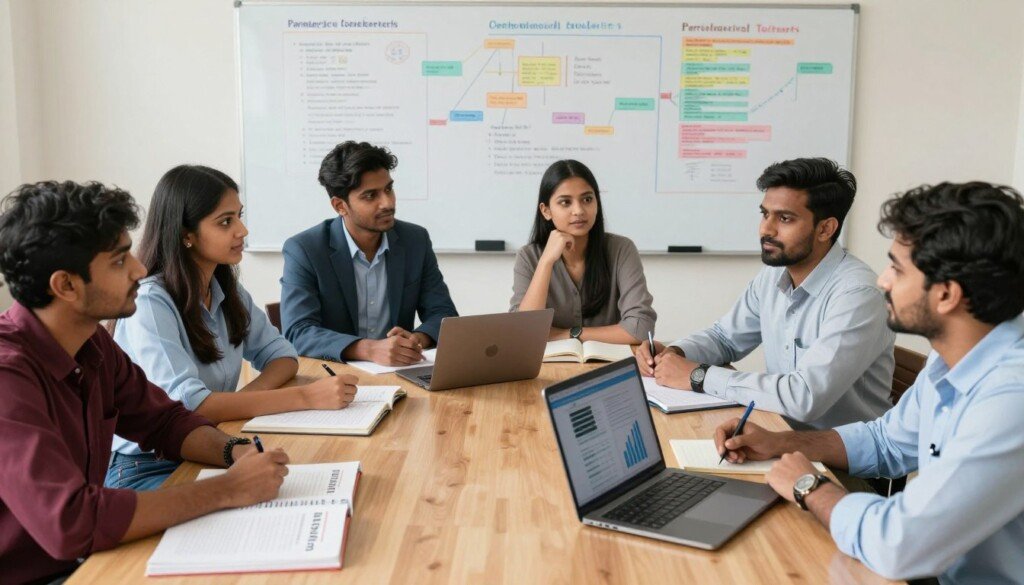
Not every student who wants to serve in healthcare needs to survive the NEET grind or spend a decade earning an MBBS. That’s a truth not enough families hear early enough. For students with a genuine calling towards healing, diagnostics, and patient care, paramedical courses after 12th offer a faster, equally respected, and increasingly well-paid entry into India’s booming healthcare sector. The demand for trained allied health professionals has never been stronger than it is right now.
India’s healthcare industry is expanding at a pace that simply cannot be met by doctors and nurses alone. Radiologists, physiotherapists, medical lab technicians, operation theatre assistants, cardiac care technicians, and dialysis experts — these are the skilled professionals who keep hospitals and clinics functioning every single day. Many of these roles require two to three years of focused training after Class 12, and graduates are stepping directly into secure, salaried positions in government hospitals, private chains, diagnostic centres, and even abroad. The career runway is long and the job security is real.
For families weighing options, the fee structures across paramedical programmes are genuinely encouraging. Government medical colleges and state health universities offer several of these courses at very accessible costs, while private institutions provide additional specialisations with strong placement support. The smartest approach is to identify the healthcare domain that genuinely excites your child — whether that’s imaging technology, emergency care, rehabilitation, or laboratory sciences — and then find a recognised, accredited programme that delivers both quality training and industry connect. In 2026, this is one of the most future-proof decisions a science student can make.
Key Points Covered
- Paramedical courses after 12th offer a direct, faster entry into India’s healthcare sector without requiring an MBBS degree.
- Popular specialisations include radiology, physiotherapy, medical lab technology, OT assistance, and cardiac care.
- Most programmes run between two and three years, with diploma and degree options available across both streams.
- Government colleges offer highly affordable paramedical programmes, while private institutions provide broader specialisation choices.
- India’s rapidly expanding healthcare industry is creating strong, sustained demand for trained allied health professionals nationwide.
- Paramedical qualifications are increasingly recognised internationally, opening pathways to careers in the Middle East, UK, Canada, and beyond.
1. Why Choose Paramedical Courses After 12th in India
The healthcare sector is booming, making paramedical courses a great choice after 12th. There’s a growing need for skilled healthcare workers. This is due to an aging population and more focus on health services.
1.1 Booming Healthcare Industry and Rising Demand
India’s healthcare industry is growing fast. This is because of a bigger population, more lifestyle diseases, and government efforts to improve healthcare. This growth means there’s a big need for professional courses in India for healthcare.
Paramedical courses are now very popular for those wanting a healthcare career. They offer many specialisations in demand. This means you have lots of career options.
1.2 Excellent Career Stability and Job Security
Paramedical courses offer great career stability and job security. Healthcare jobs are always needed. With the right training, you can have a secure and stable career.
- High demand for skilled healthcare professionals
- Opportunities in various healthcare settings, including hospitals and diagnostic centres
- Potential for career advancement with experience and further education
1.3 Practical Alternative to MBBS Without NEET Pressure
Paramedical courses are a practical choice instead of MBBS, without the need to pass NEET. They’re great for those interested in healthcare but don’t want or can’t do a medical degree.
With many best courses 2026 available, you can pick one that fits your interests and skills. This ensures a fulfilling career.
1.4 Shorter Duration with Quick Employment Opportunities
Paramedical courses are shorter than medical degrees. This lets you start working quickly. You can begin your career sooner and get hands-on experience in healthcare.
“The paramedical field offers a plethora of opportunities for individuals looking to make a difference in healthcare. With the right training, you can enjoy a rewarding and challenging career.” – Healthcare Expert
Choosing a paramedical course after 12th sets you up for a successful and rewarding career in healthcare.
2. Understanding Paramedical Education: What You Need to Know
If you’re thinking about a career in healthcare, knowing about paramedical education is key. It offers a wide range of courses. These courses prepare students to support healthcare professionals in many settings.
2.1 What Exactly Are Paramedical Courses
Paramedical courses teach specific healthcare skills. They help students work with doctors, nurses, and other medical staff. These courses cover areas like diagnostic techniques, therapy, and patient care.
By taking paramedical courses after your 12th grade, you get practical and theoretical knowledge. This knowledge is useful in healthcare settings.
Paramedical professionals are vital in fields like radiology, physiotherapy, and emergency services. These roles are rewarding and help patients recover.
2.2 Difference Between Diploma and Degree Programmes
In paramedical education, you can choose between diploma and degree programs. Diploma courses are shorter, lasting one to three years. They focus on specific healthcare areas and are great for quick entry into the workforce.
Degree programs, like Bachelor’s or Master’s degrees, offer more comprehensive education. They take three to four years to complete. Degrees often lead to better career opportunities and higher salaries.
2.3 Course Duration and Academic Structure in India
The length and structure of paramedical courses in India vary. Diploma courses last one to three years. Undergraduate degrees take three to four years, and postgraduate programs add two years after a bachelor’s degree.
The courses mix theory, practical training, and clinical internships. This ensures students get real-world experience.
Knowing the differences between these programs is important. It helps you choose the right path in the healthcare industry.
3. Eligibility Criteria for Paramedical Courses After 12th
Thinking about paramedical courses after your 12th? It’s key to know the eligibility criteria. These criteria can change based on the course and school you choose.
3.1 Academic Qualifications Required
To get into paramedical courses, you need to have finished your 12th with science subjects. This includes Physics, Chemistry, and Biology (PCB). Some schools might also ask for Mathematics.
Key Subjects: Physics, Chemistry, Biology (PCB)
3.2 Stream-Specific Requirements (Science, Commerce, Arts)
Most paramedical courses need a science background, mainly PCB. But, some might ask for different things. For example, medical lab or radiology courses need a solid science base.
| Course | Required Stream | Key Subjects |
|---|---|---|
| Medical Laboratory Technology | Science | PCB |
| Radiology | Science | PCB, Mathematics |
| Pharmacy | Science | PCMB |
3.3 Minimum Percentage and Age Limit Criteria
You also need to pass the minimum percentage, which varies by school. Usually, you need at least 50% in PCB. But, for competitive courses, it might be higher. Some schools also have age limits for students.
Minimum Percentage: Usually 50% in PCB
Age Limit: Varies by institution, typically between 17 and 35 years
“The eligibility criteria are not just a formality; they ensure that candidates are well-prepared for the rigors of paramedical courses.”
3.4 Medical Fitness Requirements
Some courses need you to be medically fit. This means a medical check to see if you can do the job.
Meeting these criteria is the first step to a career in paramedical sciences. Make sure to check the specific needs for your chosen courses and get ready.
4. Complete List of Paramedical Courses After 12th with Fees
Thinking about a career in healthcare? Paramedical courses after 12th are a great start. They open doors to the medical field and offer many specialisations. This means you can find a course that fits your interests and skills.
Paramedical courses vary from diplomas to degrees. The fees differ a lot, depending on the school and course you choose.
Popular Diploma Paramedical Courses
Diploma courses are popular because they’re short and practical. Here are a few examples:
Diploma in Medical Laboratory Technology (DMLT) – ₹20,000 to ₹1.5 lakhs
The Diploma in Medical Laboratory Technology (DMLT) teaches students to do lab tests and procedures. DMLT course fees are between ₹20,000 to ₹1.5 lakhs, based on the school.
Diploma in Radiology and Imaging Technology – ₹30,000 to ₹2 lakhs
The Diploma in Radiology and Imaging Technology focuses on imaging techniques. Its fees range from ₹30,000 to ₹2 lakhs.
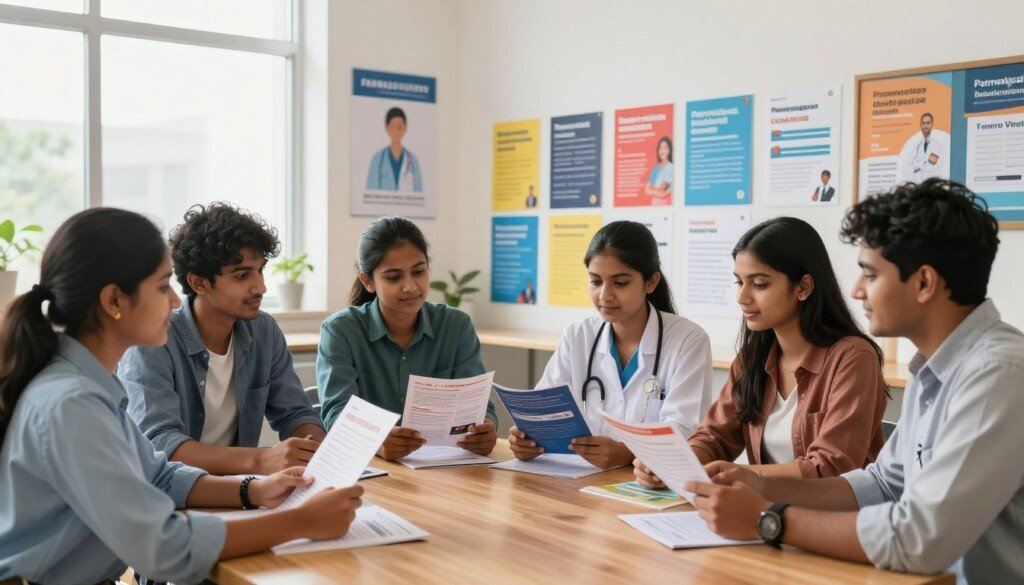
Bachelor’s Degree Paramedical Courses
For degree seekers, there are many bachelor’s paramedical courses.
Bachelor of Physiotherapy (BPT) – ₹1 to ₹5 lakhs per annum
The Bachelor of Physiotherapy (BPT) helps patients recover with physical methods. BPT course fees are from ₹1 to ₹5 lakhs a year.
Bachelor of Occupational Therapy (BOT) – ₹50,000 to ₹3 lakhs per annum
Bachelor of Occupational Therapy (BOT) helps patients with daily living and work skills. BOT course fees are between ₹50,000 to ₹3 lakhs a year.
Knowing the fees is key to planning your education. The right paramedical course can lead to a fulfilling healthcare career.
5. Top Entrance Exams for Paramedical Courses in India 2026
Getting into a paramedical career starts with passing the right entrance exam. To get into paramedical courses in India, you must pass specific exams. Some need NEET scores, while others have their own tests.
State-level exams are also used for paramedical programs. Knowing about these exams is key for your success.
5.1 NEET for Select Paramedical Programmes
The National Eligibility cum Entrance Test (NEET) is important for some paramedical courses. It’s mainly for medical, but some paramedical programs also need NEET scores.
NEET Eligibility: You need to have passed 12th standard with Physics, Chemistry, and Biology/Biotechnology.
5.2 AIIMS Paramedical Entrance Examination
The All India Institute of Medical Sciences (AIIMS) holds exams for paramedical courses. These exams are very competitive and need a lot of study.
AIIMS Entrance Exam Pattern: The exam has multiple-choice questions on Physics, Chemistry, and Biology.
5.3 JIPMER Paramedical Entrance Test
Jawaharlal Institute of Postgraduate Medical Education and Research (JIPMER) has its own paramedical exam. This exam is tough and needs a strong grasp of the subjects.
5.4 All India Paramedical Entrance Exam
The All India Paramedical Entrance Exam is a big test for many paramedical courses in India. It checks your knowledge in key subjects and is a big step towards a paramedical career.
5.5 State-Level Paramedical Entrance Exams
Many states in India have their own paramedical exams. These exams are key for getting into state-level paramedical schools.
State-Level Exam Variability: The syllabus, exam pattern, and eligibility can change a lot from state to state.
To do well in these exams, knowing the specific needs and preparing well is crucial. Career counselling can help a lot in guiding you and picking the best courses for 2026.
6. Best Colleges and Institutes for Paramedical Courses in India
India has many top colleges and institutes for paramedical courses. These courses can help you grow in your career. You have lots of options, each with its own strengths and special areas.
6.1 Premier Government Medical Institutions
Government medical schools in India are known for their quality and research. They lead in medical research and give students real-world experience in modern facilities.
6.1.1 All India Institute of Medical Sciences (AIIMS) Delhi and AIIMS Network
The All India Institute of Medical Sciences (AIIMS), Delhi, is a top medical school in India. Its network across cities offers many paramedical courses. AIIMS is famous for its tough academic programs and advanced research facilities.
“The AIIMS network has been instrumental in shaping the medical education landscape in India, providing a platform for aspiring healthcare professionals to excel.”
6.2 Top Private Medical Colleges and Universities
Private medical schools and universities in India also provide great paramedical courses. They have modern facilities and strong links with the industry. These schools focus on practical training and getting jobs.
6.2.1 Manipal Academy of Higher Education
Manipal Academy of Higher Education is a leading private university. It offers a wide range of paramedical programs. These include undergraduate and postgraduate courses that are highly valued in the healthcare field.
| Institution | Courses Offered | Location |
|---|---|---|
| AIIMS Delhi | B.Sc. Nursing, M.Sc. Nursing, Diploma in Radiography | New Delhi |
| Manipal Academy of Higher Education | B.Sc. in Medical Laboratory Technology, M.Sc. in Medical Imaging Technology | Manipal, Karnataka |
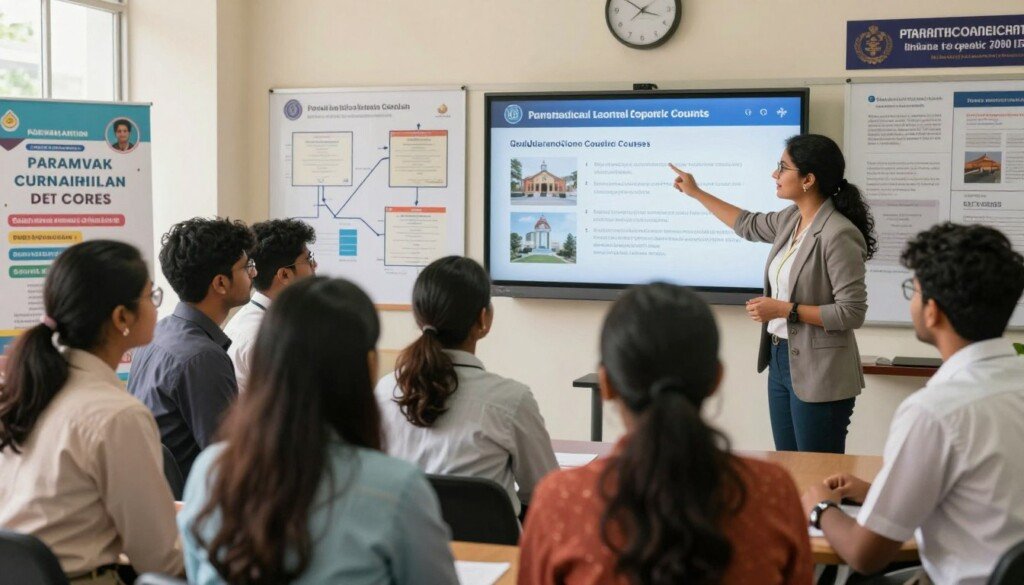
When picking a college for paramedical courses, look at the school’s reputation, the teachers’ skills, the facilities, and job chances. Choosing a well-known institution will give you a solid start in the healthcare field.
7. Step-by-Step Admission Process for Paramedical Courses
The admission process for paramedical courses can seem daunting. But breaking it down into manageable steps makes it more achievable. Understanding each stage is crucial for a successful application.
7.1 Researching and Selecting Your Course
The first step is to research and select a course that aligns with your interests and career goals. There are many paramedical courses available. It’s important to consider factors such as course duration, curriculum, and specialisations.
Also, look into the reputation of the institutions offering these courses. Top institutions often have better infrastructure, experienced faculty, and higher placement rates. Make a list of potential courses and colleges that fit your criteria.
7.2 Preparing for Entrance Examinations
Most paramedical courses require you to clear entrance examinations. Preparation is key to performing well in these exams. Start by understanding the exam pattern, syllabus, and marking scheme.
Create a study plan that covers all the necessary topics and allows for regular practice through mock tests. Coaching classes can also be beneficial if you need additional guidance.
7.3 Filling Application Forms and Important Deadlines
Once you’ve prepared for and taken the entrance exams, the next step is to fill out the application forms for your chosen courses. Ensure you have all necessary documents ready, including academic records, entrance exam scores, and identity proof.
Pay close attention to application deadlines and submit your forms well in advance to avoid last-minute complications. Some institutions may also require personal interviews or counselling sessions as part of the admission process.
By following these steps and staying organised, you can navigate the admission process for paramedical courses with confidence. Remember, career counselling services can also provide valuable guidance if you’re unsure about any aspect of your paramedical career path.
8. Career Opportunities and Job Prospects After Paramedical Courses
Starting a paramedical course opens doors to a fulfilling career in India’s growing healthcare field. The demand for paramedical workers is high. You can find jobs in both government and private healthcare sectors after finishing your course.
8.1 Government Healthcare Sector Employment
Government hospitals and health institutions provide stable jobs for paramedical workers. These jobs are secure and let you serve the community.
8.1.1 Central Government Hospitals
Central government hospitals, like AIIMS, hire paramedical staff. They need radiology technicians, medical lab workers, and physiotherapists.
8.2 Private Hospital Chains and Diagnostic Centres
India’s private healthcare sector is growing fast. Many hospitals and diagnostic centres offer jobs for paramedical workers. These jobs often come with good pay and benefits.
8.2.1 Apollo Hospitals
Apollo Hospitals, a top healthcare provider, hires many paramedical staff. They work in various roles, from diagnostic tech to rehabilitation.
Here’s a look at some paramedical jobs and their average salaries:
| Job Role | Average Salary (₹ per annum) | Work Setting |
|---|---|---|
| Radiology Technician | 3,00,000 – 5,00,000 | Government/Private Hospitals |
| Medical Laboratory Technician | 2,50,000 – 4,00,000 | Diagnostic Centres, Hospitals |
| Physiotherapist | 3,50,000 – 6,00,000 | Rehabilitation Centres, Hospitals |
Paramedical courses after 12th offer many career paths with good pay. It’s key to pick a course that fits your interests and goals.
9. Salary Expectations for Paramedical Professionals in India
Salaries for paramedical jobs in India vary a lot. This depends on your experience and what special area you work in. Knowing what you might earn can help you plan your career.
9.1 Entry-Level Salaries for Fresh Graduates
New graduates in paramedical fields can earn between ₹2 to ₹5 lakhs a year. Your starting salary depends on your course, where you studied, and where you work.
Jobs in big cities usually pay more than those in smaller towns. Specialised roles, like dialysis technology, might start with higher salaries because they need specific skills.
9.2 Mid-Career Salary Range
As you gain more experience, your salary will likely go up. Mid-career, you could earn between ₹5 to ₹12 lakhs a year. This depends on your extra qualifications, specialisations, and who you work for.
Those who work in high-demand areas or take on supervisory roles can earn more. Keeping up with new medical technologies and practices can also help you earn more.
9.3 Senior-Level and Specialist Positions
At the top, salaries for senior and specialist roles can reach ₹12 to ₹30 lakhs a year. These jobs need a lot of experience, advanced qualifications, and sometimes extra specialisations.
For example, senior radiographers or chief operation theatre technicians can earn more. Leadership roles or jobs in top private hospitals and international chains can also pay well.
As you move up in your paramedical career, you’ll have chances for growth and good pay. This makes it a rewarding career both personally and financially.
10. Essential Skills and Qualities for Success in Paramedical Careers
To do well in paramedical careers, you need both technical skills and soft skills. The healthcare world looks for people who are good at their job and can talk well with patients and other healthcare workers.
10.1 Strong Technical and Medical Knowledge
Knowing a lot about medical stuff is key for paramedical pros. You should know medical terms, be familiar with medical tools, and keep up with new healthcare news. Always learning and getting better at your job is important.
10.2 Excellent Communication and Patient Care Abilities
Talking well is very important in paramedical jobs. You must be able to clearly explain medical stuff to patients, listen to their worries, and offer support when they need it. Being good at caring for patients helps you gain their trust and give top-notch care.
10.3 Attention to Detail and Precision
Paramedical workers must be very careful in their work. They need to be accurate with medical records, lab tests, and patient care steps. Being precise is crucial to avoid mistakes and give the best care to patients.
By working on these key skills, you can improve your career chances and do well in the paramedical field. Whether you’re starting out or trying to move up, always getting better at your job is the way to reach your goals.
11. Conclusion
You now know about the many chances in paramedical courses after 12th. The healthcare sector in India is growing fast. This means these courses could lead to a stable and rewarding career.
By looking into different paramedical courses, their requirements, and how to get in, you’re ready to decide. Getting career advice is also key. It helps you pick the best course and plan your career path.
If you need help with paramedical courses or career advice, visit GlobalCareerLabs.com. Their experts offer tailored support. They aim to help you reach your goals in healthcare.
Start your journey to a satisfying career today. Look into the many options in paramedical courses.
Frequently Asked Questions
Why are paramedical programmes considered the best courses 2026 for healthcare aspirants?
Which professional courses India offers are most popular in the paramedical field?
Can I pursue these degree courses without appearing for NEET?
What is the benefit of seeking career counselling before choosing a course?
Are there opportunities for paramedical graduates in the government sector?
What is the average starting salary for someone finishing a paramedical degree?
At GlobalCareerLabs.com, we offer one-on-one career counselling that maps your aptitude, interests, and academic background to the right course. Visit us or take our free aptitude test to get started.
Your future begins with making the right choice today. Start Now!
GlobalCareerLabs.com
Your Partner in Career Success
Some More Resources
– NEET Preparation 2026: Your Complete Strategy & Planning For Success
– What to Do After 12th: Your Ultimate Guide to Successful Careers
– Courses After 12th: 100+ Best Options for Bright Future
– NEET Preparation 2026: Your Complete Strategy & Planning For Success
– JEE Main Preparation 2026: Proven Strategy for Sure Success
– Career Counselling in India: Complete Guide for Students
– Career Options After 10th: Successful Career Paths for Students
– Courses After 12th: 100+ Best Options for Bright Future
– What to Do After 12th: Your Ultimate Guide to Successful Careers
External Resources for You
Explore these trusted authority sources to research paramedical programmes, accreditation, and healthcare career pathways:
- Medical Council of India — National Medical Commission (NMC) — The apex regulatory body overseeing medical and allied health education standards in India, including recognition of paramedical programmes and institutions.
- All India Institute of Medical Sciences (AIIMS) — India’s premier medical institution offering paramedical and allied health programmes — a benchmark for curriculum standards across the country.
- Paramedical Council of India — The dedicated national body governing paramedical education and professional registration, with details on recognised courses, eligibility, and career pathways.
- National Health Mission — Ministry of Health — Government portal covering India’s healthcare expansion targets, workforce demand projections, and skill development initiatives for allied health professionals.
- National Skill Development Corporation (NSDC) — Offers government-backed skill certifications in healthcare support roles — valuable short-term qualifications that complement formal paramedical degree programmes.
Disclaimer:
The salary figures, course details, course fees and career information provided in this article are for general reference only and may vary based on location, company, experience, and market conditions. Readers are advised to independently verify all information from official and authentic sources before making any career or educational decisions. www.globalcareerlabs.com does not guarantee the accuracy or authenticity of this data and shall not be held responsible for any decisions made based on this information.
Related posts:
 Data Science Course After 12th: Best Options & Career Path
 Career Options After 12th in India: Know How to take The Right Decision
 Medical Courses After 12th Without NEET: 20+ Options 2026
 Industrial Training: Importance, Types & How to Find One 2026
 BBA Course: Your Complete Guide – College List, Subjects, Fees & Career Options
 BBA 1st Year Subjects: Complete Syllabus & Subject List 2026
 Career Counsellors in Kolkata: Know The Best Experts 2006
 Biotechnology Careers – Your Ultimate Guide to ₹10-30 Lakh Salaries
 Free Online Aptitude Test For All – Students, Freshers & Professionals
 Career Opportunities After 12th: Complete Guide for Students 2026
 B.Sc Data Science- Know Your Best Options: Courses, Colleges & Careers 2026
 MBA Subjects List: Specialization-wise Syllabus Guide 2026
 Overseas Education – Way to Successful Dollar Salary Jobs
 Best Career for Me: Complete Self-Discovery -Aptitude & Personality Tests
 Career Confusion in Children: Causes, Effects And “How to Get Clarity”
 MBA Courses List: All Specializations with Career Scope 2026
 Bio Courses After 12th: Best Options Beyond MBBS & NEET 2026
 Best MBA Colleges in India 2026: Top 25 with Fees & ROI
 Psychometric Test Meaning: Your Complete Guide for Career Assessment
 Subject Combination in Class 10: Complete Guide for Students
Powered by YARPP.