

You’ve probably spent countless nights staring at textbooks, feeling the weight of expectations on your shoulders. The pressure to crack NEET can feel overwhelming, and when things don’t go as planned, it’s easy to feel lost. But here’s something important – if you’re looking for courses after 12th biology, there’s a whole world of exciting options waiting for you beyond NEET. One exam should never stop you from pursuing your love for science. (76 words)
The Indian education system today offers so many wonderful paths that celebrate your talents and curiosity. Choosing biology was never a mistake – it means you’re someone who’s fascinated by life, health, and how things work. Fields like biotechnology, genetics, food science, forensics, and environmental science are booming, and they don’t require NEET qualification. These careers offer both purpose and stability.
Getting a fulfilling career is absolutely possible when you explore beyond the conventional MBBS route. Whether you dream of working in a research lab, helping solve environmental challenges, or innovating in the food industry – there’s a place for you. Let’s explore how you can shape your future with these exciting opportunities and build a career you’ll genuinely love!
This Article Covers
- Why medical science offers many rewarding paths beyond traditional medicine and surgery
- How success in India’s job market doesn’t depend on cracking a single exam
- High-growth sectors like biotechnology, forensics, and environmental science worth exploring
- How to prioritise your personal interests and long-term goals when choosing a degree
- Diverse vocational paths that offer early financial stability and growth
- Why specialising in niche areas can boost your employability in today’s competitive world
Why You Should Explore Career Paths Beyond NEET in 2026
There are many career options for biology students in India, not just MBBS. The fierce competition for medical college seats makes many rethink their choices.
The Reality of NEET Competition in India
The NEET exam is very competitive. Lots of students want a few seats in top medical colleges.
“The competition is so intense that even top scorers can find it challenging to secure a seat in a reputable medical college,”
said Dr. K. K. Talwar, a renowned cardiologist and educationist.
This has made many look into other career paths. These paths offer job satisfaction and financial stability.
Diverse Opportunities in Biology-Related Fields
Biology-related fields offer many career options. These include research, healthcare, and environmental sciences.
Consider courses like B.Sc. in Biotechnology, Microbiology, or Biochemistry. They have good career prospects.
Fields like food technology, nutrition sciences, and environmental sciences are also popular. They are relevant and have growth potential.
Some key areas for biology students include:
- Research and Development
- Healthcare and Diagnostics
- Environmental Conservation
- Food Technology and Nutrition
Success Stories: Indian Professionals Who Chose Alternative Paths
Many Indian professionals have found success in alternative paths.
Dr. Anil Kumar, for example, chose environmental conservation over medicine.
He now leads a top research institute on sustainable development.
Dr. Kumar says,
“Choosing a career beyond medicine was the best decision I ever made. It allowed me to contribute to society in a meaningful way while pursuing my passion for environmental science.”
Best Courses After 12th Biology: A Complete Overview
If you’ve studied biology, you’re ready to dive into many professional courses. The Indian education system has lots of choices for biology students after 12th grade. You can choose from degree programs, undergraduate science degrees, or diploma and certificate courses. Each option is tailored to different interests and career goals.
Professional Degree Programmes Available for Biology Students
Professional degree programs give you the skills needed for a job right after you finish. Biology students can look into:
- Bachelor of Pharmacy (B.Pharm): A four-year program for the pharmaceutical industry.
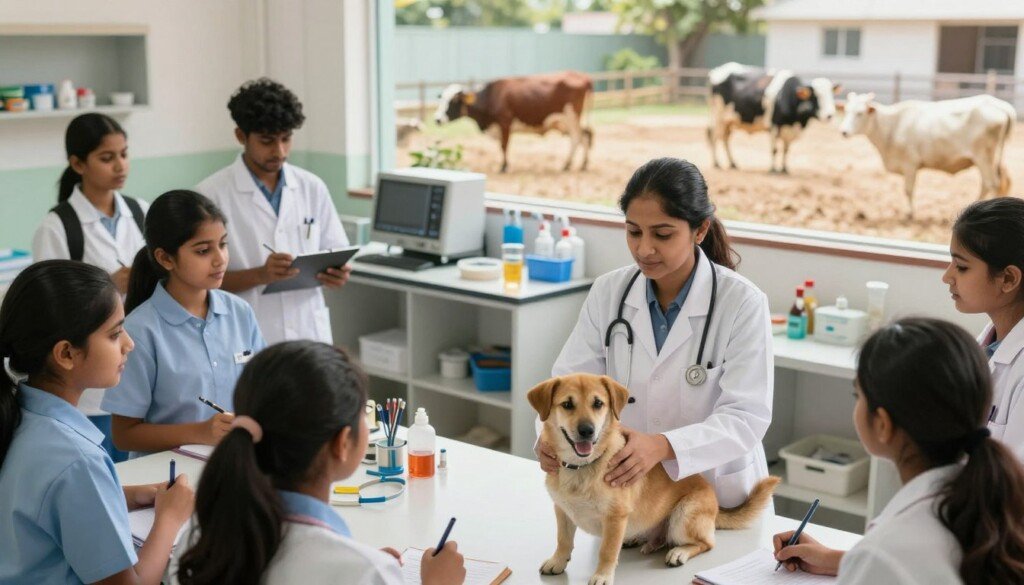
- Bachelor of Veterinary Science (B.V.Sc.): Prepares you for veterinary medicine.
- Bachelor of Physiotherapy (BPT): Focuses on physical therapy and rehabilitation.
These programs are available at many Indian colleges and universities. For example, the Manipal College of Pharmaceutical Sciences and the College of Veterinary Sciences in different states offer these.
Undergraduate Science Degrees with Strong Career Prospects
Undergraduate science degrees give a solid base in biological sciences. They open doors to careers in research, healthcare, and more. Some top degrees include:
- B.Sc. in Biotechnology: Uses biological systems to create new products and technologies.
- B.Sc. in Microbiology: Studies microorganisms and their uses.
- B.Sc. in Biochemistry: Looks into the chemical processes in living things.
Universities like Delhi University and Banaras Hindu University offer these programs. They are highly respected in India.
Diploma and Certificate Courses for Quick Entry
If you want to start working quickly, diploma and certificate courses are good options. They are shorter and focus on specific skills or knowledge. For example:
- Diploma in Medical Laboratory Technology: Prepares you for lab testing and diagnostics.
- Certificate Course in Nutrition and Dietetics: Teaches about nutrition and diet planning.
Institutions like the National Institute of Nutrition offer these courses. They give you the skills to begin your career sooner.
Bachelor of Pharmacy (B.Pharm): Your Gateway to India’s Pharmaceutical Industry
Thinking about a career in the pharmaceutical industry? A B.Pharm degree could be your perfect start. The Bachelor of Pharmacy (B.Pharm) program prepares you with the skills needed to thrive in this field.
Entrance Exams and Admission Process
To get into a top B.Pharm program, you must pass entrance exams. These tests check your skills in physics, chemistry, and math.
GPAT: Graduate Pharmacy Aptitude Test
The Graduate Pharmacy Aptitude Test (GPAT) is a national exam for pharmacy programs. It’s mainly for postgraduate studies, but some colleges use it for M.Pharm admissions too.
MHT CET, BITSAT, and State-Level Entrance Exams
Many states in India have their own B.Pharm entrance exams. For example, MHT CET is used in Maharashtra, and BITSAT is needed for BITS Pilani. Other exams also play a big role in getting into college.
Top Pharmacy Colleges in India
India boasts many top pharmacy colleges for quality education and research. Some of the best include:
BITS Pilani, NIPER Mohali, ICT Mumbai
These colleges are known for their academic excellence and strong ties with the industry. BITS Pilani, for instance, offers challenging programs and research opportunities.
Government vs Private Pharmacy Colleges
Government colleges often have lower fees and are more prestigious. Private colleges, on the other hand, may have better facilities and connections with the industry.
| Institution | Location | Fees (Annual) |
|---|---|---|
| BITS Pilani | Rajasthan | ₹2,50,000 |
| NIPER Mohali | Punjab | ₹1,50,000 |
| ICT Mumbai | Maharashtra | ₹1,00,000 |
Career Prospects and Salary in Indian Pharma Companies
B.Pharm graduates have many career options in the pharmaceutical industry. Some key roles include:
Job Roles: Quality Control, Research, Medical Writing
Quality control specialists check if drugs meet standards. Research roles focus on creating new medicines. Medical writers produce documents for healthcare professionals and regulatory bodies.
Expected Salary: ₹3-8 Lakhs per Annum
The salary for B.Pharm graduates varies. It depends on location, college, and job. On average, you can earn between ₹3 lakhs and ₹8 lakhs a year in Indian pharma companies.
Allied Health Sciences: Build Your Healthcare Career Without MBBS
You can explore many healthcare careers through allied health sciences without an MBBS degree. Allied health sciences include various professions not related to medicine, nursing, or dentistry. These courses give you special skills and knowledge for different roles in healthcare.
Medical Laboratory Technology (B.Sc. MLT)
Medical Laboratory Technology is key in healthcare, helping diagnose and treat diseases with lab tests. As a B.Sc. MLT graduate, you’ll work in diagnostic centres, hospitals, and research labs.
Entrance Exams: AIIMS BSc, JIPMER BSc, State CETs
To get into B.Sc. MLT, you must pass entrance exams like AIIMS BSc, JIPMER BSc, or state CETs. These tests check your knowledge in biology, chemistry, and physics.
Career in Diagnostic Centres, Hospitals, and Research Labs
MLT graduates can work in many healthcare places, like diagnostic centres, hospitals, and research labs. Your job will be to do lab tests, analyze samples, and help in patient diagnosis and treatment.
Salary Range: ₹2.5-6 Lakhs
B.Sc. MLT graduates usually earn between ₹2.5 lakhs to ₹6 lakhs a year. This depends on where you work, your employer, and your experience.
Physiotherapy (BPT): Growing Demand in India
Physiotherapy helps patients recover from injuries or manage chronic conditions with physical therapy. In India, the need for physiotherapists is growing as more people understand the value of rehabilitation.
Top Colleges: AIIMS, Manipal, CMC Vellore
Top places for BPT courses in India are AIIMS, Manipal Academy of Higher Education, and Christian Medical College (CMC) Vellore. These colleges are known for their excellent education and clinical training.
Career Opportunities and Private Practice Options
As a physiotherapist, you can work in hospitals, rehabilitation centres, sports teams, or start your own practice. There are many career paths, like sports physiotherapy, paediatric physiotherapy, or neurology.
Other Paramedical Courses
There are many other paramedical courses to consider, like occupational therapy, radiology, and optometry.
Occupational Therapy, Radiology, Optometry
Occupational therapy helps patients learn skills for daily life and work. Radiology uses imaging like X-rays and MRI scans for diagnosis. Optometry deals with eye care and vision correction.
Admission Process and Career Scope
To get into these courses, you need to pass entrance exams set by institutions or state governments. The career outlook is good, with chances in healthcare, education, and private practice.
“Allied health professionals are crucial for delivering primary and community healthcare, and their roles are vital in achieving universal health coverage.”
This shows how important allied health sciences are in healthcare.
Life Sciences and Research: B.Sc. Programmes and Career Pathways
Studying for a B.Sc. in life sciences or research can lead to many career paths in India. This field covers important areas like healthcare, agriculture, and environmental conservation. It’s vast and crucial for progress in these fields.
B.Sc. in Biotechnology, Microbiology, and Biochemistry
Biotechnology, microbiology, and biochemistry B.Sc. programmes are very popular. They are key in today’s scientific world. These courses give you a solid base in lab skills, theory, and research methods.
- Biotechnology: Uses biological systems to create new products and technologies.
- Microbiology: Studies microorganisms and their role in the environment.
- Biochemistry: Looks into the chemical processes in living things.
Admission Through University Entrance Tests
To get into these B.Sc. programmes, you need to pass university entrance tests. These tests check your knowledge in biology, chemistry, and maths.
Top Universities: Delhi University, Mumbai University, St. Stephen’s College
Delhi University, Mumbai University, and St. Stephen’s College are among the best for B.Sc. in life sciences. They are known for their high standards and research chances.
After graduating, you can work in industry or academia. In industry, you might do research and development, quality control, or sales in biotech and pharma. In academia, you can teach and do research in universities and research centres.
Integrated M.Sc. Programmes at IITs and NITs
IITs and NITs have five-year integrated M.Sc. programmes. These programmes mix undergraduate and postgraduate studies for a smooth learning journey.
IIT JAM: Joint Admission Test for M.Sc.
To get into these programmes, you need to pass the IIT JAM. It’s a national exam for M.Sc. admissions.
Five-Year Integrated Programmes Benefits
These programmes have many advantages. They offer a simpler admission process and early research experience.
Research Opportunities in Indian Institutions
India has many research chances in government labs and private companies.
CSIR, ICMR, DRDO, and Private Research Labs
Places like CSIR, ICMR, and DRDO offer research chances in different areas. Private labs also have great career options.
Expected Salary: ₹3.5-9 Lakhs for Research Positions
Research jobs pay well, from ₹3.5 lakhs to ₹9 lakhs a year. Salaries depend on the role and your experience.
Food Technology and Nutrition Sciences: Emerging Career Options
Exploring career options after your 12th biology can open up many doors. Food technology and nutrition sciences are key areas. They are vital for public health and offer exciting career paths.
B.Sc. and B.Tech. in Food Technology
Food technology uses science to improve food production and preservation. You can study for a B.Sc. or B.Tech. in this field. This will give you a deep understanding of food science.
To get into these courses, you’ll need to pass entrance exams. These include JEE Main, ICAR AIEEA, and UCEED. Top schools like NIFTEM Kundli, CFTRI Mysore, and ICT Mumbai provide quality education.
Entrance Exams: JEE Main, ICAR AIEEA, UCEED
To get into a good school, you must prepare for exams like JEE Main, ICAR AIEEA, and UCEED. These tests cover physics, chemistry, and math.
Top Institutions: NIFTEM Kundli, CFTRI Mysore, ICT Mumbai
Schools like NIFTEM Kundli, CFTRI Mysore, and ICT Mumbai are known for their food technology programs. They have the latest facilities and experienced teachers to help you.
Career in Food Processing Companies and Quality Control
After your degree, you can work in food processing, quality control, or regulatory agencies. Your job might involve ensuring food safety, creating new products, or improving production.

Nutrition and Dietetics: Clinical and Community Health
Nutrition and dietetics study the link between food, health, and disease. You can get a B.Sc. in nutrition and dietetics to become a nutritionist or dietitian.
B.Sc. Nutrition and Dietetics Admission Process
Getting into B.Sc. nutrition and dietetics involves looking at your grades and might need entrance exams. Some places also do personal interviews or group talks.
Career in Hospitals, Wellness Centres, and Food Industry
As a nutritionist or dietitian, you can work in hospitals, wellness centres, or the food industry. You might create diets, teach nutrition, or develop healthy eating plans.
Salary Range: ₹2.5-7 Lakhs per Annum
The pay for nutritionists and dietitians varies. It depends on where you work, your employer, and your experience. On average, you can earn between ₹2.5-7 lakhs a year.
Environmental Sciences and Forestry: Contribute to Sustainable Development
Exploring careers in environmental sciences and forestry can greatly help sustainable development. These fields are key to solving environmental problems in India and globally.
B.Sc. in Environmental Science and Management
A B.Sc. in Environmental Science and Management teaches you to solve environmental issues. It covers ecology, conservation biology, and environmental policy. You’ll learn about sustainable development too.
Admission Process and Top Colleges in India
To get into B.Sc. in Environmental Science and Management, you need good grades or pass entrance exams. Top colleges in India for this course include:
- Delhi University
- Jawaharlal Nehru University
- Banaras Hindu University
Career with NGOs, Government Bodies, and Environmental Consultancies
After graduating, you can work with NGOs, government bodies, or environmental consultancies. You might become an environmental consultant, conservation officer, or sustainability manager.
“The clearest way into the Universe is through a forest wilderness.” – John Muir
Salary Expectations: ₹2.5-6 Lakhs
Environmental science graduates can earn between ₹2.5 lakhs and ₹6 lakhs a year. This depends on the job and where you work.
| Job Role | Average Salary (₹ Lakhs) |
|---|---|
| Environmental Consultant | 3.5 |
| Conservation Officer | 3.0 |
| Sustainability Manager | 5.0 |
B.Sc. Forestry and Wildlife Sciences
B.Sc. Forestry and Wildlife Sciences deals with forest and wildlife management. It includes forest ecology, wildlife management, and forest economics.
Entrance Through ICAR AIEEA
To get into B.Sc. Forestry and Wildlife Sciences, you need to pass the ICAR AIEEA (All India Entrance Examination for Admission).
Opportunities in Forest Department and Conservation Projects
Graduates can work in the forest department, conservation projects, and NGOs. They might become a forest officer, wildlife biologist, or conservation manager.
There’s a lot of room for growth in environmental impact assessment. Professionals here check the environmental effects of projects.
Agricultural Sciences: Promising Careers Through ICAR AIEEA
The Indian Council of Agricultural Research All India Entrance Examination (ICAR AIEEA) opens doors to promising careers in agricultural sciences. If you’re considering a career in this field, you’re on the right track to exploring various opportunities.
B.Sc. Agriculture and Admission Process
Pursuing a B.Sc. in Agriculture is a popular choice among students who have completed their 12th standard with Biology. The admission process for these undergraduate programs is mainly through ICAR AIEEA.
ICAR AIEEA: All India Entrance Examination for Admission
ICAR AIEEA is a national-level entrance exam that offers admission to various undergraduate and postgraduate programs in agriculture and allied sciences. It’s a competitive exam that requires thorough preparation.
Top Agricultural Universities: PAU Ludhiana, IARI Delhi, TNAU Coimbatore
Some of the top agricultural universities in India include Punjab Agricultural University (PAU) Ludhiana, Indian Agricultural Research Institute (IARI) Delhi, and Tamil Nadu Agricultural University (TNAU) Coimbatore. These institutions are renowned for their academic excellence and research opportunities.
Career Prospects in Agribusiness and Rural Development
Graduates with a degree in agricultural sciences can explore various career paths in agribusiness and rural development. These fields offer numerous opportunities for growth and development.
Job Opportunities: Agricultural Officer, Farm Manager, Agri-Consultant
Some of the key job roles in this sector include Agricultural Officer, Farm Manager, and Agri-Consultant. These positions involve managing farms, advising farmers, and developing agricultural policies.
Salary Range: ₹3-8 Lakhs in Indian Companies
The salary range for agricultural science graduates in Indian companies varies from ₹3 lakhs to ₹8 lakhs per annum, depending on the job role and company.
| Job Role | Average Salary (₹ Lakhs) | Key Responsibilities |
|---|---|---|
| Agricultural Officer | 3-5 | Implementing agricultural policies, advising farmers |
| Farm Manager | 4-6 | Managing farm operations, crop planning |
| Agri-Consultant | 5-8 | Providing consultancy services to farmers and agribusinesses |
Horticulture, Plant Sciences, and Agronomy
Agricultural sciences encompass various specializations, including horticulture, plant sciences, and agronomy. These fields offer diverse career opportunities.
Specialisation Options and Career Scope
Students can specialize in areas like horticulture, plant breeding, and soil science. These specializations can lead to careers in research, teaching, and industry.
By choosing to pursue a career in agricultural sciences through ICAR AIEEA, you’re opting for a rewarding and challenging profession that contributes to the country’s food security and sustainable development. You can explore the best courses 2026 and various degree courses available in this field to make an informed decision.
Veterinary Sciences and Animal Husbandry: Non-NEET Entry Routes
Students who have finished their 12th with biology can explore veterinary sciences and animal husbandry. These fields offer undergraduate programs without needing NEET. This opens up alternative career paths for those who love biology.
B.V.Sc. Through State Veterinary Entrance Exams
The Bachelor of Veterinary Sciences (B.V.Sc.) degree is a gateway to a rewarding career in veterinary medicine. Many Indian states hold their own entrance exams for B.V.Sc. programs.
State-Level Exams: Maharashtra, Karnataka, Tamil Nadu
States like Maharashtra, Karnataka, and Tamil Nadu have their own veterinary entrance exams. For example, the Maharashtra Animal and Fishery Sciences University holds an entrance exam for its B.V.Sc. program. Karnataka and Tamil Nadu also have their exams.
Top Veterinary Colleges in India
India boasts several prestigious veterinary colleges. These colleges provide top-notch education and research opportunities. Some of the best include:
- College of Veterinary Sciences, GADVASU, Punjab
- Faculty of Veterinary Sciences, BANU, Jhansi
- Tamil Nadu Veterinary and Animal Sciences University, Chennai
B.Sc. in Animal Husbandry and Dairy Sciences
For those interested in animal care and management, B.Sc. programs in Animal Husbandry and Dairy Sciences are available. These programs are accessed through the ICAR AIEEA exam.
Admission Through ICAR AIEEA
The Indian Council of Agricultural Research (ICAR) holds the All India Entrance Examination for Admission (AIEEA). This exam allows entry into various undergraduate programs, including B.Sc. in Animal Husbandry and Dairy Sciences. It’s a key to top agricultural and veterinary universities.
Career Opportunities and Salary Range
Graduates in veterinary sciences and animal husbandry have diverse career paths. They can work in government departments, private clinics, or in research and academia.
Government Veterinary Departments and Private Clinics
Government veterinary departments offer roles in animal health, disease control, and policy-making. Private clinics and hospitals also employ veterinarians and animal husbandry professionals for clinical practice and management.
Expected Salary: ₹2.5-7 Lakhs per Annum
The salary for veterinary professionals varies based on experience, location, and job role. Fresh graduates can expect a salary between ₹2.5 to 7 lakhs per annum.
Government Services: UPSC and Civil Services for Biology Background
Your biology background can lead to a fulfilling career in government services. Many biology students don’t know about the many opportunities in government jobs that match their studies.
Indian Forest Service (IFS) Through UPSC Civil Services Examination
The Indian Forest Service (IFS) is a top job offered through the UPSC Civil Services Examination. Biology students can use their knowledge of environmental sciences and ecology to excel in this field.
How Your Biology Background Gives You a Competitive Edge
Understanding biological principles is key for a career in IFS. Knowledge of ecology, conservation biology, and environmental science is vital for managing and conserving forests.
“The Indian Forest Service is not just about managing forests; it’s about conserving biodiversity and ensuring sustainable development.”
Preparation Strategy for IFS
To prepare for IFS through UPSC, focus on ecology, environmental science, and geography. Keep up with environmental conservation and forestry news.
- Study the UPSC syllabus thoroughly
- Refer to standard textbooks and resources
- Practice with previous years’ question papers
State Public Service Commissions and Opportunities
State Public Service Commissions offer many chances for biology students. These include roles in state forest services and agriculture departments.
State Forest Service, Agriculture Department Posts
Jobs in state forest services involve managing and conserving state forests. Roles in agriculture departments focus on improving farming practices and policies.
| Department | Roles and Responsibilities |
|---|---|
| State Forest Service | Forest conservation, wildlife management |
| Agriculture Department | Agricultural development, policy making |
Scientific Officer Positions in Central Government
Central government research organisations like CSIR, ICMR, and DBT offer scientific officer positions. These are perfect for biology students.
CSIR, ICMR, DBT, and Other Research Organisations
These organisations do research in various biological sciences. They offer biology students a chance to help advance science.
Scientific officers in these organisations get good salaries and benefits. They also get to contribute to national development.
| Organisation | Salary Range | Benefits |
|---|---|---|
| CSIR | ₹50,000 – ₹80,000 per month | Health insurance, pension schemes |
| ICMR | ₹60,000 – ₹90,000 per month | Research grants, travel allowances |
Step-by-Step Guide: How to Choose Your Ideal Biology Career Path
Choosing a career after 12th biology can seem tough. But, by following a step-by-step guide, you can make a well-informed choice.
Step 1: Conduct a Self-Assessment of Your Interests and Aptitude
It’s important to know your strengths and weaknesses. This helps you pick a career that fits your abilities.
Identify Your Strengths in Biology Subjects
Think about your performance in biology subjects. Find out where you do best.
Consider Your Long-Term Career Goals
Think about what you want to achieve in your career. Consider how your strengths can help you reach your goals.
Step 2: Research Career Prospects and Market Demand in India
Understanding the job market and career prospects is key. It helps you decide on your future.
Analyse Industry Growth and Job Availability
Look into the growth of biology-related industries. Also, check how many jobs are available.
Compare Salary Ranges Across Different Fields
Knowing the salary ranges in different fields is important. It helps you choose a career that meets your financial goals.
Step 3: Evaluate Entrance Exam Requirements and Preparation Time
Different courses have different entrance exams. Knowing these requirements helps you prepare better.
Match Your Preparation Level with Exam Difficulty
Check your preparation level and match it with the exam difficulty. This ensures you’re ready for the exams.
Consider Multiple Entrance Exam Options
Some courses have more than one entrance exam. Think about these options when planning your career.
Step 4: Assess Financial Investment and Return on Investment
It’s crucial to understand the financial investment needed for different courses. Also, consider the potential return on investment.
Compare Course Fees Across Colleges
Research the fees for different courses at various colleges. This helps you make a well-informed decision.
Calculate Expected Salary vs Education Cost
Compare the expected salary after completing a course with the education cost. This helps you see the return on investment.
| Course | Average Course Fee | Expected Average Salary |
|---|---|---|
| B.Sc. Biotechnology | ₹2 lakhs – ₹5 lakhs | ₹3 lakhs – ₹6 lakhs per annum |
| B.Pharm | ₹3 lakhs – ₹10 lakhs | ₹4 lakhs – ₹8 lakhs per annum |
| B.Sc. Environmental Science | ₹1 lakh – ₹3 lakhs | ₹2.5 lakhs – ₹5 lakhs per annum |
Step 5: Seek Professional Career Counselling for Personalised Guidance
Career counselling offers personalised advice. It helps you choose the right career path.
Benefits of Expert Career Counselling
Expert counsellors can identify your strengths and weaknesses. They guide you to the right career path.
How GlobalCareerLabs.com Can Help You Make the Right Choice
GlobalCareerLabs.com provides personalised career counselling. It helps you explore career options after 12th biology.
For personalised guidance, visit GlobalCareerLabs.com today. Make an informed decision about your career path.
Conclusion
You now know about many career paths after your 12th with biology. You can choose from professional degrees, undergraduate science, or diploma and certificate courses. This guide helps you decide your future career.
Are you interested in pharmacy, allied health sciences, life sciences, or environmental sciences? There are many opportunities for you. Use these courses to start a successful career after 12th. Check out GlobalCareerLabs.com to find the best career for you.
Think about your strengths, interests, and what the market needs. Choose a career that fits your goals. With the right help, you can find a fulfilling and rewarding job.
FAQ
What are the best career after 12th options for biology students who do not want to take NEET?
Are there any high-paying professional courses in India for biology students other than MBBS?
Which degree courses allow me to enter the research field in India?
How can career counselling help me choose between different biology streams?
Can a biology student apply for government jobs through UPSC?
Related posts:
 Creative Careers After 12th (Non-Engineering) in India: Your Complete Guide 2026
 BBA Subjects List: Year-wise Syllabus & Core Subjects in BBA 2026
 MBA Courses in India 2026: Complete Guide with Fees, Duration & Admission
 Top 50 MBA Colleges in India 2026: Rankings, Fees & Placement
 Best Courses After 12th Commerce: Complete Guide 2026
 BBA Course Details: Fees, Duration, Subjects & Career Scope 2026
 What is BBA? Full Form, Eligibility, Syllabus & Career Options
 MBA Course Fees in India 2026: IIMs, Private & Government Colleges
 Paramedical Courses After 12th: Complete List with Fees 2026
 Career Opportunities After 12th: Complete Guide for Students 2026
 MBA Specialisations List: Which One is Best for You? 2026
 B.Sc Data Science- Know Your Best Options: Courses, Colleges & Careers 2026
 Best Courses After 12th Commerce: Top 25 Options 2026
 MBA Fees in India 2026: Complete Fee Structure Guide
 MBA Courses List: All Specializations with Career Scope 2026
 BBA Course Duration: How Many Years is BBA in India?
 Bachelor of Business Administration (BBA): Complete Guide 2026
 BBA Course Fees in India 2026: College-wise Fee Structure
 Bio Courses After 12th: Best Options Beyond MBBS & NEET 2026
 What is Psychometric Assessment? Types & Benefits Explained
Powered by YARPP.