
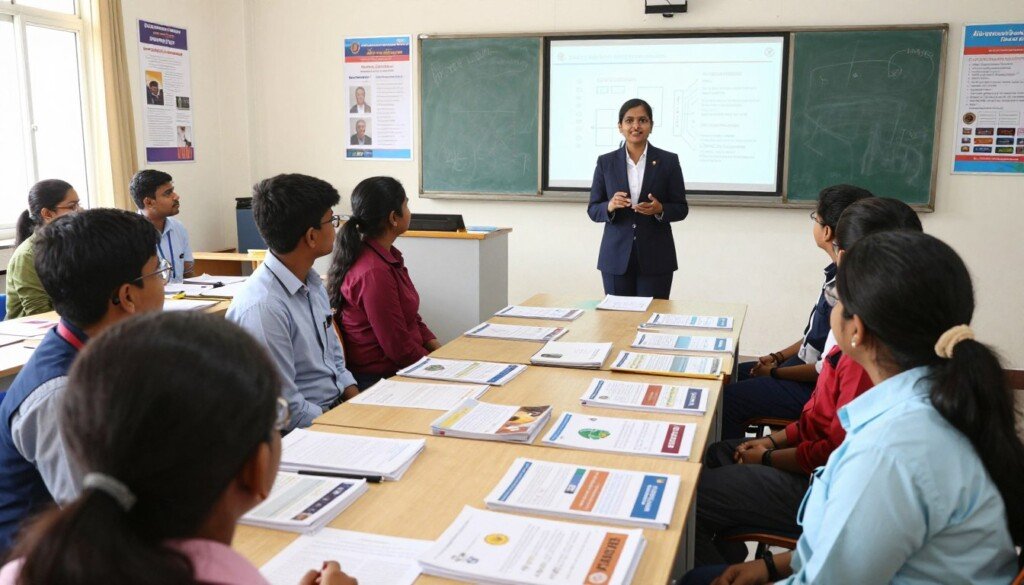
Not every student who leaves Class 10 wants to spend four more years in a classroom before earning their first salary. Some already know they learn better with their hands — fixing things, building things, operating equipment — and they’re looking for a path that respects that. For students like this, the first real question worth answering is: what is ITI course, how long does it take, what does it actually cost, and most importantly, does it lead to genuine employment or just another certificate that sits in a drawer.
These are practical questions, and they deserve straight answers rather than vague encouragement about “skill development.”
ITI — Industrial Training Institute — is a government-backed vocational training programme run under the Ministry of Skill Development and Entrepreneurship across thousands of centres in India.
The courses run from 6 months to 2 years depending on the trade you choose, and they are specifically designed to make you job-ready, not exam-ready. Electrician, Fitter, Welder, COPA, Mechanic — these aren’t just course names, they’re occupations with real demand in manufacturing plants, government departments, railways, and private workshops across the country.
What makes ITI genuinely worth considering in 2026 is the economics of it. The fees at government ITIs are remarkably low — often under ₹10,000 for the full program — and students regularly begin earning ₹12,000–₹25,000 per month within months of completing their trade. For families where time and money both matter, that equation is hard to ignore.
What You’ll Find in This Guide
- ITI full form, structure, and how it differs from regular academic courses
- Complete list of trades available — engineering and non-engineering both
- Fee breakdown for government vs private ITIs across India
- Admission process, eligibility, and which trades are currently in highest demand
- Honest career scope — salaries, government job opportunities, and scope for further study
What is ITI Course: Understanding the Basics
Exploring vocational training means learning about ITI courses. These courses give you practical skills for different trades. You’ll be ready for a job when you finish.
Full Form and Definition of ITI
ITI stands for Industrial Training Institute. ITIs offer training in various trades. They focus on teaching practical skills to students.
The main goal of an ITI is to get you ready for work. They teach the skills needed in different industries.
History and Purpose of ITI in India
ITI courses have a long history in India. They started after independence to meet the need for skilled workers. ITIs aim to fill the gap between skilled labour demand and supply.
By training in different trades, ITIs help India’s economy grow.
NCVT vs SCVT Certification Explained
In India, ITI certifications come from two main groups: NCVT and SCVT. NCVT sets the national curriculum and standards for ITI courses. SCVT, on the other hand, has different curricula and exams in each state.
| Certification Body | Curriculum | Assessment |
|---|---|---|
| NCVT | Standardized across India | Centralized exams |
| SCVT | May vary by state | State-level exams |
Role in India’s Skill Development Mission
ITI courses are key to India’s skill development mission. They train in various trades, creating a skilled workforce. This boosts the country’s economy and growth.
ITIs play a big role in skill development. They not only teach traditional trades but also keep up with new technologies and industry needs. This prepares you for the changing job market.
Why Should You Consider an ITI Course?
Choosing an ITI course can be a smart move if you want to start working quickly. These courses offer hands-on training in various trades. This makes you ready for a job in a shorter time than traditional degrees.
Practical Skills Over Theoretical Knowledge
ITI courses focus on practical skills, unlike traditional degrees. They teach you the skills needed for specific jobs. For example, electricians, fitters, and machinists get a lot of practical training.
Practical training is a key feature of ITI courses. It lets you work on real projects. This gives you experience that’s useful in the job world.
Quicker Entry into the Workforce Compared to Degree Programmes
ITI courses are shorter, lasting one to two years. This means you can start working sooner. Many students choose ITI courses because they can earn money faster than with a degree.
For instance, a welding ITI course graduate can start in manufacturing or construction right away. This is quicker than a degree in a similar field, which takes three to four years.
Cost-Effective Alternative to Engineering Colleges
ITI courses are cheaper than engineering colleges. Their fees are much lower. This makes them a good choice for those who want technical skills without a big financial cost.
| Course Type | Typical Duration | Approximate Fees (in INR) |
|---|---|---|
| ITI Courses | 1-2 years | 5,000 – 20,000 |
| Engineering Degree | 3-4 years | 50,000 – 200,000 |
Strong Demand in Indian Manufacturing Sector
The Indian manufacturing sector needs skilled workers. ITI graduates are well-suited for these jobs. Trades like machinist, electrician, and fitter are always in demand.
The government’s ‘Make in India’ initiative will increase the need for skilled workers. This will improve the job prospects for ITI graduates even more.
Types of ITI Trades Available in India
The Industrial Training Institute (ITI) offers many trades important for India’s growth. These trades help students get jobs in different sectors.
ITI courses are split into engineering and non-engineering trades. Specialists in Engineering trades are in high demand because of India’s growing industries.
Engineering
Engineering trades at ITIs give hands-on training in technical fields. Some key engineering trades include:
Fitter Trade
The Fitter trade teaches assembling, maintaining, and repairing machinery. It’s key for industries like manufacturing and construction.
Electrician Trade
The Electrician trade deals with electrical systems. It includes installation, maintenance, and repair. Electricians are needed in many sectors.
Welder Trade
Welding is crucial in construction, manufacturing, and automotive. The Welder trade teaches various welding methods.
Machinist Trade
Machinists learn to operate and maintain machine tools. This trade is essential for industries needing precision engineering.
Electronics Mechanic
The Electronics Mechanic trade covers repairing and maintaining electronic devices. With more electronics use, this trade is getting more important.
Non-Engineering Trades
Non-engineering trades focus on areas not directly related to engineering. They are vital for administrative and support roles.
Stenography
Stenography is about shorthand writing and typing. It’s useful for secretarial and administrative jobs.
Computer Operator and Programming Assistant (COPA)
The COPA trade teaches computer operations and basic programming. It prepares students for office roles.
Secretarial Practice
This trade covers skills needed for secretarial work. It includes office management and communication.
Draughtsman Civil
Draughtsman Civil involves making technical drawings and plans for construction. It’s vital for the construction sector.
Eligibility Criteria for ITI Courses
When you think about joining an ITI course, knowing the eligibility criteria is key. These criteria help make sure you’re ready for what’s ahead. They ensure you’re well-prepared for the challenges of the course.
Educational Qualifications Required
To qualify for an ITI course, you usually need to have passed Class 8 or Class 10. The exact qualification needed can depend on the trade you’re interested in. For example, some engineering trades might need a Class 10 pass. On the other hand, non-engineering trades might only require a Class 8 pass.
Make sure to check the specific educational needs for your chosen trade. This way, you can be sure you meet the criteria. Some trades might have extra educational needs or preferences.
Age Limit and Reservations
The age range for ITI courses varies. Generally, you must be at least 14 years old and no older than 40 to 45 years. There are also reservations for SC/ST/OBC categories, following government rules.
It’s a good idea to ask the ITI institute you’re interested in about their age and reservation policies. These can differ from one institute to another.
Trade-Specific Eligibility Requirements
Each trade has its own set of requirements. For example, electrician or fitter might need you to be physically fit or have some experience. It’s important to check the specific needs for your chosen trade to make sure you’re eligible.

Physical Fitness Requirements for Certain Trades
Some ITI trades, like engineering ones, might need you to be physically fit. This is to keep you safe while doing the job. Trades that involve a lot of physical work or using heavy machinery might have specific fitness standards.
Always look into the physical fitness needs for your trade. This way, you won’t be surprised during the admission process.
How to Get Admission in ITI: Step-by-Step Process
Getting into an ITI course is easy if you know the steps. The process includes finding your trade and finishing the admission steps.
Research and Choose Your Preferred Trade
Start by picking a trade that fits your career dreams. ITIs offer many trades, from engineering to non-engineering fields. It’s key to pick one that interests you and matches your job goals.
- Look at the trades available in your area.
- Think about the job chances and growth in each trade.
- Pick a trade that fits your career plans.
Check Eligibility and Required Documents
After choosing your trade, check if you meet the eligibility criteria. You’ll need educational qualifications, age limits, and sometimes physical fitness for certain trades.
Make sure you have these documents:
- Educational certificates (like Class 10th or 12th mark sheets).
- Proof of age (like a birth certificate or passport).
- Caste certificate (if needed for reserved categories).
- Proof of where you live (like an Aadhaar card or voter ID).
Register and Fill Out the Application Form Online
Most ITIs now have online registration and application. Go to the ITI’s website or the state’s ITI portal to fill out the form.
Have all your documents scanned and ready to upload.
Appear for Entrance Test or Merit-Based Selection
You might need to take an entrance test or be chosen based on merit. Some ITIs have their own tests, while others use state tests.
“The entrance test checks your skills and knowledge for the trade you’ve chosen.”
Attend Counselling and Select Institute
After passing the test or being chosen, you’ll go to counselling. Here, you’ll pick an ITI and finalize your admission.
Complete Document Verification and Admission Formalities
The last step is to verify your documents and complete the admission process. Make sure to submit all documents and pay any fees to secure your spot.
Here are some tips for a smooth process:
- Have all original documents ready for verification.
- Watch out for admission deadlines.
- Keep in touch with the ITI for updates on your application.
ITI Course Duration and Academic Structure
ITI courses vary in length and structure, based on the trade. Courses can last from six months to two years. Some trades might have longer or shorter programs.
Duration of Different Trades
The course length depends on the trade. For example, Electrician, Fitter, and Welder courses last one to two years. Non-engineering trades might finish in six months to a year.
Here’s a breakdown of typical ITI course durations for various trades:
- Engineering trades: 1-2 years
- Non-engineering trades: 6 months to 1 year
- Specialised trades: Variable duration
Semester and Module-Based Learning System
ITI courses use a semester or module system. This mix of theory and practice helps you learn well. The curriculum is split into modules, with exams at the end of each.
This system helps you understand your trade fully. Each module builds on the last one.
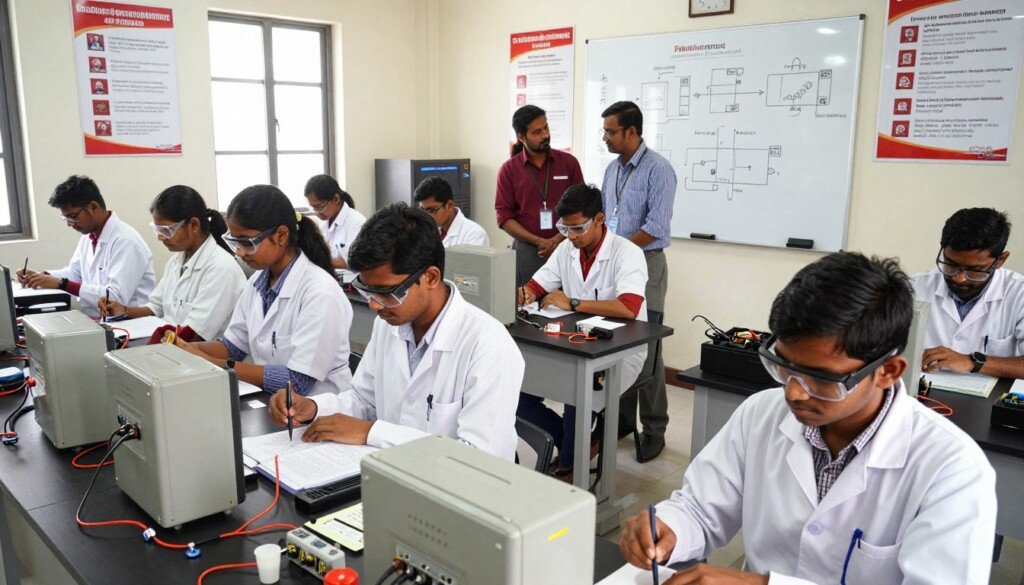
Practical Training and Workshop Sessions
Practical training is a big part of ITI courses. These sessions teach you the skills needed for your trade.
You’ll work with real tools and equipment. For example, electrician students will wire circuits and install systems. This hands-on experience is very useful.
Apprenticeship and On-the-Job Training Requirements
Many ITI courses include apprenticeships or on-the-job training. This lets you practice in real settings, under experienced professionals.
After finishing your ITI course, you’ll be ready for work. Many companies, like Tata Motors and Siemens, hire ITI graduates. They offer good salaries, from ₹2-₹5 lakhs a year, based on the trade and industry.
Knowing about ITI course duration and structure helps you choose the right career path. Pick a trade that fits your goals and dreams.
ITI Course Fees Structure Across India
When you think about joining an ITI course, knowing the fees is key. The cost of ITI courses changes a lot depending on where you are in India.
Government ITI Fees and Charges
Government ITIs are affordable. They get help from the government, making them cheaper for students. Fees can be between ₹5,000 to ₹15,000 a year, based on the trade and state.
For example, fees in Delhi’s Government ITI might differ from those in Maharashtra. Always check the fees for the ITI you’re interested in.
Private ITI Fees Structure
Private ITIs cost more than government ones. Their fees can be ₹20,000 to ₹50,000 or more a year. This depends on the trade and the ITI’s reputation.
Private ITIs might offer extra services or better facilities. Think about what you get for the money when choosing a private ITI.
State-Wise Fee Variations
Fees for ITI courses change a lot from state to state. For example, Karnataka and Tamil Nadu might charge differently for the same trade. It’s important to know these differences if you’re looking to study.
| State | Average Government ITI Fees | Average Private ITI Fees |
|---|---|---|
| Delhi | ₹8,000 | ₹30,000 |
| Maharashtra | ₹10,000 | ₹40,000 |
| Karnataka | ₹7,000 | ₹25,000 |
Scholarships and Financial Assistance Schemes
There are many scholarships and financial help plans to make ITI courses more affordable. These come from the government, private groups, or the ITIs themselves.
- National Scholarship Portal
- State-specific scholarships
- Institutional scholarships
Students should look into these options to help pay for their education.
Additional Costs: Books, Tools, and Uniforms
Students also need to think about extra costs like books, tools, and uniforms. These costs can change based on the trade and the ITI.
For example, electrical or mechanical trades might need special tools, which can increase costs. It’s a good idea to ask the ITI about these extra costs.
Career Opportunities and Job Prospects After ITI
After finishing your ITI course, you’ll find many career paths in different fields. ITI graduates are sought after in both public and private sectors. They’re needed in manufacturing, construction, and service industries.
You might look into engineering trades like fitter, welder, or machinist. Or, you could explore non-engineering trades like dressmaking or hair and beauty services. The hands-on skills you learn make you ready for work, helping you find a job fast.
Going for more education or skills can also boost your career. You could get advanced diplomas or certifications to focus on your trade. This can improve your job chances and earnings.
For better career choices, think about getting career advice from GlobalCareerLabs.com. Their experts can guide you through the job market. They’ll help you reach your career dreams.
Frequently Asked Questions
What exactly is an ITI course and how does it benefit your career in India?
What is the difference between NCVT and SCVT certifications?
Why should you choose an ITI course over a traditional degree programme?
What are the primary engineering and non-engineering trades available?
What are the eligibility criteria for joining an ITI in India?
How can you apply for admission to a government or private ITI?
How long do ITI courses last and what are the apprenticeship requirements?
What is the fee structure and are there any scholarships available?
What is the expected salary for an ITI graduate in India?
Where can you find expert advice on choosing the right ITI trade?
Useful External Links
Official Portals: DGT India | NCVT MIS | NAPS Portal
Job Portals: NCS India | Indian Railways | SSC
ITI courses after 10th will lead you to a very bright and successful future in 2026 and beyond!
Your future begins with making the right choice today. Start Now!
GlobalCareerLabs.com
Your Partner in Career Success
Related Resources:
– What to Do After 12th: Your Ultimate Guide to Successful Careers
– Courses After 12th: 100+ Best Options for Bright Future
– JEE Main Preparation 2026: Proven Strategy for Sure Success
– Career Counselling in India: Complete Guide for Students
– Career Options After 10th: Successful Career Paths for Students
– Courses After 12th: 100+ Best Options for Bright Future
– What to Do After 12th: Your Ultimate Guide to Successful Careers
Disclaimer:
Salary figures, course fees and other course details & career information provided in this article are for general reference only and may vary based on location, company, experience & market conditions. So, readers are advised to independently verify all information from official and authentic sources before making any career or educational decisions. GlobalCareerLabs.com does not guarantee the accuracy or authenticity of this data. And so, Global Career Labs shall not be held responsible for any decisions made based on this information.
Related posts:
 Career Confusion in Children: Causes, Effects And “How to Get Clarity”
 Career Counsellors in Kolkata: Know The Best Experts 2006
 Biotechnology Careers – Your Ultimate Guide to ₹10-30 Lakh Salaries
 Free Online Aptitude Test For All – Students, Freshers & Professionals
 Diploma Courses After 10th: Ultimate Options for Students 2026
 Overseas Education – Way to Successful Dollar Salary Jobs
 Best Career for Me: Complete Self-Discovery -Aptitude & Personality Tests
 Data Science Careers In India: Know everything to Land The Best Paid Jobs!
 Careers for Analytical Thinkers: Proven Roadmap to Success 2026
 Cyber Security Jobs: Best Career Options for 2026
 Cybersecurity Jobs for Freshers: How to Get Hired 2026
 Digital Marketing Course 2026: How to Start a High-Paying Career
 Central Government Jobs: Your Ultimate Career Guide for 2026
 Career Counsellor: Your Complete Guide to Finding the Right Counsellor
 Best Stream After 10th: Plan your next move now
 Psychometric Test for Career: Unlock Your Right Career Path
 Personality Development: Your Key To Ultimate Career Success
 How to Become A Data Scientist in 2026 Without Coding Knowledge: Earn More than ₹10 LPA Salary
 Short-Term Courses After 12th: Get High Salary jobs fast & easy
 Cybersecurity Career Guide: Ultimate path to secure ₹10 LPA Job Offer
Powered by YARPP.