
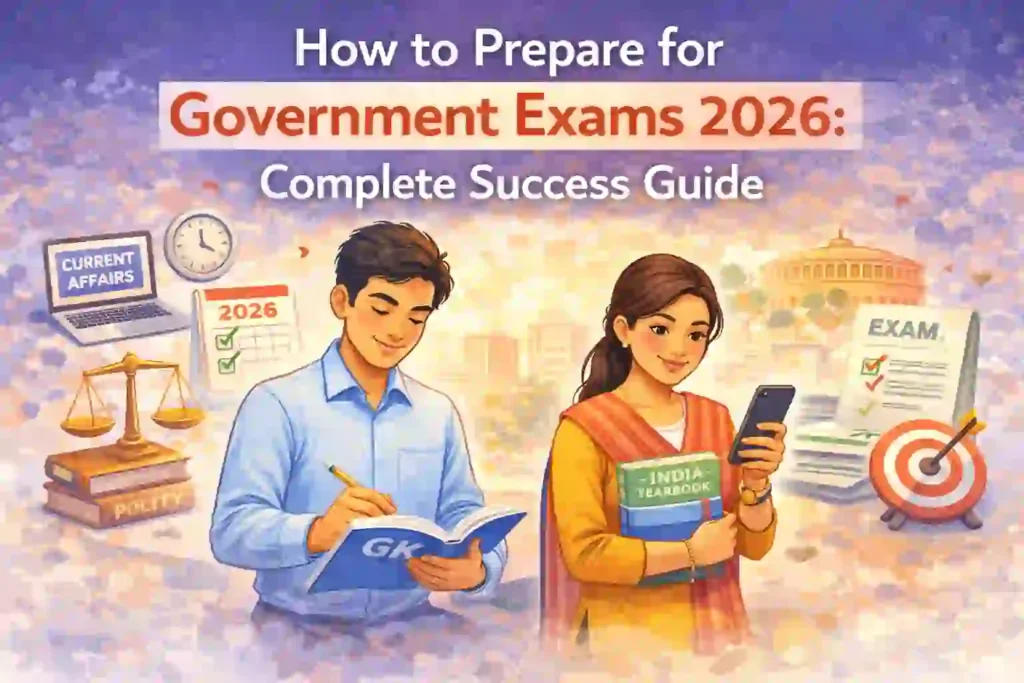
How to prepare for government exams might be the most searched question you typed this week. And I totally get why you are here right now. Maybe you have watched your friends study for three years without clearing even prelims. Or your parents keep asking when you will finally get that government job they dream about. You might have failed your last attempt and that sinking feeling of disappointment still haunts you at night.
Trust me, I have seen hundreds of aspirants sitting exactly where you are sitting right now. Some went on to become IAS officers. Others cracked SSC on their first try. But most kept struggling because nobody showed them the right path. So here is what actually separates those who succeed from those who keep trying. It is not about being the smartest person in the room. It is about knowing exactly what to study, how to study it, and having the guts to stick with your plan even when everyone doubts you.
Why Most People Fail Government Exams
Let me tell you something nobody wants to admit. Most candidates who fail government exams do not lack intelligence or hard work. They fail because they jump into preparation without understanding what they are getting into. Think about it for a second. You would not start a business without researching the market, right?
Yet people spend years preparing for UPSC or SSC without even reading the complete syllabus properly. They buy random books that their friends recommended. They join expensive coaching because everyone else is doing it. Then six months later, they realize they have been studying the wrong things all along. So before we talk about how to prepare for government exams, you need to know which exam matches your background and what you are actually signing up for.
Understanding Exam Categories
Government exams in India fall into several big buckets. UPSC conducts civil services for IAS, IPS and other administrative posts. SSC handles Group B and C positions across central ministries. Banking exams come from IBPS and SBI for clerical and officer roles. Railway jobs go through RRB recruitment. Each state has its own PSC for administrative services. Defense has NDA, CDS and technical entries. Now here is what matters. These are not just different exams with different names. They test completely different things. The person who cracks UPSC might bomb SSC and vice versa. So your first job is picking the exam that fits your strengths and interests.
Matching Your Background
Your degree decides which doors are open for you. Engineering graduates can aim for ISRO, DRDO or engineering services. Commerce folks naturally fit banking and accounting positions. Science students have defense research and forensics. Arts graduates dominate civil services. But do not just look at eligibility. Check age limits because they kick out more people than you think. See how many attempts you get. Some exams give you unlimited tries while others cut you off after a few. Also think practical. Do you want to stay in your home state or move anywhere? Can you handle shift work or do you need fixed office hours? These questions matter more than most preparation guides tell you.
How to Prepare for Government Exams Without Wasting Time
So you have picked your exam. Great. Now comes the part where most people mess up completely. They create these beautiful study timetables with color codes and motivation quotes. Then reality hits. They study twelve hours on day one, feel like a champion, and crash by day three. Here is what actually works. Forget those Instagram study accounts showing perfect desk setups.
What you need is a plan you can follow when you are tired, when you are stressed, and when life throws problems at you. Start by counting backwards from your exam date. Break your syllabus into monthly chunks. Then weekly targets. Then daily goals. But keep it real. If you can honestly study four hours daily, plan for three hours. Life will fill that extra hour with emergencies anyway.
Daily Study Routine That Works
Your brain works in cycles, not marathons. So forget sitting at your desk for eight straight hours. That is a fantasy. Instead, break your day into ninety-minute study blocks with real breaks in between. Mornings are gold for tough subjects like maths or reasoning when your mind is fresh. Afternoons work for medium difficulty stuff. Evenings are perfect for revision or lighter topics. And here is the trick nobody tells you. You do not need to study every single day like a robot. Take one full day off each week. Your brain needs rest to actually remember what you learned. Plus, missing one day because you are sick or something came up should not destroy your whole plan.
What to Study First
This is where smart preparation beats hard preparation. Not all topics are created equal. Some subjects appear in almost every paper. Others show up once in five years. So grab the last ten years of question papers for your exam. Sit down and actually count which topics come up most. Those high-frequency topics are your priority one.
Put sixty percent of your time there. Then look at your own strengths. Some subjects you pick up fast. Others make you want to cry. Strong subjects need regular revision to stay sharp. Weak subjects need deep work to build basics. Average subjects need consistent practice. And here is something crucial. Focus extra on subjects where everyone scores high. Missing easy marks costs you more than missing tough questions.
Building Solid Subject Knowledge
Now we get to the actual studying part. And this is where I see the biggest difference between people who clear exams and people who keep trying. Winners build rock-solid basics. Losers collect hundreds of books without mastering any. You do not need fancy expensive study material. What you need is complete understanding of core concepts. Start with NCERT textbooks from class six to twelve. Yes, even if you are preparing for UPSC. These books give you the foundation that everything else builds on. For maths and reasoning, master basic concepts before jumping to shortcuts and tricks. For English, focus on grammar rules and vocabulary more than just doing random comprehension passages.
General Knowledge Strategy
GK is the monster that scares everyone because it feels endless. But here is the secret. Static GK has limits. Once you learn Indian history or geography, it does not change. So focus hard on static topics first using NCERTs. Cover history from ancient to modern times. Geography means both physical features and economic aspects. Polity includes constitution, government structure and international relations. Economics covers basic concepts plus budget and policies. Now current affairs is different. It keeps changing every single day. So read one good newspaper daily. Not scrolling headlines on your phone. Actually reading articles and understanding context. Make monthly compilations. Connect current events with your static knowledge. That connection is what they test in exams.
Maths and Reasoning Mastery
Here is good news. Maths and reasoning are the easiest subjects to score high once you get them. Unlike GK which keeps expanding, these topics stay fixed. Learn percentages today and you know percentages forever. Start with basic arithmetic. Percentages, ratios, averages, profit and loss. Get these rock solid. Then move to algebra and geometry. For reasoning, practice different puzzle types daily. Coding-decoding, series, analogies, directions. The key here is not just solving questions. It is solving them fast without making silly mistakes. Speed comes from recognizing patterns. Accuracy comes from understanding why answers are correct, not just what the answer is.
How to Prepare for Government Exams Using Past Papers
Previous year papers are like having the exam setter whisper answers in your ear. Yet most students treat them as just another practice tool. Big mistake. These papers show you exactly what matters and what does not. They reveal patterns that coaching institutes charge thousands to teach. But timing matters here. Do not touch previous papers until you have covered at least sixty percent of your syllabus. Jumping in too early just demoralizes you. Once you are ready, take these papers seriously. Set a timer. Sit in a quiet room. No phone, no music, no distractions. Treat it exactly like the real exam. Because what you practice is what you will do under pressure.
Learning From Mistakes
After finishing a mock test, most people check their score and move on. Wrong approach. The analysis after the test matters twice as much as taking the test. Spend serious time on every wrong answer. Was it a concept you do not understand? Was it a silly calculation error? Did you run out of time? Each type of mistake needs a different fix. Concept gaps need more study. Silly mistakes need more careful checking. Time problems need speed practice. Keep a notebook of mistakes. Write down why you got things wrong. Review this notebook before your next mock. You will see patterns in your errors. Fixing those patterns is how you actually improve scores.
Building Speed Smartly
Speed without accuracy is useless, especially with negative marking. So here is the right way to build speed. Start by solving questions correctly even if you are slow. Speed comes naturally with practice. Track your time per question. Notice which types slow you down most. Practice those specific formats separately. Learn shortcuts but only after you understand the long method. Because shortcuts fail when question formats change slightly. In the real exam, scan the whole paper first. Mark easy questions and do them first. This builds momentum and confidence. Then handle medium difficulty. Save the toughest questions for last or skip them if time runs short.
Smart Strategies for Exam Day
Exam day separates people who know answers from people who can deliver under pressure. You might have studied everything perfectly. But if you panic when you see the paper, all that preparation goes to waste. So let me share what actually works when you are sitting in that exam hall with sweaty palms and racing thoughts.
First, accept that some nervousness is normal and even helpful. It keeps you alert. What you need to control is panic. Take three deep breaths before starting. Then spend five minutes scanning the entire paper. Do not start solving yet. Just look at all the questions. Mark the easy ones with a small tick. This scanning calms you down because you realize there are plenty of questions you can handle.
Negative Marking is Your Enemy
Negative marking has destroyed more dreams than difficult questions ever did. So here is the rule that will save your score. Never guess unless you can eliminate at least two options confidently. If a question has four choices and you have no clue, skip it. Zero marks is better than negative marks. But if you can eliminate two wrong options, now you have fifty-fifty odds. That is when educated guessing makes sense. Also watch out for questions designed to trap you. They look easy but have subtle tricks. Read these questions twice. Many candidates lose marks not because they do not know the answer but because they misread the question in their hurry.
How to Prepare for Government Exams Interview Round
Clearing the written test feels amazing until you realize the interview can still knock you out. And this stage is brutal because technical knowledge matters less than how you present yourself. I have seen brilliant students bomb interviews because they could not string sentences together confidently. So interview preparation starts from day one of your written exam prep. Do not wait until you clear prelims. Communication skills take time to build. Read newspapers not just for current affairs but to improve your language. Watch quality debates to learn how people argue logically. Join study groups where you discuss topics out loud. This practice of explaining things verbally is exactly what interviews test.
Building Interview Confidence
Confidence in interviews comes from preparation, not personality. Even shy people can nail interviews with proper practice. Start by recording yourself speaking on random topics for three minutes. Watch these recordings. You will notice filler words, poor posture, weak eye contact. Fix these one at a time. Practice with friends or family acting as interviewers. Make them ask uncomfortable questions because that is what real panels do. Work on your body language. Sit straight but not stiff. Make eye contact but do not stare. Use hand gestures naturally. And here is something crucial. Dress professionally. First impressions matter whether we like it or not.
Mock Interviews Are Non-Negotiable
You cannot skip mock interviews and expect to perform well. Sitting across a panel of experienced people asking tough questions is different from practicing with friends. Many coaching institutes offer mock interviews. Take at least five before your real interview. Listen carefully to feedback even when it hurts. Panel members can see things you cannot see about yourself. Common problems include speaking too fast, giving vague answers, or sounding rehearsed. They want authentic responses, not scripted speeches. Prepare your background thoroughly because questions often come from your own application. Your hometown, degree, hobbies, previous jobs. Know them inside out.
Interview Day Action Plan
Here is your step-by-step plan for interview day. One, reach the venue forty-five minutes early, not thirty. Traffic happens. Two, carry multiple copies of all documents. You do not want technical issues. Three, dress in formal business attire, nothing casual. Four, be polite to everyone including guards and clerks. Five, stay updated with yesterday’s news in case it comes up. Six, enter with a smile and greet the panel. Seven, sit only when asked. Eight, maintain eye contact while answering. Nine, if you do not know something, admit it. Do not bluff. Ten, thank the panel before leaving. And most important, breathe. These people want you to succeed. They are not your enemies.
Taking Care of Yourself During Preparation
This part sounds boring but ignoring it will destroy your preparation. Your brain is not a machine that runs on coffee and motivation quotes. It needs proper food, sleep and exercise to work well. I know you want to study sixteen hours daily. But burning yourself out helps nobody. Sleep seven to eight hours every night. Not negotiable. Your brain consolidates memories during sleep. Skip sleep and you forget what you studied. Eat real food. Not just maggi and biscuits. Your brain needs nutrition. And move your body. Walk for thirty minutes daily. Exercise reduces stress and improves focus. These basics matter more than any study hack you will find online.
Managing Study Stress
Stress during exam prep is normal. Crippling anxiety is not. Learn the difference. When stress motivates you to study, that is good stress. When it makes you freeze and avoid studying, that is a problem. Practice simple breathing exercises. Five minutes of deep breathing calms your nervous system remarkably well. Take real breaks from studying. Watch a movie. Meet friends. Do things you enjoy. Also stop comparing yourself to others. Your friend might study ten hours daily but you do not know their efficiency or understanding level. Focus on your own progress. And remember, failing one attempt does not make you a failure. Most successful government employees cleared their exams after multiple tries.
Biggest Mistakes to Avoid
Let me save you from mistakes that ruin preparations. First mistake is information overload. You do not need fifty books for one subject. Pick two good books and master them completely. Second mistake is skipping revision. Covering topics once means nothing. You will forget. Third mistake is ignoring mock tests. Theory without practice is useless. Fourth mistake is studying without a plan. Random studying gets random results. Fifth mistake is neglecting weak areas. They will not fix themselves. And the biggest mistake is giving up too soon. One failure does not mean you cannot succeed. Learn from it and try again smarter.
Why Consistency Beats Intensity
Many students believe studying twelve hours one day makes up for days of no study. Wrong. Your brain does not work like that. It needs consistent daily input to retain information effectively. Four hours daily for ninety days beats ten hours daily for twenty days. Build sustainable habits, not heroic efforts. Show up every day even when you do not feel like it. Miss a day because life happened? Fine. Resume next day without guilt. Do not try to study double hours to compensate. That creates a cycle of burnout and catch-up that never works. Steady progress wins. Always.
Using Technology the Right Way
Apps and online resources can help your preparation or destroy it depending on how you use them. YouTube has amazing free lectures on every topic. But it also has endless distractions. So here is the rule. Use technology with a specific purpose. Downloading ten exam apps and scrolling through all of them helps nobody. Pick three good apps, maximum. One for daily current affairs. Second one for mock tests. And the other one for video lectures if needed. Delete the rest. Turn off all notifications except emergencies. Your phone should be a tool for studying, not an endless distraction machine. And here is something important. Limit online study to specific hours. Too much screen time kills your eyes and focus.
Frequently Asked Questions
How long does it take to prepare for government exams?
Honest answer? It depends on which exam and where you are starting from. SSC or banking usually needs six to twelve months of focused prep. UPSC takes most people one and a half to two years. But here is what matters more than time. Consistency. Someone studying seriously for six hours daily will progress faster than someone casually studying for twelve months. So focus on quality and consistency rather than counting months.
Can I prepare for multiple exams together?
Yes, but only if syllabi overlap significantly. SSC, railway and banking share common topics like aptitude, reasoning and English. So preparing for them together makes sense. Same with UPSC and state civil services. But trying to prepare for UPSC and banking together will spread you too thin. Pick one primary exam. Add one or two backup exams with similar content. This maximizes your chances without diluting preparation quality.
Do I really need coaching or can I self-study?
Coaching helps but is not mandatory. Thousands clear government exams through self-study every year. Coaching gives you structure, expert guidance and peer pressure. But it costs money and follows fixed schedules. Self-study offers flexibility and lower costs. But it demands serious discipline. Choose based on your personality and situation. Strong self-discipline? Self-study works fine. Need structure and motivation? Coaching might help. Or mix both. Self-study main subjects and take coaching for weak areas.
How important are mock tests really?
Extremely important. Cannot stress this enough. Mocks are not optional extras. They are essential preparation tools. They expose your weak areas, improve your speed, build exam stamina, and reduce anxiety. Theory without practice is like learning to swim by reading books. Start mocks after covering sixty percent syllabus. Take at least one weekly in the final three months. And analyze every mock thoroughly. That analysis matters as much as taking the test.
What if I fail my first attempt?
Then you join the majority of successful government employees. Most did not clear on their first try. Failure teaches you things success never can. You learn the exam pattern, your preparation gaps, time management issues. Use that knowledge. Analyze what went wrong honestly. Were you underprepared? Did you panic? Time management problems? Fix those specific issues. Many candidates perform better in second or third attempts because they know exactly what to expect. One failure is feedback, not a verdict on your abilities.
How to prepare for government exams while working full-time?
It is tough but definitely possible. Wake up two hours early and study before work. Use commute time for revision or audio lectures. Study two to three hours after work. Maximize weekends for longer sessions and mock tests. Focus heavily on high-weightage topics since time is limited. Drop low-priority topics if needed. And be realistic. Working plus preparing takes longer. Give yourself more time than full-time aspirants need. But the advantage is you keep earning while preparing.
Your Next Steps Start Now
So now you know how to prepare for government exams the right way. You understand the common mistakes, the smart strategies, the daily habits that matter. But here is the truth. Reading this guide changes nothing unless you actually start. Close this tab. Pick one small action. Download your exam syllabus. Buy one standard book. Make a one-week study plan. Just start somewhere. Because the perfect time to begin does not exist. You will always have doubts. You will always feel underprepared. Winners start anyway. They learn while doing, adjust while moving, improve while failing.
Every IAS officer, bank manager, and a senior govt employee who has cleared the SSC exam that you admire felt exactly like you feel right now before they started. Scared, uncertain, overwhelmed. They did not have some special talent you lack. They just refused to quit when things got hard. Your government job journey will not be smooth. You will have strict study plans, and you will doubt yourself constantly. You might even fail your first attempt. But if you stick with it, if you keep learning and adjusting, you will get there. So stop reading. Start doing. Your future self is counting on the decision you make right now. Good luck.
Helpful Resources:
UPSC Official Website – Exam Notifications
Staff Selection Commission – Central Jobs
NCERT Textbooks – Foundation Material
IBPS – Banking Exam Information
Railway Recruitment Board – Railway Jobs
Some More Resources
– Govt jobs for successful careers with Govt
Your future begins with making the right choice today. Start Now!
GlobalCareerLabs.com
Your Partner in Career Success
Related Resources:
– What to Do After 12th: Your Ultimate Guide to Successful Careers
– Courses After 12th: 100+ Best Options for Bright Future
– NEET Preparation 2026: Your Complete Strategy & Planning For Success
– JEE Main Preparation 2026: Proven Strategy for Sure Success
– Career Counselling in India: Complete Guide for Students
– Career Options After 10th: Successful Career Paths for Students
– Courses After 12th: 100+ Best Options for Bright Future
– What to Do After 12th: Your Ultimate Guide to Successful Careers
– Best Colleges in India: Your Complete Guide
– Sarkari Naukri: Complete Guide to Govt Jobs in India
– Best Career Options After 12th: Successful Careers for You
– Best Fashion Design Careers in India: Your Ultimate Guide
– Fashion Designing Course After 12th: Eligibility, Fees & Best Options
– How to Choose the Right Career After 12th: 5-Step Framework for Students
– Digital Marketing Career After 12th: Complete Guide for Students in 2026
Disclaimer:
Salary figures, course fees and other course details & career information provided in this article are for general reference only and may vary based on location, company, experience & market conditions. So, readers are advised to independently verify all information from official and authentic sources before making any career or educational decisions. GlobalCareerLabs.com does not guarantee the accuracy or authenticity of this data. And so, Global Career Labs shall not be held responsible for any decisions made based on this information.

Related posts:
 State Government Jobs: Stress Free, Stable & Secure careers
 Career Confusion in Children: Causes, Effects And “How to Get Clarity”
 Career Counsellors in Kolkata: Know The Best Experts 2006
 Career Guidance: Complete Roadmap to Find Your Dream Job in 2026
 Career Guidance After 12th: Ultimate Roadmap for Students 2026
 Highest Paying Jobs in India: Top Careers for 2026
 Careers for Analytical Thinkers: Proven Roadmap to Success 2026
 Cyber Security Jobs: Best Career Options for 2026
 Cybersecurity Jobs for Freshers: How to Get Hired 2026
 Central Government Jobs: Your Ultimate Career Guide for 2026
 Aptitude Test for Students: Find Your Right Career Path Now
 Career Counsellor: Your Complete Guide to Finding the Right Counsellor
 Best Stream After 10th: Plan your next move now
 Career Counselling After 12th: Ultimate Guide for Career Planning
 Psychometric Test for Career: Unlock Your Right Career Path
 Professional Courses After 12th: Best Courses for High Salary Careers
 GATE Preparation for 800+ Score: This is Proven Strategy 2026
 How to Become A Data Scientist in 2026 Without Coding Knowledge: Earn More than ₹10 LPA Salary
 Short-Term Courses After 12th: Get High Salary jobs fast & easy
 Career Counsellor Certification: Ultimate Guide to becoming a successful Counsellor
Powered by YARPP.