

Class 10 results bring a wave of relief — and almost immediately, the next big question arrives about streams, subjects, and career direction. For students who find themselves naturally drawn to understanding people — why they behave the way they do, what drives emotions, how relationships work — that curiosity is actually a very strong career signal worth taking seriously. Exploring psychology courses after 10th is not just possible in India, it is genuinely one of the smartest early moves a student with this inclination can make.
The most practical and well-recognised starting point is choosing the Humanities or Arts stream in Class 11 with Psychology as an elective subject. Most schools — particularly private institutions — offer this combination, with annual fees typically ranging from ₹20,000 to ₹1,00,000 depending on the school and city. This early exposure does something very valuable: it gives students a real taste of behavioural science before they commit to a full undergraduate degree. Students who study psychology at the plus-two level consistently find it easier to crack entrance exams like DUET, BHU UET, and other university-level tests for undergraduate psychology programmes later.
Starting the psychology journey at Class 11 rather than waiting until graduation also builds a meaningful head start in what is becoming one of India’s fastest-growing professional fields. Mental health awareness has shifted dramatically in Indian society over the past few years — and with that shift has come a genuine surge in demand for trained counsellors, therapists, organisational psychologists, and behavioural specialists across healthcare, education, HR, and business. The student who begins early, builds consistently, and chooses the right undergraduate programme is the one who reaches that career destination fastest and most confidently.
Key Takeaways
- Psychology courses after 10th begin with choosing the Humanities or Arts stream in Class 11 with Psychology as an elective.
- Private schools offering psychology as an elective typically charge between ₹20,000 and ₹1,00,000 annually in fees.
- Early exposure to behavioural science builds a stronger foundation for competitive university entrance exams after Class 12.
- Understanding human behaviour opens career pathways in counselling, therapy, HR, education, healthcare, and organisational consulting.
- India’s growing mental health awareness is creating sustained and expanding demand for qualified psychology professionals across sectors.
- Starting psychology study at Class 11 gives students a genuine academic and professional head start over those who begin at degree level.
Understanding the Reality of Psychology Courses After 10th
Thinking about a career in psychology? You might wonder what to do after 10th grade. You can’t directly start a psychology undergraduate program right after 10th. But, you can start preparing for your future studies.
In India, to study psychology, you need to finish 12th grade first. Then, you can apply for a Bachelor’s degree in Psychology. You must have completed 12th grade from a recognized board to be eligible for BA Psychology. The stream you choose after 10th can affect your preparation and future choices.
Many students wonder if their 10th grade stream matters for a psychology career. There’s no single answer. But, picking a stream that matches your interests and strengths is key. For example, if you’re interested in human behavior, choosing arts or humanities might be good.
It’s also important to build a strong foundation in critical thinking and analytical skills. You can start by studying psychology online or reading about it. This can help you understand the subject better and prepare for further studies.
To wrap it up, you can’t enroll in psychology courses right after 10th. But, you can prepare by choosing the right stream, improving your skills, and exploring psychology through various means.
Choosing the Right Stream After 10th for a Psychology Career
Choosing the right stream after 10th is key for a successful psychology career. At this important time, knowing the different streams and their impact on your future in psychology is crucial.
In India, there are three main streams after 10th: Science, Commerce, and Arts. Each stream has its own benefits and can lead to various psychology careers.
Science Stream and Its Advantages for Psychology Courses After 10th
The Science stream is a top choice for those aiming for psychology, like clinical or neuropsychology. Biology and Chemistry lay a solid base in human physiology and behavior’s biological roots.
Key benefits of the Science stream for psychology include:
- Understanding of biological and physiological aspects
- Development of research skills through scientific experiments
- Preparation for fields like clinical psychology and neuroscience
Commerce Stream: A Strategic Choice for Industrial Psychology Courses after 10th
The Commerce stream might seem far from psychology at first. Yet, it’s a smart pick for industrial-organizational psychology. Business Studies and Economics help grasp organizational behavior and human resource management.
The Commerce stream can be beneficial for:
- Understanding organizational dynamics
- Applying psychological principles to business and management
- Pursuing careers in human resources and organizational development
Arts and Humanities: The Traditional Path to Psychology Courses After 10th
The Arts stream, with subjects like History, Sociology, and Psychology, is a traditional route to psychology. It boosts critical thinking, empathy, and understanding of human behavior and social structures.
Advantages of the Arts stream for psychology:
- Development of critical thinking and analytical skills
- Understanding of human behavior and social contexts
- Preparation for careers in counseling and social work
In conclusion, while all three streams can lead to a psychology career, your choice should reflect your interests, strengths, and the specific area of psychology you aim for.
Building a Foundation: What You Can Learn Before 12th
Before you hit 12th grade, there are many ways to lay a solid groundwork for a psychology career. Start by diving into psychology through self-study and online tools. Also, work on developing key soft skills and empathy early.
Self-Study and Online Resources for Aspiring Psychologists
Start your psychology journey with online resources and self-study. Sites like Coursera, edX, and Khan Academy have great intro courses. These can give you a strong grasp of psychology basics.
Some top online resources include:
- Crash Course Psychology: A YouTube series with engaging lectures on psychology topics.
- Psychology Today: A website with articles and blogs on modern psychology issues.
- American Psychological Association (APA) Resources: The APA website has lots of psychology info, including research and educational materials.
Using these resources can deepen your psychology knowledge and its subfields.
Developing Soft Skills and Empathy Early On
It’s not just about books and classes. Soft skills and empathy are key for a psychology career. You can improve these by:
- Volunteering at local NGOs or community centers to meet people from different backgrounds.
- Joining group activities or sports to boost your communication and teamwork.
- Practicing active listening and empathy in everyday life.
These steps will not only grow you personally but also prepare you for mental health work.
To show how vital soft skills are in psychology, look at this table:
| Soft Skill | Relevance to Psychology Career |
|---|---|
| Communication | Good communication is key to understanding clients and helping them. |
| Empathy | Empathy lets psychologists connect with clients and grasp their feelings. |
| Problem-solving | Psychologists often have to solve complex problems and find solutions. |
By focusing on both learning and soft skills, you can build a strong base for a rewarding psychology career.
Navigating the Transition from 10th to 12th Grade
Going from 10th to 12th grade can be tough, but with the right help, you can do well in psychology. This time is key because it gets you ready for college and builds a strong base for your career.
Subject Combinations That Boost Your College Admissions
Choosing the right subjects for 11th and 12th grade is vital. You want to pick ones that will help you get into college for psychology courses.
Science Stream: Picking a science stream with Psychology, Biology, and Math is smart. It shows you can handle scientific and analytical subjects, which is good for psychology.
Humanities and Social Sciences: Subjects like Sociology, Political Science, and History are also great. They help you think critically and analyze well.
- Psychology, Biology, and Chemistry
- Sociology, English, and Political Science
- Mathematics, Statistics, and Psychology
“The right subject combination can significantly enhance a student’s chances of getting into a top psychology program.”
Balancing Board Exams with Interest-Based Learning
It’s important to study for board exams, but don’t forget about learning things you’re interested in. Reading books or joining clubs related to psychology can make you more passionate and knowledgeable about the subject.
- Set times for studying and fun activities
- Choose projects or assignments that match your psychology interests
- Get advice from teachers or mentors on managing your time
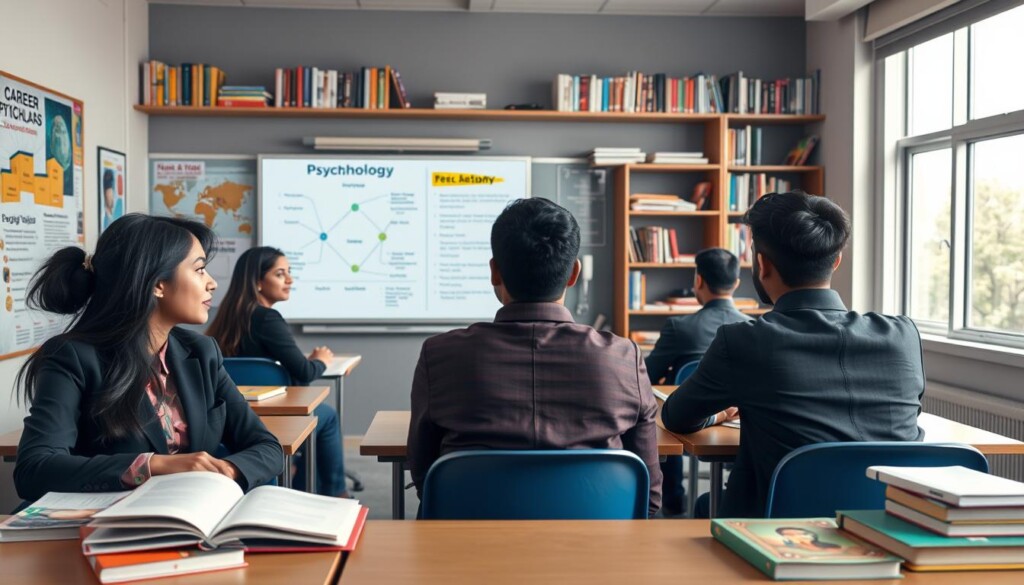
By choosing the right subjects and balancing school with your interests, you can succeed in psychology.
Entrance Exams and Admissions for Psychology Courses in India
As you prepare for a career in psychology, knowing the entrance exams and admissions in India is key. The process is complex, with many exams and criteria to understand.
The Common University Entrance Test (CUET) is a major entry point for many undergraduate programs, including psychology. It’s important to know how CUET affects admissions.
Understanding CUET and Its Role in Psychology Admissions
CUET aims to make admissions easier by offering a single application for many universities. For those interested in psychology, CUET is a straightforward way to get into top central universities with BA Psychology programs.
To do well in CUET, get familiar with its format. It covers language, domain-specific knowledge, and general awareness. Practicing with sample papers can boost your score.
Other University-Specific Entrance Tests
Even with CUET’s rise, many universities still have their own entrance exams for psychology. These exams vary, so it’s crucial to check each university’s requirements.
Some universities might also look at national or state-level exams for admissions. For example, they might consider the National Entrance Screening Test (NEST) or state-specific tests.
When getting ready for these exams, make sure you know the BA Psychology eligibility rules. These often include a minimum 12th-grade score and specific subject needs.
In short, CUET is a big deal for psychology admissions, but don’t forget about university-specific tests. Knowing the exam formats, syllabi, and eligibility will help you through the admissions process.
Top Indian Colleges and Universities for Psychology
If you’re thinking about a career in counselling in India, knowing the best colleges and universities for psychology is key. India has many institutions that offer top-notch education in psychology. They cater to different interests and specializations.
Central Universities and Their Psychology Departments
Central universities in India are known for their academic excellence and research opportunities. Top central universities for psychology include the University of Delhi and Jawaharlal Nehru University. They offer well-structured psychology programs.
The University of Delhi has a Department of Psychology known for its research and academic rigor.
Private Institutions Offering Excellence in Mental Health Studies
Private institutions also play a big role in providing quality psychology education in India. Some notable private universities include Manipal University and Christ University. They offer specialized programs in mental health and counselling.
| Institution | Program Offered | Specialization |
|---|---|---|
| University of Delhi | BA, MA in Psychology | Clinical Psychology, Cognitive Psychology |
| Manipal University | BSc, MSc in Psychology | Mental Health, Counselling Psychology |
| Christ University | BA, MA in Psychology | Industrial Psychology, Developmental Psychology |
When picking a place for your psychology education, think about the curriculum, faculty expertise, and research opportunities. This will help you make an informed decision that aligns with your career goals in counselling or mental health.
Eligibility Criteria for BA and BSc Psychology Programs
To get into a psychology program, you need to meet certain criteria. These rules change from school to school. Knowing what you need to do next is key.
Academic Requirements After 12th Grade
The rules for BA and BSc psychology programs are a bit different. For a BA in Psychology, you usually need to have finished your 12th grade in Arts, Commerce, or Science. Some schools might ask for a certain percentage, like 45% to 60%.
For a BSc in Psychology, the rules are stricter. You often need to have studied Science in your 12th grade, with subjects like Psychology, Biology, or Math. The percentage needed is usually the same as for BA programs.
Entrance Exam Prerequisites and Cut-offs
Many schools ask you to pass entrance exams to get into their psychology programs. These exams can be for the university or national tests like the Common University Entrance Test (CUET). The scores needed can vary a lot between schools.
To get into college, it’s important to study hard for these exams. Knowing the cut-off scores for your schools is crucial. Some schools use state-level entrance exams or their own tests. So, it’s important to check each school’s requirements.
By knowing what you need, you can get ready for your application. This will help you make smart choices for your future in psychology.
Fee Structures and Financial Planning for Psychology Students
Thinking about a career in psychology? It’s key to know the fees at different schools.
Getting a degree in psychology is a big step for your future. The cost in India changes a lot. It depends on if you go to a government school or a private college.
Government College Fees in India
Government schools in India have psychology programs at lower costs. The yearly tuition for a BA or BSc in Psychology can be between ₹5,000 and ₹20,000.
Here’s a look at some government college fees in India:
| Institution | Annual Tuition Fee (₹) |
|---|---|
| University of Delhi | 6,000 – 10,000 |
| Banaras Hindu University | 5,500 – 9,000 |
| University of Calcutta | 4,000 – 8,000 |
Private University Costs and Scholarship Opportunities
Private colleges in India charge more for psychology programs. The yearly tuition can be from ₹50,000 to ₹2,00,000 or more.
But, many private colleges offer scholarships and financial help. Some examples are:
- Merit-based scholarships: For students with top grades.
- Need-based scholarships: For students who really need help.
- Scholarships for research: For students who love research and have good grades.
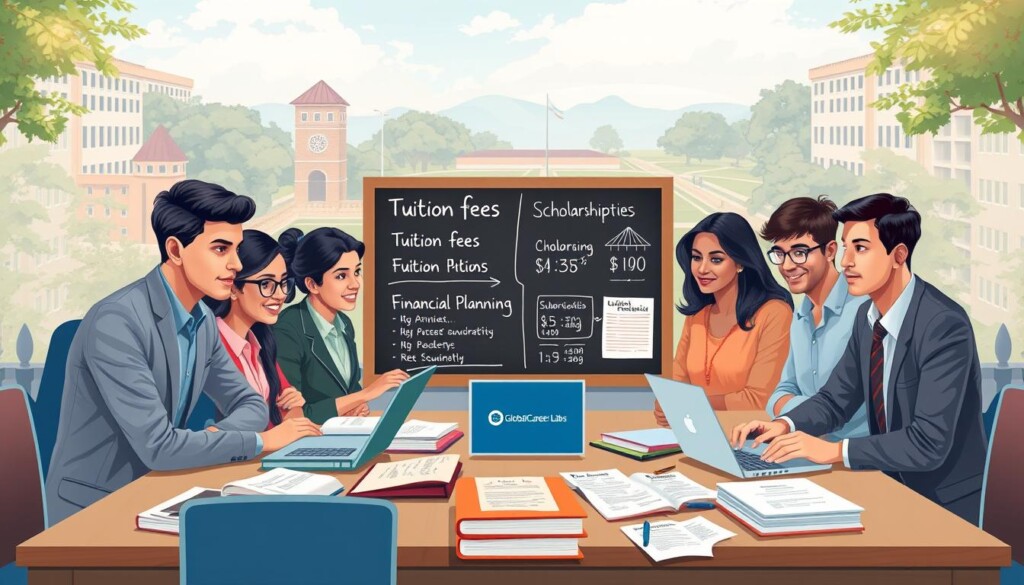
It’s important to look into these options to help pay for your psychology education.
Career Prospects and Salary Expectations in India
After graduating with a psychology degree in India, you’ll find many career paths. The demand for psychology is growing in different fields.
Entry-Level Roles in Counselling and Mental Health
You can start as a counsellor, mental health worker, or research assistant. These jobs are in hospitals, clinics, schools, and NGOs.
Counsellor: You’ll work with people, groups, or families on mental health issues.
Mental Health Worker: You’ll help provide support and services to those with mental health conditions.
Growth Potential in Clinical and Organizational Psychology
With more experience, you can become a clinical or organizational psychologist. These roles have higher salaries and more responsibility.
| Role | Average Starting Salary (INR) | Average Salary After 5 Years (INR) |
|---|---|---|
| Counsellor | 250,000 – 350,000 | 500,000 – 700,000 |
| Clinical Psychologist | 400,000 – 600,000 | 800,000 – 1,200,000 |
| Organizational Psychologist | 500,000 – 700,000 | 1,000,000 – 1,500,000 |
There’s a lot of growth potential in these areas. You can specialize and earn more. As you advance, your salary and job satisfaction will increase.
The Role of Internships and Practical Experience
Starting your journey in psychology after 10th in India means understanding the importance of internships. Internships and practical experience are key, not just extra to your studies. They shape your future in psychology.
Getting hands-on experience lets you use what you learn in real life. It makes you understand psychological principles better. Plus, it helps you stand out in job searches, as employers value practical skills.
Finding Opportunities During Your Undergraduate Years
While studying psychology, look for internship chances. Many Indian universities include internships in their courses. You can also find opportunities at mental health groups, hospitals, and NGOs.
- Ask your university’s career office about internships.
- Meet professionals at seminars, workshops, and conferences.
- Check online for psychology internships.
Networking with Professionals in the Indian Mental Health Sector
Networking is key for finding internships and staying current in the field. Go to conferences, join groups, and connect with professionals on LinkedIn.
Building a strong network helps you learn from the best and find new opportunities. It boosts your career and personal growth in psychology.
Preparing for a Future in Mental Health and Counselling
Getting ready for a career in mental health and counselling means learning a lot. It’s important to know about higher education and professional standards. The field is complex and needs a strong educational base to handle its challenges.
Going for higher education in psychology or a related field can really boost your career. In India, many top schools offer postgraduate programs like MA, MSc, M.Phil, and Ph.D. These programs help you understand psychology better and prepare you for advanced roles.
The Importance of Higher Education: Masters and M.Phil
A master’s degree in psychology or a related field is often needed for advanced roles. Programs like MA in Psychology, MSc in Clinical Psychology, or M.Phil in Clinical Psychology are highly valued. They give you the knowledge and skills needed for success.
Some key benefits of higher education in psychology include:
- Advanced knowledge of psychological theories and practices
- Specialized training in clinical psychology, counselling, or research
- More career opportunities in mental health, hospitals, and schools
- Eligibility for higher positions in government and private sectors
| Degree | Specialization | Career Opportunities |
|---|---|---|
| MA in Psychology | Counselling, Research | Counsellor, Researcher, Lecturer |
| MSc in Clinical Psychology | Clinical Psychology | Clinical Psychologist, Mental Health Professional |
| M.Phil in Clinical Psychology | Advanced Clinical Psychology | Senior Clinical Psychologist, Consultant |
Licensing and Ethical Standards in the Indian Context
In India, following licensing and ethical standards is very important. Professionals must follow guidelines from bodies like the Rehabilitation Council of India (RCI) and the Indian Psychological Association (IPA).
To work in mental health and counselling, you might need certification or registration. This shows you meet the standards and makes you more credible and trustworthy.
By following these standards, you can build a respected career in mental health and counselling. Higher education and professional certification are key. They give you the knowledge, skills, and credentials to succeed.
Conclusion
Choosing a stream after 10th is a big decision. You’ve learned that psychology isn’t directly available after 10th. But, picking the right stream can help you get there.
Science, commerce, or arts are all good choices. Each one has its own benefits that can lead to a career in psychology.
While psychology courses after 10th might not be straightforward, you can still get there. The right subjects and activities can prepare you for college. Top colleges in India have many psychology courses.
Knowing what you need to get in, the costs, and what you can do after can guide you. This knowledge helps you make smart choices.
As you go on, work on your soft skills. Get practical experience through internships. And, keep up with entrance exams. With hard work and the right advice, you can start a fulfilling career in psychology.
FAQ
Can I start focusing on psychology after 10th grade in India?
Which stream is best if I want to pursue a psychology stream after 12th?
What is the standard BA psychology eligibility in top Indian universities?
Do I need to take specific entrance exams for a mental health career in India?
Can I pursue a BSc in Psychology instead of a BA?
What are the steps to building a successful counselling career India?
Are there high-paying jobs in the Indian psychology sector?
Is a license required to practice psychology in India?
Your future begins with making the right choice today.
Start Now!
Useful Resources
- Psychology Courses – All Over India
- Free Psychometric Aptitude Test
- https://globalcareerlabs.com/aptitude-test/
- https://globalcareerlabs.com/what-is-psychometric-assessment/
- https://globalcareerlabs.com/psychometric-assessment-meaning/
INDIAN GOVT. KNOWLEDGE RESOURCES
INTERNATIONAL RESOURCES
- American Psychological Association (APA) — Education & Career URL
- https://www.nirfindia.org/Rankings/2024/CollegeRanking.html
Disclaimer:
The salary figures, course details, and career information provided in this article are for general reference only and may vary based on location, company, experience, and market conditions. So, readers are advised to independently verify all information from official and authentic sources before making any career or educational decisions. GlobalCareerLabs.com does not guarantee the accuracy or authenticity of this data. And so, Global Career Labs shall not be held responsible for any decisions made based on this information.
Related posts:
 Diploma Courses After 10th: Ultimate Options for Students 2026
 Courses After 12th Commerce Without Maths: Best options for You
 Careers for Analytical Thinkers: Proven Roadmap to Success 2026
 Cyber Security Jobs: Best Career Options for 2026
 Cybersecurity Jobs for Freshers: How to Get Hired 2026
 Digital Marketing Course 2026: How to Start a High-Paying Career
 Career Aptitude Test: Choose Your Right Career Path Now in 2026
 ITI Courses After 10th: Complete Guide to Best Trades & High Salary Jobs in 2026
 Central Government Jobs: Your Ultimate Career Guide for 2026
 Career Counsellor: Your Complete Guide to Finding the Right Counsellor
 B.Tech Colleges in India: Guaranteed Roadmap for Successful Tech Careers
 Best Skills to Learn in 2026: Guaranteed Career Success
 Psychometric Test for Career: Unlock Your Right Career Path
 Personality Development: Your Key To Ultimate Career Success
 Best Private Colleges: Your Complete Guide to Top Education
 Which Career Is Best for Me: Ultimate Guide to “Best Careers”
 How to Become A Data Scientist in 2026 Without Coding Knowledge: Earn More than ₹10 LPA Salary
 Data Science Career 2026: Complete guide to high paying jobs in AI Era
 Career Counselling Near Me: Find The Best Career Counsellor
 Career Counsellors in Kolkata: Know The Best Experts 2006
Powered by YARPP.