
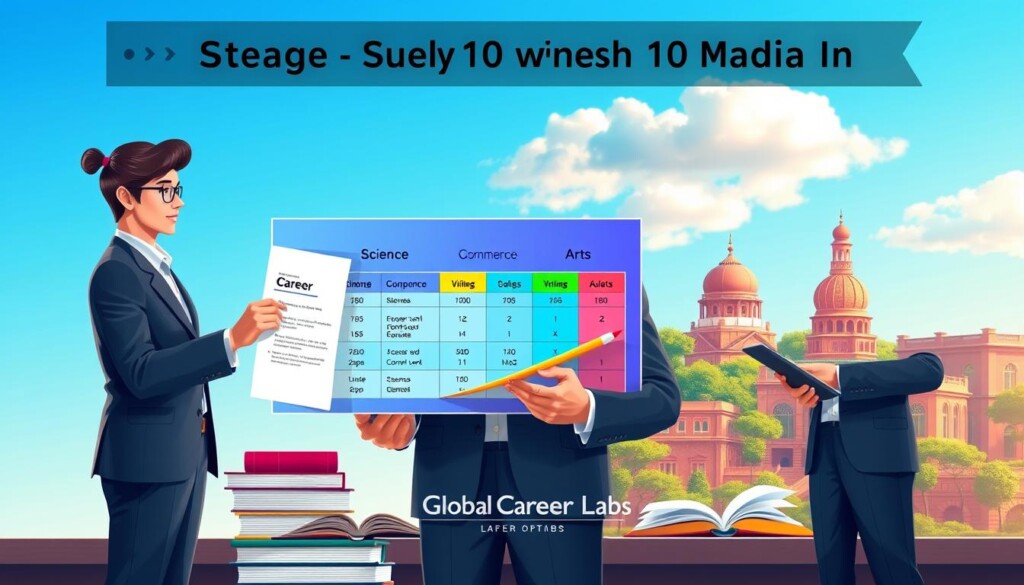
The moment your board exams end, there’s a brief sense of relief—quickly followed by one big question about the future. Conversations at home often shift to careers, stability, and long-term success. In this phase, many students start wondering which stream is best for future after 10th. It’s a valid concern, because this choice is not just about subjects—it’s about the direction your life begins to take.
What you choose now influences your career options, earning potential, and even your lifestyle in the years ahead. Whether you are considering Science, Commerce, or Humanities, each stream comes with its own opportunities and challenges. Entrance paths like Joint Entrance Examination, National Eligibility cum Entrance Test, or professional routes through Institute of Chartered Accountants of India show how differently each stream can shape your journey.
At the same time, there is growing awareness that success is not defined by one stream alone. Factors like personal interest, adaptability, and emerging industry trends play a major role in long-term growth. When you combine self-awareness with the right information, you can choose a path that offers both satisfaction and financial stability in the evolving world of 2026 and beyond.
Key Takeaways
- Choosing a path shapes your long-term career opportunities and daily lifestyle
- Salary trends for 2026 show high growth in both technical and creative fields
- Science offers diverse paths but requires managing high tuition in INR
- Commerce and Humanities provide excellent prospects in management and design
- Matching your personal interests with market trends ensures job satisfaction
- Early planning helps Indian students secure admissions in top-tier colleges
Understanding the Landscape: Which Stream Is Best for Future After 10th?
Choosing the right stream after 10th grade is a big decision. It can shape your future career. It’s important to understand the factors that influence your choice.
“The right stream can unlock a world of opportunities, while the wrong one can lead to a path of dissatisfaction and regret,” as many educational counsellors would say. So, making an informed decision is crucial.
Aligning Personal Interests with Academic Streams
When choosing a stream, your personal interest is key. Being passionate about a subject makes learning more enjoyable. For example, if you love math and solving problems, science might be the best choice.
If you enjoy understanding people and social dynamics, arts could be better. Aligning your studies with your interests boosts your performance. As Warren Buffet said, “Price is what you pay. Value is what you get.” In stream choice, the value is in pursuing what interests you.
The Role of Aptitude and Long-term Career Goals
Your aptitude and career goals also matter. It’s important to know your strengths and weaknesses. For example, if you’re good with numbers, commerce could lead to finance and management careers.
Understanding the job market and required skills is vital. Researching can help you make a better choice. Streams like arts and humanities are opening up new creative and social career paths.
Some streams offer more flexibility than others. Commerce can lead to CA, CS, and CFA, while arts can lead to law, psychology, and design. This flexibility is important to consider.
In conclusion, choosing the right stream after 10th grade requires careful thought. Consider your interests, aptitude, and career goals. An informed decision can lead to success and satisfaction in your future.
Science Stream: Engineering, Medicine, and Beyond
Choosing the Science stream after the 10th grade is a big decision. It can lead to careers in engineering and medicine. The Science stream covers many areas, opening up lots of job paths.
Core Subjects and Specializations
The Science stream includes Physics, Chemistry, and Mathematics (PCM) or Physics, Chemistry, and Biology (PCB). PCM is best for engineering, while PCB is for medical fields.
Specializations in Science Stream:
- Engineering: Mechanical, Electrical, Computer Science, etc.
- Medical: MBBS, BDS, and other medical courses.
- Research: Opportunities in various scientific research institutions.
As Dr. APJ Abdul Kalam once said,
“The purpose of education is to make good human beings with skill and expertise… Enlightened human beings can be created by teachers.”
Entrance Exams: JEE Main, JEE Advanced, and NEET
To get into top schools, you must pass certain exams. For engineering, JEE Main and JEE Advanced are key. NEET is for medical courses.
| Exam | Purpose | Eligibility |
|---|---|---|
| JEE Main | Qualifying exam for JEE Advanced and admission to NITs | 10+2 with PCM |
| JEE Advanced | Admission to IITs | Top 2.5 lakh rank holders in JEE Main |
| NEET | Admission to medical courses | 10+2 with PCB |
Top Institutions: IITs, NITs, and AIIMS
IITs, NITs, and AIIMS are India’s top schools. They offer excellent education and research chances.
Graduates from these schools are in high demand. Many land good jobs or study abroad.
Commerce Stream: Finance, Business, and Management
If you dream of a career in business, finance, or management, the Commerce stream is for you. It’s perfect for students who love the business world. You’ll learn a lot about finance and management.
Core Subjects: Accountancy, Economics, and Business Studies
The Commerce stream focuses on key subjects like Accountancy, Economics, and Business Studies. These subjects give you a strong base in finance, economics, and business.
- Accountancy teaches you to manage and analyze financial data, a key skill for business.
- Economics helps you understand the economic world and its impact on businesses.
- Business Studies covers management, marketing, and entrepreneurship basics.
Professional Paths: CA, CS, and CFA
Commerce students can choose from many careers, like Chartered Accountancy (CA), Company Secretary (CS), and Chartered Financial Analyst (CFA).
- CA is a top certification for auditing, taxation, and financial consulting. It costs between ₹2 lakhs and ₹5 lakhs.
- CS is great for corporate law and governance. It costs between ₹1.5 lakhs and ₹3 lakhs.
- CFA is a worldwide recognized certification for finance careers. It costs between ₹3 lakhs and ₹6 lakhs.
“The Commerce stream offers a wide range of career opportunities, from finance and accounting to management and entrepreneurship.”
Top Colleges: SRCC, NMIMS, and Symbiosis
Top colleges for Commerce education in India include:
- Shri Ram College of Commerce (SRCC), Delhi – Known for its rigorous academic programs and strong industry connections.
- Narsee Monjee Institute of Management Studies (NMIMS), Mumbai – Offers a comprehensive Commerce program with specializations in finance, accounting, and business management.
- Symbiosis College, Pune – Provides a well-rounded education in Commerce, with a focus on practical skills and industry exposure.

Arts and Humanities: Creative, Social, and Legal Careers
The Arts and Humanities stream offers many career paths. It suits those interested in history, literature, or languages. It also caters to those passionate about creative fields.
Choosing this stream opens up a wide range of fields. You can explore careers in law, psychology, design, and more. It teaches you critical thinking, analytical, and communication skills. These skills make you valuable in many professional settings.
Diverse Career Avenues
The Arts and Humanities stream is not just for teaching or literature. It offers a wide range of opportunities:
- Law: You can become a lawyer, legal advisor, or judicial officer if you’re into legal studies.
- Psychology: Careers in psychology include clinical psychology, counseling, and research.
- Design: If you’re creative, you can explore graphic design, fashion design, and interior design.
Entrance Exams
To get into top institutions, you’ll need to pass specific entrance exams:
- CUET: The Common University Entrance Test is for undergraduate programs in central universities.
- CLAT: The Common Law Admission Test is needed for law schools.
- NID DAT: The National Institute of Design Design Aptitude Test is for design disciplines.
Top Institutions
Some top institutions for Arts and Humanities students are:
- St. Stephens College: Known for its liberal arts programs.
- Jawaharlal Nehru University (JNU): Famous for social sciences and humanities programs.
- National Law University (NLU): Offers excellent legal education.
Financial Commitment: Fee Structures in Indian Colleges
When it comes to higher education in India, understanding the fee structures is crucial. These fees can vary greatly depending on the type of college and the course you choose. Let’s explore the different fee structures you might encounter.
Types of Fees
Indian colleges charge various types of fees to cover the costs of education. These include:
- Course fees: These are the main fees for your chosen course. They can vary based on the course’s duration, complexity, and reputation.
- Registration fees: These fees are for the administrative process of enrolling in a college. They cover the costs of processing your application and other administrative tasks.
- Exam fees: If you need to take exams as part of your course, you’ll have to pay exam fees. These cover the costs of administering the exams.
- Library fees: Many colleges charge fees for library access. These fees help maintain the library facilities and resources.
- Transport fees: If your college offers transportation services, you might need to pay transport fees. These fees cover the costs of transportation to and from college.
Payment Options
Indian colleges offer various payment options to make fee payment convenient for students. These options include:
- Online payment: Many colleges allow you to pay your fees online. This is a quick and secure way to make payments.
- Cash payment: You can also pay your fees in cash at designated payment centers. This option is convenient if you prefer not to use online payment methods.
- Installment plans: Some colleges offer installment plans to help students manage their fees. This allows you to pay your fees in installments over a specified period.
It’s important to note that fee structures and payment options may vary between colleges. It’s best to check with the college you’re interested in to understand their specific fee structures and payment options.
Understanding the fee structures and payment options in Indian colleges is essential for planning your finances. By exploring the different types of fees and available payment options, you can make informed decisions about your education and financial commitment.
Salary Expectations and Job Market Trends for 2026
The job market is changing fast. It’s important to look at salary expectations and trends for 2026. This helps you make smart choices about your future. As an Indian student, knowing these trends can guide you to a stream that fits your interests and offers good career chances.
Entry-Level Salary Benchmarks by Stream
Salaries at the start of your career vary a lot by stream. Here’s a quick look at what you might earn:
- Science Stream: Engineering graduates can earn between ₹4-7 lakhs a year. Medical professionals might start with even higher salaries.
- Commerce Stream: CA and CS professionals often earn the most, starting at ₹5-8 lakhs a year.
- Arts and Humanities: Graduates in this stream might start with ₹3-5 lakhs a year. But, creative fields like design can pay more.
High-Growth Sectors and Emerging Job Roles
In 2026, the job market will be shaped by several growing sectors:
- Technology and IT: With AI, machine learning, and cybersecurity on the rise, tech jobs are in high demand.
- Healthcare: The healthcare sector is expanding, with opportunities in pharmaceuticals, biotechnology, and healthcare services.
- Finance and Banking: The finance sector is strong, with new roles in fintech and digital banking.

The Impact of Skill-Based Certifications on Pay
Getting skill-based certifications can really boost your salary. Certifications in data science, digital marketing, and cloud computing are very valuable. For example, a data science certification can raise your salary by up to 30% compared to those without it.
To increase your earning potential, consider these tips:
- Go for certifications that are in demand in your field.
- Build a diverse skill set, including technical and soft skills.
- Keep up with industry trends and keep improving your skills.
Navigating the Transition: From 10th Grade to Higher Education
After 10th grade, you face big decisions about your future. This journey can be tough, but with the right help, you can thrive.
Foundation Years: The Crucial 11th and 12th Grades
The 11th and 12th grades are key for your future. Choose subjects that match your interests and career dreams. These years are more than just for exams; they’re for setting up your future studies.
Focus on learning the basics of your subjects. Also, create a study plan to keep up with your work.
Balancing Board Exams with Competitive Preparation
Managing board exams and competitive tests like JEE, NEET, or CLAT is a big challenge. A good study schedule is essential for success.
Start by making a study plan. Set times for board exams and competitive exam prep. Regular practice and reviewing materials are crucial for doing well.
Choosing the Right Coaching Centers
Coaching centers are important for exam prep. Look at the faculty, study materials, and success stories when choosing.
Ask friends or mentors for advice on coaching centers. A great center offers valuable support for your exams.
Future-Proofing Your Career: Best Streams for 2030
As 2030 gets closer, it’s key for 10th-grade students to know which streams are best for the future. The job world is changing, with more focus on combining different studies and using technology.
The Rise of Interdisciplinary Studies
Interdisciplinary studies mix different subjects to give a deeper understanding of complex problems. This mix is becoming more important in the job world.
Benefits of Interdisciplinary Studies include better problem-solving, a wider view, and being able to fit into many work settings.
Technology Integration Across All Streams
Technology is now a big part of many fields, not just science. Knowing how to use technology is key for success in your career.
Key Areas of Technology Integration include data analysis, AI, and digital marketing. These are changing industries and opening up new jobs.
Adapting to the Changing Global Economy
The global economy is changing a lot, thanks to globalization, green concerns, and new tech. Students need to get ready for these changes.
By picking streams that focus on flexibility, innovation, and learning always, you can make your career future-proof. This way, you’ll stay important in the 2030 job market.
Common Pitfalls to Avoid When Choosing a Stream
When picking a stream, it’s easy to fall into traps. These can lead to poor choices and missed opportunities. Here are some common mistakes to steer clear of:
- Not Considering Your Interests: Picking a stream just for the money can lead to burnout. Make sure it aligns with your passions and skills.
- Ignoring Market Demand: The demand for certain streams can change quickly. Keep an eye on trends to stay relevant.
- Underestimating Competition: Every stream has competition. Research your rivals to understand the market and find your niche.
- Overlooking Long-Term Growth: Focus on streams with growth potential. This way, you can build a sustainable career.
By avoiding these pitfalls, you can make a choice that’s both fulfilling and profitable. Remember, the right stream can open doors to success and personal growth.
Conclusion
Choosing the right stream after 10th grade is a big decision. It affects your future career a lot. Each stream – Science, Commerce, and Arts – has its own opportunities and challenges.
The Science stream leads to engineering and medicine. Commerce is for finance and business. Arts and Humanities are for creative, social, and legal careers.
When picking a stream, think about your skills, interests, and goals. Look into high-paying jobs like engineering and CA. They offer great career paths.
Understanding the different streams and their career paths is key. This helps you choose a stream that fits your strengths. It also prepares you for success in your future career.
FAQ
What is the future scope of science stream for students graduating in the next decade?
How does the commerce stream future look with the rise of digital finance?
Can I really have a successful arts stream career future in a tech-heavy world?
Which is considered the high salary stream after 10th for 2026 graduates?
What will be the best stream 2030 for students concerned about AI automation?
How should I balance board exams with competitive entrance tests like JEE or NEET?
Are private universities like Amity or Ashoka worth the higher tuition fees compared to public colleges?
What are the most common pitfalls to avoid when choosing a stream after 10th?
GlobalCareerLabs.com
Your Partner in Career Success
External Resources for You
- National Skill Development Corporation
👉 https://www.nsdcindia.org
(Industry skill trends and future job demand insights in India) - NITI Aayog
👉 https://www.niti.gov.in
(Reports on future workforce trends and economic growth sectors) - World Economic Forum
👉 https://www.weforum.org
(Global future jobs reports and skill demand forecasts) - Ministry of Statistics and Programme Implementation
👉 https://mospi.gov.in
(Data on employment, income trends, and economic indicators in India)
Disclaimer:
The salary figures, course details, and career information provided in this article are for general reference only and may vary based on location, company, experience, and market conditions. Readers are advised to independently verify all information in the blog, from official and authentic sources. GlobalCareerLabs.com does not guarantee the accuracy or authenticity of this data. And so, Global Career Labs shall not be held responsible for any decisions made based on this information
Related posts:
 Streams After 10th: Science, Commerce & Arts — What Each Stream Offers in 2026
 Which Stream is Best for Class 11? A Practical Decision Guide for Indian Students
 Free Online Aptitude Test For All – Students, Freshers & Professionals
 BBA Course: Your Complete Guide – College List, Subjects, Fees & Career Options
 BBA 1st Year Subjects: Complete Syllabus & Subject List 2026
 Which Stream is Best After 10th? Science vs Commerce vs Arts
 Data Science Course After 12th: Best Options & Career Path
 Different Streams After 10th in India: Science, Commerce, Arts & Vocational — Full Breakdown
 Career Options After 12th in India: Know How to take The Right Decision
 Best Stream After 10th: Plan your next move now
 Career Confusion in Children: Causes, Effects And “How to Get Clarity”
 Career Counsellors in Kolkata: Know The Best Experts 2006
 Biotechnology Careers – Your Ultimate Guide to ₹10-30 Lakh Salaries
 Medical Courses After 12th Without NEET: 20+ Options 2026
 Industrial Training: Importance, Types & How to Find One 2026
 Diploma Courses After 10th: Complete List with Fees 2026
 Subject Combination in Class 10: Complete Guide for Students
 Non Medical Subjects in 11th Class: Complete List 2026
 Which Subject is Best for Class 11? Stream-wise Subject Recommendations for Every Goal
 How to Choose Stream After 10th: 7-Step Framework Every Student Must Follow
Powered by YARPP.