

Some careers don’t just follow a path—they create one. If you’ve always been drawn to colours, fabrics, and the idea of turning imagination into something people can wear, you’re already thinking differently. That’s where exploring fashion designing courses after 12th becomes exciting. It offers a chance to turn creativity into a profession while building a career in a fast-evolving, global industry.
India today is not just consuming fashion—it’s shaping trends. From traditional textiles to modern, sustainable design, the industry is expanding rapidly. Institutes now combine creative skills with business understanding, digital tools, and global exposure. This means students are not only learning design but also how to build brands, understand markets, and stay relevant in a competitive space.
Top institutes like National Institute of Fashion Technology and National Institute of Design have become gateways for aspiring designers. With structured entrance processes and industry-linked training, these institutions prepare students for diverse roles—from fashion design and styling to entrepreneurship and retail management.
Key Takeaways
- India is a leading global hub for creative and sustainable apparel education
- Entrance exams remain the primary gateway to top-tier government institutions
- Modern curricula now integrate AI and digital 3D modeling
- Graduates can pursue roles in styling, design, and retail management
- Tuition fees vary significantly between public and private institutes
- Early preparation for portfolio reviews is essential
Choosing the Right Stream for a Fashion Career
Choosing the right stream after 12th is key for a fashion career. The fashion world has many areas like design, tech, management, and marketing. Your stream choice can shape your career path in fashion.
Wondering how your studies fit with your fashion dreams? The good news is fashion design welcomes students from Science, Commerce, or Arts. Each stream brings different strengths to the fashion world.
Science Stream and Fashion Technology
Science stream students can explore Fashion Technology. It mixes fashion with technical skills. You’ll learn about textiles, fabric making, and garment creation. Look into Bachelor of Fashion Technology (B.F.Tech) or textile engineering.
- Understanding of scientific principles behind fabric and textile production
- Knowledge of garment manufacturing processes
- Opportunities in textile research and development
Commerce Stream and Fashion Management
Commerce stream students can go into Fashion Management. It’s about the business side of fashion, like marketing, merchandising, and brand management. You might choose Bachelor of Business Administration (BBA) in Fashion Management or similar fields.
- Opportunities in fashion marketing and branding
- Understanding of the business dynamics of the fashion industry
- Roles in retail management and e-commerce
Arts Stream and Creative Design
Arts stream students can focus on Creative Design in fashion. This includes fashion design, accessory design, and styling. Bachelor of Design (B.Des) in Fashion Design is a good option.
- Development of creative and artistic skills
- Opportunities in fashion design and styling
- Career paths in accessory design and fashion illustration
In conclusion, your stream after 12th can lead to many exciting fashion careers. Whether you’re into tech, business, or creativity, there’s a place for you in fashion.
Exploring Fashion Designing Courses After 12th
If you’re thinking about a career in fashion, it’s important to know about the courses after 12th. The fashion industry in India is growing fast. There are many courses to help you get into this exciting market.
Fashion designing courses after 12th offer a range of options. You can choose from undergraduate programs like Bachelor of Design (B.Des) and Bachelor of Fashion Technology (B.F.Tech). There are also diploma and certificate courses. These programs teach you the skills needed to succeed in fashion.
Bachelor of Design (B.Des) Programs
B.Des programs in fashion design are very popular. They last four years and cover important topics like textile science and garment construction. You’ll also learn about fashion illustration.
Eligibility: You need to have finished 12th with a good score, usually around 50%. Some schools might ask for entrance exams like NIFT or CEED.
Course Duration: 4 years
Top Colleges: National Institute of Fashion Technology (NIFT), National Institute of Design (NID), and private schools like Pearl Academy of Fashion.
Job Prospects: You can become a fashion designer, stylist, or even start your own label.
Expected Salary: Starting salaries are around ₹3-5 lakhs per year.
Bachelor of Fashion Technology (B.F.Tech)
B.F.Tech programs focus on the technical side of fashion. You’ll learn about apparel production, textile technology, and fashion merchandising. It’s great for those who want to understand the fashion industry’s behind-the-scenes.
Eligibility: You should have a science background from 12th grade and pass entrance exams.
Course Duration: 4 years
Top Colleges: NIFT and some technical universities offer B.F.Tech.
Job Prospects: You can work in apparel manufacturing, textile technology, or fashion merchandising.
Expected Salary: Starting salaries are around ₹3.5 lakhs per year.
Diploma and Certificate Courses
If you prefer shorter programs, diploma and certificate courses in fashion designing are available. These courses last 1-2 years and focus on specific areas like fashion design or styling.
Eligibility: Most schools require you to have finished 12th grade.
Course Duration: 1-2 years
Top Colleges: Many private fashion schools and vocational centers offer these courses.
Job Prospects: You can become an assistant to designers, stylists, or merchandisers.
Expected Salary: Entry-level positions start at ₹2-3 lakhs per year.
As a fashion industry expert once said,
“The key to success in the fashion industry is not just about designing clothes, but understanding the market, technology, and consumer behavior.”
Top Fashion Design Colleges in India
Exploring fashion design in India means finding the best colleges. India has many top schools for fashion design. They prepare students for the fast-changing fashion world.
These schools teach both theory and practical skills. This makes sure students are ready for the industry. Let’s look at some of India’s top fashion design colleges.
National Institute of Fashion Technology (NIFT)
NIFT is a top fashion design college in India. It’s known for its tough courses and strong connections with the industry. NIFT has campuses all over the country, offering both undergraduate and postgraduate programs in fashion.
Its teachers are industry experts. The courses keep up with fashion trends. NIFT’s strong alumni and job placement make it a favorite for fashion design students.
National Institute of Design (NID)
The National Institute of Design (NID) is another top school for fashion design. It focuses on creativity and innovation. NID is a great place for students to grow their design skills.
NID’s courses mix theory and practical skills. This prepares graduates for the fashion industry. The teachers are experienced designers and industry pros.
Private Institutions and Universities
India also has many private colleges and universities for fashion design. Schools like Pearl Academy and JD Institute are known for their relevant courses and strong job records.
These schools often work with international fashion schools. This gives students global experience and chances. They also offer special courses in areas like sustainable fashion and luxury brand management.
When picking a fashion design college, think about the curriculum, teachers, industry connections, and alumni success. Choosing the right school can help you succeed in the competitive fashion world.
Understanding NIFT Admission and Entrance Exams
Thinking about a career in fashion design? Knowing how to get into top schools like NIFT is key. The National Institute of Fashion Technology (NIFT) is a top fashion school in India. Getting in means passing a tough entrance exam.
NIFT Entrance Exam Pattern
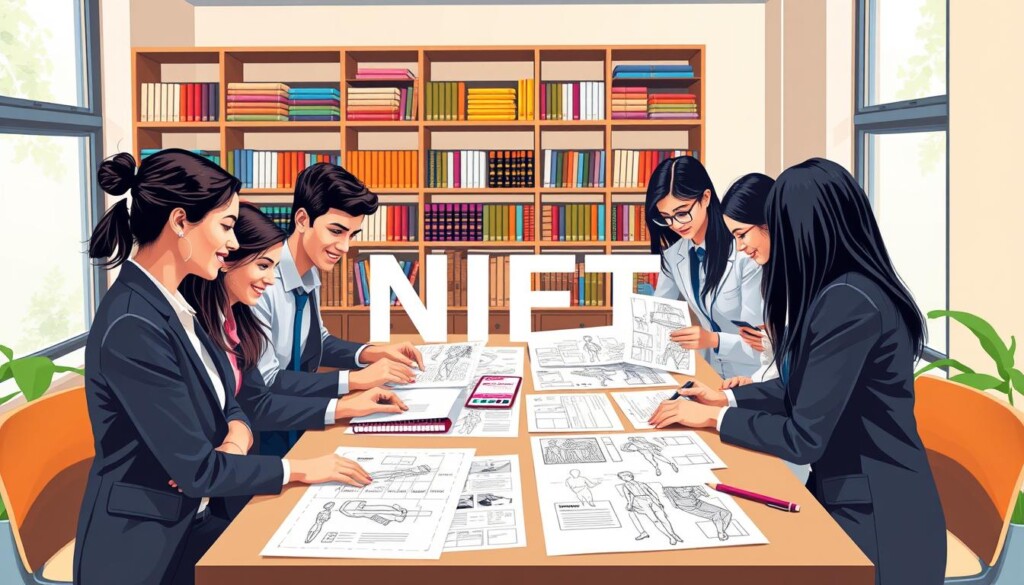
The NIFT entrance exam tests your creativity and problem-solving skills. It usually has:
- A creative ability test that checks your drawing and design skills
- A general ability test that looks at math, communication, and problem-solving skills
Knowing the exam pattern helps you prepare better. The creative test sees if you can think outside the box and show your ideas through art.
CUET and Other University-Level Tests
NIFT has its own exam, but some schools use the Common University Entrance Test (CUET) or other tests. Make sure to check what each school needs for fashion design programs.
| University | Entrance Exam | Weightage |
|---|---|---|
| NIFT | NIFT Entrance Exam | 100% |
| Delhi University | CUET | 50% + 50% Class 12th Score |
| Private Universities | Varies (University-specific tests or CUET) | Varies |
Preparation Tips for Design Aptitude Tests
To do well in design tests, work on your creative and analytical skills. Practice drawing and thinking visually. Also, improve your math, communication, and problem-solving skills.
- Practice with sample papers and last year’s questions
- Take classes or online tutorials for help
- Make a study plan and follow it
Fee Structures for Fashion Design Programs
Thinking about a career in fashion design? It’s important to know the costs of different programs. The price for a fashion design degree changes based on the school type. Govt. colleges and private universities have different fees.
Government College Fee Estimates
Government colleges, like the National Institute of Fashion Technology (NIFT), have lower fees. For undergraduate programs, NIFT’s fees are between ₹1.5 lakhs and ₹2.5 lakhs a year for Indian students. These schools offer quality education at a lower cost.
Here are some key points about government college fees:
- Lower tuition fees compared to private institutions
- Government subsidies and scholarships available
- High-quality infrastructure and faculty
Private University Tuition Costs
Private universities have higher fees. Fashion design program costs at these schools range from ₹5 lakhs to ₹15 lakhs a year. Even with higher fees, these schools provide top-notch facilities and connections to the industry.
Some key points about private university fees include:
- Higher tuition fees reflecting premium facilities and education
- Varied scholarship opportunities
- Strong industry connections for internships and placements
Scholarships and Financial Aid Options
Both types of schools offer scholarships and financial aid. These can help make getting a fashion design degree more affordable. Government colleges have programs for those from lower-income backgrounds. Private universities offer scholarships based on merit.
Key financial aid options include:
- Government scholarships for SC/ST and OBC categories
- Merit-based scholarships
- Education loans from banks and financial institutions
Knowing about these fees and financial aids can help you choose the right education in fashion design.
Essential Skills for Aspiring Fashion Designers
To make it in the fashion world, you need both creative and technical skills. As a fashion designer, you should be good at many things. This includes coming up with designs and knowing how fabrics are made.
There are three main areas to focus on: creative sketching and illustration, technical knowledge of textiles and fabrics, and software proficiency in design tools.
Creative Sketching and Illustration
Being good at drawing is key for fashion designers. You must show your ideas clearly through sketches.
- Work on your drawing skills to show your design ideas well.
- Learn about color theory and how to use it in your designs.
- Make mood boards to show the look and feel of your designs.
Technical Knowledge of Textiles and Fabrics
Knowing about different fabrics is very important. This helps you pick the right materials for your designs. It makes sure they look good and work well.
- Study the different fabrics, like their texture, strength, and how they drape.
- Learn about ways to change fabrics, like dyeing, printing, and embroidery.
- Know about the environmental and sustainability issues in fabric making.
Software Proficiency in Design Tools
In today’s world, knowing how to use design software is a must. You should be good with computer-aided design (CAD) software and other digital tools. This helps you make and change your designs.
- Get to know popular design software like Adobe Illustrator and Photoshop.
- Learn to make digital patterns and prototypes with CAD software.
- Know how to use tech to make your design work better and faster.
By working on these key skills, you can do well in the fashion world. Remember, being a great fashion designer means being creative and technical. Also, keep up with new trends and tech.
Career Scope and Job Roles in the Indian Fashion Industry
The Indian fashion industry is rich in culture and modern trends. It offers many career paths. You can find roles that match your skills and interests.
Consider becoming a Fashion Designer and Stylist. You’ll create original clothes and accessories. It’s all about keeping up with trends and being creative with designs.
Fashion Designer and Stylist
Fashion designers design clothes, shoes, and accessories. They do things like:
- Sketching designs and creating prototypes
- Selecting fabrics and materials
- Overseeing the production process
Stylists pick out clothes and accessories for photoshoots, runway shows, or personal style.
Fashion Merchandiser and Buyer
Fashion merchandisers and buyers are key in the industry. They do things like:
- Analyzing market trends and consumer behavior
- Selecting products to purchase and sell
- Managing inventory and sales data
They work with designers and manufacturers to meet consumer needs.
Textile Designer and Production Manager
Textile designers make designs for fabrics. Their tasks include:
- Developing original textile designs
- Collaborating with manufacturers
- Staying updated with the latest textile trends
Production managers manage the manufacturing process. They ensure products are made well and efficiently.
The Indian fashion industry is growing. It offers great career opportunities for those with the right skills and passion.
Fashion Designer Salary in India
Thinking about a career in fashion design in India? Knowing the salary is key. The fashion world is booming, offering more chances for designers. But, pay varies based on experience, where you work, and your role.
Entry-Level Salary Expectations
Starting out, fashion designers in India can earn ₹3–5 lakhs a year. This is common for newbies in big and small fashion spots. Your first salary depends on the company’s fame, your education, and any work experience you’ve got.
Mid-Career Growth and Compensation
With more experience, your salary can jump up. Designers with 5-10 years of work can make ₹8–15 lakhs a year. Top designers or those well-known in the field can earn ₹10–20 lakhs or more. Your salary will grow based on your skills, the fashion area you’re in, and how well you keep up with trends.
Factors Influencing Earning Potential
Several things can affect how much you earn as a fashion designer in India. These include:
- Location: Cities like Mumbai, Delhi, and Bangalore pay more than smaller towns.
- Experience: More seasoned designers get paid better.
- Specialization: Being an expert in a niche like sustainable fashion can boost your pay.
- Industry Segment: Working in luxury fashion, celebrity styling, or with global brands can be more profitable.
Here’s a simple table showing average salaries for designers at different career stages:
| Career Stage | Average Salary (LPA) |
|---|---|
| Entry-Level | ₹3–5 |
| Mid-Career | ₹8–15 |
| Senior | ₹10–20+ |

Knowing these salary ranges and factors can help you plan your fashion design career in India. Focus on improving your skills, networking, and keeping up with trends. This way, you can make the most of your career in this vibrant field.
Portfolio Development for College Admissions
Your design portfolio is often the first thing college admissions panels see. It’s crucial to make it count. A strong portfolio shows your creativity, passion for fashion, and potential in the industry.
What to Include in Your Design Portfolio
Focus on quality over quantity when building your portfolio. Include a variety of pieces to show your range and versatility. Some key items to consider are:
- Sketchbooks or digital files of your sketches and illustrations
- Photographs of your finished projects or garments
- Descriptions of your design process and inspiration
- Any relevant coursework or projects that demonstrate your skills
Tip: Customize your portfolio for the college or program you’re applying to. Research their curriculum and focus areas to know what they value in a portfolio.
Showcasing Your Creative Process
Admission panels want to see your creative process, not just finished products. Include works-in-progress and sketches to show your design thinking.
For example: If you’re working on a collection, show initial mood boards, fabric swatches, and sketches alongside the final garments. This shows your ability to conceptualize and execute a design.
Tips for Impressing Admission Panels
To impress, your portfolio should be well-organized, visually appealing, and easy to navigate. Here are some tips:
- Use clear and concise labels and captions for each piece.
- Include a brief introduction or artist statement that outlines your design philosophy.
- Ensure your portfolio is free of errors and professionally presented.
Here’s a comparison of what to include and what to avoid in your design portfolio:
| Inclusion Criteria | Avoid |
|---|---|
| Original and creative work | Plagiarized or unoriginal designs |
| Clear and concise descriptions | Overly complex or confusing explanations |
| Well-organized and visually appealing layout | Cluttered or disorganized presentation |
Internships and Industry Exposure
Internships and getting to know the industry are key parts of a good fashion design education. As a fashion student, you must connect your classroom learning with real-world experience. This is crucial to stand out in a tough field.
Practical Experience Matters
Getting practical experience is key to using what you learn in class. Internships let you work in design studios, fashion houses, or textile companies. This hands-on experience is invaluable.
- Develops skills in design software and technology
- Enhances understanding of the production process
- Provides insight into industry trends and expectations
Networking with Fashion Houses
Connecting with fashion pros can lead to new chances. Networking with fashion houses and experts keeps you in the loop with trends and best practices.
Key networking opportunities include:
- Fashion weeks and trade shows
- Industry conferences and seminars
- Internships and collaborative projects
Building a Professional Brand Early
Creating a professional image is vital for your career. A strong online presence and portfolio show off your abilities to employers.
Tips for building your brand:
- Develop a professional website or blog
- Engage on social media platforms relevant to the industry
- Participate in design competitions to gain recognition
Balancing Academic Pressure and Creative Passion
When you start fashion designing courses after 12th, it’s key to balance school work and creative dreams. Fashion design needs creativity and a solid education. Finding a balance can be tough, but with smart strategies, you can do well.
Time Management for Design Students
Good time management is essential for balancing school and creative projects. Here are some tips to help you manage your time well:
- Prioritize tasks based on deadlines and importance
- Create a schedule that includes dedicated time for academic work and creative projects
- Avoid procrastination by breaking down large tasks into smaller, manageable chunks
By managing your time well, you can lower stress and make room for both school and creativity.
Maintaining Mental Well-being
Design students often face a lot of stress and pressure. Here are some ways to stay mentally healthy:
- Practice mindfulness and meditation to reduce stress
- Engage in physical activities to boost your mood and energy levels
- Connect with peers and mentors for support and guidance
Remember, taking care of your mental health is as important as achieving academic success.
Support Systems for Students and Parents
A strong support system can greatly help in managing school pressure and nurturing creativity. Here are some support systems available:
| Support System | Description | Benefits |
|---|---|---|
| Counseling Services | Many colleges offer counseling services to help students manage stress and mental health. | Professional guidance, stress management |
| Peer Groups | Connecting with fellow students can provide emotional support and a sense of community. | Emotional support, networking opportunities |
| Parent-Teacher Associations | These associations can provide a platform for parents to engage with the college and support their child’s education. | Parental involvement, additional resources |
A strong support system can help you navigate the challenges of fashion design education and foster a healthy, creative environment.
Conclusion
Exploring fashion designing after 12th grade has opened your eyes to many courses, top colleges, and career paths. Institutions like National Institute of Fashion Technology (NIFT) and National Institute of Design (NID) offer specialized programs. This lets you pick the best path for your goals.
The Indian fashion industry is booming, full of chances for new designers. Learning the key skills, creating a strong portfolio, and getting practical experience through internships are crucial. These steps can help you build a successful career in fashion.
With the right education and training, you can enter a world of fashion possibilities. This includes fashion design, merchandising, textile design, and production management. So, start your journey towards your dream career and seize the opportunities that await you.
FAQs
Can you pursue a career in fashion if you studied Science or Commerce in the 12th grade?
What is the main difference between a B.Des and a BSc Fashion Designing degree?
Which are the most prestigious fashion design colleges in India today?
How can you successfully navigate the NIFT admission process?
What should you expect regarding fashion designing fees in India?
What is the average fashion designer salary in India for a fresh graduate?
How important is a design portfolio for your college application?
Are internships mandatory for fashion designing students?
GlobalCareerLabs.com
Your Partner in Career Success
External Resources for You
- National Institute of Fashion Technology
👉 https://www.nift.ac.in
(Official details on admissions, courses, and entrance exams) - National Institute of Design
👉 https://www.nid.edu
(Premier institute for design education and creative careers) - Fashion Design Council of India
👉 https://fdci.org
(Industry body connecting designers, events, and fashion ecosystem) - Ministry of Textiles India
👉 https://texmin.nic.in
(Insights into India’s textile and fashion industry growth)
Disclaimer:
The salary figures, course details, and career information provided in this article are for general reference only and may vary based on location, company, experience, and market conditions. Readers are advised to independently verify all information in the blog, from official and authentic sources. GlobalCareerLabs.com does not guarantee the accuracy or authenticity of this data. And so, Global Career Labs shall not be held responsible for any decisions made based on this information
Related posts:
 Industrial Training: Importance, Types & How to Find One 2026
 BBA Course: Your Complete Guide – College List, Subjects, Fees & Career Options
 BBA 1st Year Subjects: Complete Syllabus & Subject List 2026
 Free Online Aptitude Test For All – Students, Freshers & Professionals
 Best Courses After 12th Commerce: Complete Guide 2026
 Medical Courses After 12th Without NEET: 20+ Options 2026
 Diploma Courses After 10th: Complete List with Fees 2026
 Data Science Course After 12th: Best Options & Career Path
 Subject Combination in Class 10: Complete Guide for Students
 Career Options After 12th in India: Know How to take The Right Decision
 Career Confusion in Children: Causes, Effects And “How to Get Clarity”
 Career Counsellors in Kolkata: Know The Best Experts 2006
 Biotechnology Careers – Your Ultimate Guide to ₹10-30 Lakh Salaries
 What is BBA? Full Form, Eligibility, Syllabus & Career Options
 Paramedical Courses After 12th: Complete List with Fees 2026
 Which Stream is Best After 10th? Science vs Commerce vs Arts
 Different Streams After 10th in India: Science, Commerce, Arts & Vocational — Full Breakdown
 Which Stream is Best for Class 11? A Practical Decision Guide for Indian Students
 Forensic Science Courses After 12th: Eligibility, Top Colleges, Fees & Career 2026
 Which Stream Has the Best Future After 10th? Scope & Salary Comparison 2026
Powered by YARPP.