
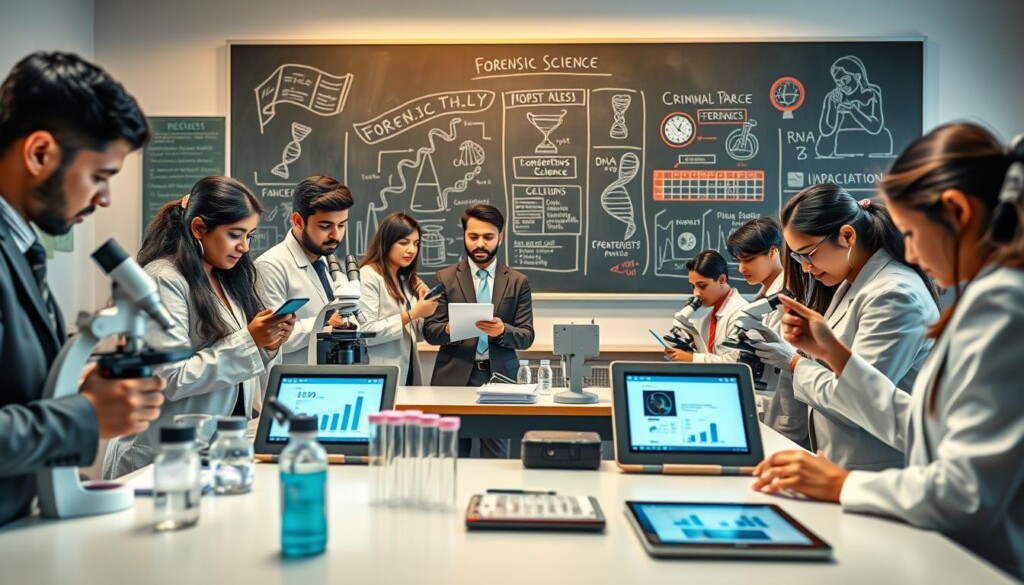
Not every student dreams of a conventional career—some are drawn to solving puzzles, uncovering hidden truths, and understanding how things really work. If you’ve ever been curious about crime investigations or lab analysis, this path might interest you. That’s where exploring forensic science courses after 12th becomes relevant. It opens up a career that blends science with real-world investigation in a meaningful way.
Forensic science sits at the intersection of biology, chemistry, and law. Professionals in this field examine evidence like DNA, fingerprints, and digital traces to support criminal investigations. Their work plays a critical role in ensuring justice, assisting agencies, and strengthening the legal system. It’s a career that demands precision, patience, and a strong sense of responsibility.
In India, institutions such as National Forensic Sciences University and Central Forensic Science Laboratory offer specialized programs and exposure to real-world forensic work. With increasing demand for skilled experts in crime labs and investigative agencies, this field is steadily growing as a unique and respected career option.
Key Takeaways
- Understand how biology and chemistry identify critical evidence
- Learn entry criteria for major investigative institutes in India
- Review average tuition costs in INR for your degree program
- Discover job roles within crime investigation laboratories
- Explore top-rated universities for your academic path
- Analyze the job market outlook for this niche in 2026
Understanding the Scope of Forensic Science in India
India is seeing a big rise in the need for forensic science. This is thanks to new tech and the need for better investigations. If you’re thinking about a career in this field, you might wonder what it’s all about in India.
Forensic scientists are key in India’s criminal justice system. They work with law enforcement agencies like the CBI and state police. They examine crime scenes, collect evidence, and give expert opinions in court.
What Does a Forensic Scientist Actually Do?
As a forensic scientist, you’ll use science to help solve crimes. Your main job will be:
- Collecting and analyzing physical evidence from crime scenes
- Doing lab tests to identify substances and analyze DNA
- Providing expert testimony in court
- Working with law enforcement to solve crimes
Forensic scientists focus on different areas like DNA, fingerprints, and bullets. Your work will be vital in solving cases and catching criminals.
Why Forensic Science is a Growing Career Path for Indian Students
The need for forensic experts is growing in India. This is because of the push for more scientific methods in crime solving. With new labs and modern forensic tools, jobs in this field are getting better.
Getting a forensic science degree in India can lead to many job opportunities. You can work in government agencies like the CBI, or in private labs and firms. As tech keeps improving, the need for forensic scientists will only grow, making it a great career choice for science and investigation fans.
Choosing the Right Stream in School for a Forensic Career
Choosing the right stream in school is key for a forensic science career. The subjects you pick in Class 11 and 12 set the stage for your future. They influence your undergraduate studies and career path.
Science Stream: The Preferred Path for Laboratory Roles
The science stream is best for those aiming for forensic science. It’s because forensic science relies heavily on science and lab work. Students choosing Physics, Chemistry, and Biology (PCB) or Physics, Chemistry, and Mathematics (PCM) are ready for forensic science programs.
Key subjects in the science stream that are beneficial for forensic science include:
- Chemistry: Understanding chemical reactions and analytical techniques.
- Biology: Knowledge of biological processes and genetics.
- Physics: Principles of physics are crucial for understanding various forensic analysis techniques.
Commerce and Arts: Can You Still Pursue Forensic Science?
While the science stream is the most direct path, students from commerce and arts can still pursue forensic science. Forensic accounting and legal aspects of forensic science might suit commerce and arts students. But, they might need extra courses or certifications to fit in.
For instance, commerce students might find opportunities in:
- Forensic accounting: Investigating financial crimes and discrepancies.
- Fraud examination: Analyzing financial data to detect fraud.
Developing Essential Skills: Analytical Thinking and Attention to Detail
Skills like analytical thinking and attention to detail are vital for forensic science. They help in analyzing evidence, interpreting data, and making conclusions.
To improve these skills, you can:
- Engage in science fairs and projects that involve experimentation and analysis.
- Participate in quizzes and competitions that test your analytical abilities.
- Develop a habit of meticulous observation and record-keeping.
Essential Forensic Science Courses After 12th
After finishing your 12th grade, you can start exploring forensic science through different programs. Forensic science uses science to solve legal problems. Choosing the right course can lead to a fulfilling career.
Bachelor of Science (B.Sc) in Forensic Science
The Bachelor of Science (B.Sc) in Forensic Science is a 3-year program. It gives a deep dive into forensic science. You need a 10+2 with PCB or PCM to apply.
Top colleges for B.Sc in Forensic Science include:
- Lovely Professional University
- Amity University
- Galgotias University
This program covers forensic biology, chemistry, digital forensics, and cybercrime investigation.
Integrated M.Sc Programs in Forensic Science
Integrated M.Sc Programs in Forensic Science are 5-year courses. They combine undergraduate and postgraduate studies. These programs offer deep knowledge and specialization in forensic science.
To apply, you need a strong science background from 10+2. Institutions like Jawaharlal Nehru University and University of Delhi offer these programs.
These programs are perfect for those serious about forensic science careers. They provide extensive knowledge and research experience.
Diploma and Certificate Courses for Skill Enhancement
Diploma and certificate courses are for skill improvement. They are shorter, lasting from months to a year. You can take them alongside or after your degree.
Popular courses include:
- Diploma in Forensic Science
- Certificate Course in Cyber Forensics
- Certificate Course in Forensic DNA Analysis
Many institutions offer these courses. They can enhance your resume and provide practical skills in forensic science.

Eligibility Criteria and Entrance Exams for Admission
Starting a career in forensic science means knowing the eligibility and entrance exams. It’s key to understand what’s needed for a top forensic science program.
Academic Requirements for Undergraduate Programs
To get into an undergraduate forensic science program, you need a science background. This includes Physics, Chemistry, and Biology or Mathematics. You should have an aggregate of 50–60% in your 10+2 exams.
Chemistry is very important in forensic labs. “A good understanding of chemical principles is essential for analyzing evidence and interpreting results,” says Dr. R.K. Sharma, a renowned forensic scientist.
| Institution Type | Eligibility Criteria | Typical Fees (INR) |
|---|---|---|
| Government Universities | 50-60% in 10+2, Science Stream | 20,000 – 50,000 per annum |
| Private Universities | 50-60% in 10+2, Science Stream | 1,00,000 – 2,00,000 per annum |
Major Entrance Exams: CUET, University-Specific Tests, and More
Most universities use the Common University Entrance Test (CUET) for admissions. Forensic science programs often require CUET scores. Some universities also have their own exams to test science and logical reasoning skills.
Some major entrance exams are:
- CUET (Common University Entrance Test)
- University-specific entrance exams like Delhi University’s Entrance Test
- State-level entrance exams for state universities
How to Prepare for Forensic Science Entrance Exams
Preparation for entrance exams needs a plan. First, learn the exam pattern and syllabus. Focus on science subjects, like chemistry and biology. Practice with sample papers and previous years’ questions.
“The key to cracking entrance exams is consistent practice and a clear understanding of the concepts. Stay focused and manage your time effectively.”
Remember, meeting eligibility and doing well in exams are just the start. With hard work, you can have a fulfilling career in forensic science. Forensic scientists in India can earn between ₹4 lakhs to ₹8 lakhs annually, based on the role and institution.
Top Colleges and Universities for Forensic Science in India
In India, students looking to study forensic science have many colleges to pick from. Each college has its own strengths. The country has both government and private schools offering degrees in forensic science.
Government Institutions and Central Universities
Government schools and central universities are often top choices. They are known for their great facilities, expert teachers, and research chances. Lok Nayak Jayaprakash Narayan National Institute of Criminology & Forensic Science, Delhi is a leading example, with top programs and research tools. Banaras Hindu University, Varanasi also stands out, with a balanced curriculum and practical training.
These schools not only teach well but also help with internships and jobs in government agencies.
Private Universities Offering Specialized Forensic Degrees
Private schools have also become important in forensic science education. They offer special courses that meet industry needs. Amity University, Noida and Jain University, Bangalore are examples of such schools. They have partnerships with international schools, giving students a global view.
Private schools are known for their flexible courses and new teaching methods. This is good for students wanting a modern education.
Factors to Consider When Selecting Your College
When picking a college for forensic science, think about a few things. Look at the curriculum, the teachers’ experience, the facilities, and job chances. Also, check the college’s research and partnerships with companies.
- Curriculum: Make sure it covers both theory and practice in forensic science.
- Faculty: Teachers with real-world or research experience are very helpful.
- Infrastructure: Look for schools with good labs and libraries.
- Placements: See how well the school places students in jobs or internships.
By looking at these points, you can choose a college that fits your career goals in forensic science.
Fee Structures and Financial Planning
Getting a forensic science degree in India is a big step. It’s important to know the costs involved. Different programs have different prices, depending on the school’s reputation.
Average Tuition Fees in Public vs. Private Institutions
Public and private schools charge different amounts for forensic science degrees. Government colleges usually cost between ₹20,000 to ₹80,000 a year. Private colleges can be more expensive, from ₹80,000 to ₹2,50,000 annually.
| Institution Type | Average Annual Fees (₹) |
|---|---|
| Government Colleges | 20,000 – 80,000 |
| Private Colleges | 80,000 – 2,50,000 |
When picking between public and private schools, think about more than just the cost. Consider the quality of education and how it might benefit you in the future.
Scholarship Opportunities for Forensic Science Students
There are many scholarships for forensic science students in India. These can help make your education more affordable.
- Merit-Based Scholarships: Many schools give scholarships to students with good grades.
- Government Schemes: The government has programs to help students financially.
- Private Scholarships: Some private groups and foundations also offer scholarships for forensic science students.
Hidden Costs: Lab Equipment, Field Trips, and Certification Fees
There are extra costs to consider when getting a forensic science degree. These include:
- Lab Equipment and Materials: Forensic science programs need special tools and supplies, which can cost more.
- Field Trips and Internships: Some programs include trips and internships, which may have extra costs.
- Certification Fees: Getting certifications in forensic science can also cost extra.
It’s key to include these hidden costs in your budget. This way, you won’t be surprised by extra expenses during your studies.

Career Prospects and Job Roles in the Indian Forensic Sector
The field of forensic science in India is full of exciting career paths. As a forensic science graduate, you can find jobs in both government and private sectors.
Working with Government Agencies
Jobs in government agencies like the Central Bureau of Investigation (CBI), Intelligence Bureau (IB), and State Forensic Science Laboratories (FSLs) are prestigious. You can work as a forensic scientist, analyzing evidence and solving crimes. These jobs offer job security and the chance to serve the nation.
Private Sector Opportunities
The private sector also has great opportunities, like in cybersecurity and corporate fraud investigation. Companies need experts to help them avoid risks and investigate fraud. Your forensic analysis skills are very valuable in these roles.
Expected Salary Packages
Fresh graduates can start as lab technicians, earning between ₹3–5 lakhs a year. With more experience, you can become a crime scene investigator or forensic toxicologist, earning more. The need for skilled forensic professionals is growing, making for a promising career.
Navigating the Path from Student to Forensic Professional
Becoming a forensic scientist is more than just learning. It’s about getting hands-on experience and networking. As you study forensic science, it’s key to get practical experience that goes with your book learning.
Internships and Practical Training During Your Degree
Internships and practical training are key parts of your education. They let you use what you’ve learned in real settings, like labs and crime scenes.
Practical training means doing lab work, analyzing cases, and sometimes, mock trials. These activities boost your skills and teach you to think critically and communicate well.
Many schools have internship programs with labs and legal firms. These internships can open doors to jobs and valuable connections after you graduate.
| Type of Practical Experience | Description | Benefits |
|---|---|---|
| Laboratory Training | Hands-on experience in forensic labs analyzing evidence | Technical skill development, understanding of lab procedures |
| Case-Study Analysis | Detailed examination of real or hypothetical cases | Critical thinking, problem-solving, and analytical skills |
| Mock Trials/Courtroom Simulations | Participation in simulated legal proceedings | Improves communication, presentation, and testimony skills |
Continuous Learning and Specialization
Forensic science keeps changing with new tech and methods. So, continuous learning is crucial for growing in your career. You can learn through workshops, seminars, and higher education like master’s degrees.
Choosing a special area in forensic science, like DNA analysis, can boost your career. Professional groups and networking help with learning and specializing.
Being part of groups like the Indian Academy of Forensic Medicine or the Forensic Science Society of India gives you access to resources and updates. It also helps with networking and learning.
By mixing book learning with practical experience and ongoing learning, you can make a smooth transition from student to skilled forensic professional.
Conclusion
Forensic science is a field that mixes science, law, and investigation. It’s a great choice after 12th. You can start forensic science courses and open doors to many jobs.
In India, this field is both exciting and in demand. With the right school choices and exam prep, you’re on your way. Find a good college to succeed in this field.
Forensic science offers many roles, from lab work to crime scene investigation. It’s perfect for those who love solving mysteries with science. If you’re curious and analytical, consider forensic science courses after 12th. It could lead to a rewarding career.
FAQ
What are the primary eligibility criteria for a forensic science degree in India?
Which entrance exams should I prepare for to get into top forensic science colleges?
How can I kickstart a cbi forensic career after my studies?
What is the typical forensic scientist salary india for a new graduate?
Can I still pursue forensic science if I am from a Commerce or Arts background?
What are the best government institutions for forensic science in India?
Are there integrated programs available that combine a Bachelor’s and Master’s degree?
GlobalCareerLabs.com
Your Partner in Career Success
External Resources for You
- National Forensic Sciences University
👉 https://nfsu.ac.in
(India’s premier university dedicated to forensic and investigative sciences) - Directorate of Forensic Science Services
👉 https://dfs.nic.in
(Government body overseeing forensic laboratories and services in India) - Central Forensic Science Laboratory
👉 https://cfsl.nic.in
(Insight into real forensic lab operations and career pathways) - Bureau of Police Research and Development
👉 https://bprd.nic.in
(Research, training, and development in forensic and criminal investigation fields)
Disclaimer:
The salary figures, course details, and career information provided in this article are for general reference only and may vary based on location, company, experience, and market conditions. Readers are advised to independently verify all information in the blog, from official and authentic sources. GlobalCareerLabs.com does not guarantee the accuracy or authenticity of this data. And so, Global Career Labs shall not be held responsible for any decisions made based on this information
Related posts:
 Career Counsellors in Kolkata: Know The Best Experts 2006
 Biotechnology Careers – Your Ultimate Guide to ₹10-30 Lakh Salaries
 Paramedical Courses After 12th: Complete List with Fees 2026
 Industrial Training: Importance, Types & How to Find One 2026
 Data Science Course After 12th: Best Options & Career Path
 Which is the Best Stream After 10th for Girls? Career Options & Scope in India 2026
 Which Stream Has the Best Future After 10th? Scope & Salary Comparison 2026
 Overseas Education – Way to Successful Dollar Salary Jobs
 Best Career for Me: Complete Self-Discovery -Aptitude & Personality Tests
 Career Confusion in Children: Causes, Effects And “How to Get Clarity”
 Free Online Aptitude Test For All – Students, Freshers & Professionals
 Medical Courses After 12th Without NEET: 20+ Options 2026
 BBA Course: Your Complete Guide – College List, Subjects, Fees & Career Options
 BBA 1st Year Subjects: Complete Syllabus & Subject List 2026
 Different Streams After 10th in India: Science, Commerce, Arts & Vocational — Full Breakdown
 Which Stream is Best for Class 11? A Practical Decision Guide for Indian Students
 Streams After 10th: Science, Commerce & Arts — What Each Stream Offers in 2026
 Careers for Analytical Thinkers: Proven Roadmap to Success 2026
 Central Government Jobs: Your Ultimate Career Guide for 2026
 Which Stream is Best After 10th? Science vs Commerce vs Arts
Powered by YARPP.