
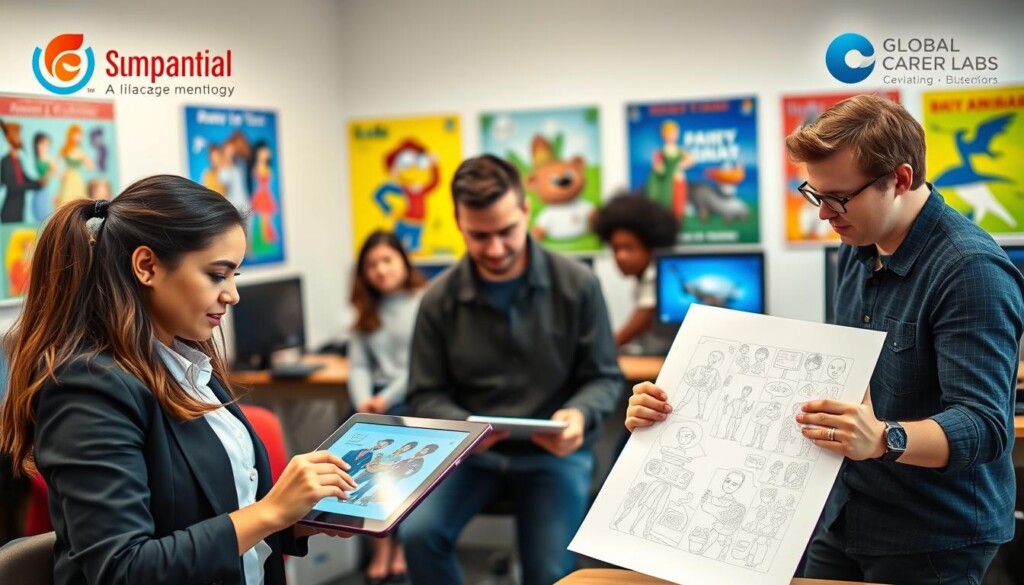
Not every career begins with textbooks—some begin with imagination, sketches, and stories. If you enjoy creating characters, visual effects, or digital worlds, this field might feel like a natural fit. That’s where exploring animation courses after 12th becomes important. It gives you a structured way to turn creativity into a professional skill set that is in demand across films, gaming, and digital media.
India’s animation and VFX industry has grown rapidly over the past few years, driven by OTT platforms, gaming, and global collaborations. Students today can choose between technical degrees like BSc Animation or creative-focused programs like BFA. Each path offers different strengths—one focusing more on software and production, the other on artistic expression and design fundamentals.
Top institutes such as National Institute of Design and Industrial Design Centre IIT Bombay provide strong foundations in animation and visual communication. With the right training and a solid portfolio, students can build careers in areas like VFX, game design, digital content, and storytelling.
Key Takeaways
- Understand the main differences between technical and fine arts degrees
- Identify leading Indian institutes and their entrance requirements
- Explore typical tuition fees and financial planning in INR
- Discover in-demand job roles for the 2026 market
- Learn how to build a strong professional portfolio
Understanding the Landscape of Animation Courses After 12th
Starting a career in animation means picking the right course after 12th. India has many options for different interests and skills. You can find undergraduate programs that match your passion for animation and related areas.
Many animation colleges in India offer practical courses with hands-on experience. You can choose from Bachelor of Science (BSc) in Animation to Bachelor of Fine Arts (BFA) in Animation, and more. Pick a course that fits your career goals and interests.
There are various specializations in animation, such as:
- 2D and 3D animation
- Visual Effects (VFX)
- Game design and development
- Animation direction
These specializations are available at different institutions across India. This gives you a wide range of choices.
When choosing a course, look at the curriculum, faculty, infrastructure, and industry connections. This helps you make a smart choice for your animation career.
BSc Animation vs BFA: Key Differences Explained
When choosing a degree in animation, knowing the difference between BSc Animation and BFA is key. Both can lead to a great career in animation. But, they take different approaches and cover different subjects.
Academic Focus and Curriculum Structure
BSc Animation focuses on the technical side of animation. It covers programming, 3D modeling, and visual effects. The program is built on science and math, the basics of animation tech.
BFA in Animation is all about the artistic side. It teaches drawing, storytelling, and design. It helps students find their own style and voice in animation.
| Program | Focus | Curriculum Highlights |
|---|---|---|
| BSc Animation | Technical Skills | Programming, 3D Modeling, Visual Effects |
| BFA in Animation | Artistic and Creative | Drawing, Storytelling, Design Skills |
Practical Training vs Theoretical Knowledge
BSc Animation programs focus on hands-on training. They teach students how to use industry software and tools. This prepares them for the technical side of animation.
BFA programs also offer practical training but focus more on theory. They cover animation history, theory, and analysis. This mix of practical and theoretical knowledge helps students understand animation’s context and evolution.
It’s important to know these differences when deciding on a program. Think about your strengths, interests, and career goals. This will help you choose the right path for your animation career.
Choosing the Right Stream: Science, Commerce, or Arts
As you look ahead to your animation career, picking the right stream after 12th is key. The stream you choose can shape your career path and open up new opportunities in animation.
Aligning Your Strengths with Animation Specializations
Different streams offer subjects that match various animation specializations. For example, Science students might excel in the technical side of animation, like 3D modeling and visual effects.
Commerce students can use their business skills to manage projects or grasp the industry’s commercial side. Arts students, with their creativity and drawing talents, are well-suited for animation.
How Your 12th Grade Subjects Influence Your Portfolio
Your 12th grade subjects play a big role in your portfolio, which is essential for getting into top animation colleges. Science students, for instance, might have an edge in creating detailed animations that involve physics and math.
| Stream | Relevant Subjects | Animation Specializations |
|---|---|---|
| Science | Physics, Mathematics | 3D Animation, VFX |
| Commerce | Business Studies, Economics | Animation Production, Project Management |
| Arts | Fine Arts, Drawing | 2D Animation, Character Design |
In the end, while your stream and subjects matter, it’s your passion, skills, and hard work that will truly make you succeed in animation.
Eligibility Criteria and Entrance Exams for 2026
To get into top animation colleges, you need to meet certain criteria and pass entrance exams. Knowing these requirements is key for a successful application in 2026.
Navigating University-Level Entrance Exams like CUET
In India, many universities use the Common University Entrance Test (CUET) for undergraduate programs. This includes animation courses. CUET scores are important for admission, letting students apply to several universities with one score.
CUET Exam Pattern: The CUET exam tests language skills, domain knowledge, and general awareness. For animation, it focuses on art, design, and the animation industry.
| Section | Description | Number of Questions |
|---|---|---|
| Language | Tests proficiency in the chosen language | 40-50 |
| Domain-Specific Knowledge | Covers relevant subjects for the chosen course | 30-40 |
| General Awareness | Assesses general knowledge and current affairs | 20-30 |
Portfolio Requirements and Personal Interviews
Along with exams, a portfolio of your art is often needed. This is reviewed during personal interviews, a key part of the process.
“A strong portfolio can significantly enhance your chances of getting into a top animation program,” says a senior admissions officer at a leading animation college.
Make sure your portfolio shows a variety of your best work. Include examples of your skills in drawing, storytelling, and using software.

Personal interviews let the admissions team see your passion for animation. They also check your career goals and if you’re a good fit for their program.
Top Animation Colleges and Universities in India
India has many choices for those who want to be animators. You can pick from public universities and private schools. Each offers different programs in animation, fitting various interests and goals.
Public Universities Offering Degree Programs
Public universities in India are known for their affordable and quality education. Here are some top public universities with animation degree programs:
- Banaras Hindu University (BHU): Offers a comprehensive course in animation through its Department of Visual Arts.
- University of Hyderabad: Provides a Master’s program in Animation and Visual Effects.
- Pune University: Has a dedicated Department of Media and Communication that offers courses related to animation.
Private Institutions and Specialized Design Schools
Private schools and design schools in India are famous for their focus on the industry. They have the latest technology and teaching methods. Here are some top private schools:
- National Institute of Design (NID): Known for its rigorous design programs, NID also offers courses in animation.
- Indian Institute of Art and Design (IIAD): Offers various programs in animation and visual effects.
- Symbiosis Institute of Design (SID): Provides undergraduate and postgraduate programs in animation.
Here’s a comparison of some top animation colleges in India. We look at their programs and fees:
| Institution | Program Offered | Fee (INR) |
|---|---|---|
| Banaras Hindu University (BHU) | BFA in Animation | 50,000 – 1,00,000 per year |
| National Institute of Design (NID) | PG Diploma in Animation | 2,00,000 – 3,00,000 per year |
| Indian Institute of Art and Design (IIAD) | BSc in Animation | 1,50,000 – 2,50,000 per year |
Professional Training Institutes: Arena Animation and MAAC
Thinking about a career in animation? Professional training institutes like Arena Animation and MAAC can change your game. They’ve helped many animation professionals in India find their path.
These institutes offer various programs to teach students the skills needed in the animation world. It’s important to know the difference between diploma programs and degree courses.
Comparing Diploma Programs with Degree Courses
Diploma programs at Arena Animation and MAAC are shorter and focus on practical skills. They’re great for those who want to quickly start working.
Degree courses, like BSc Animation or BFA, give a deeper education. They mix theory and practice. Degrees can lead to more career options.
| Program Type | Duration | Focus | Career Outcomes |
|---|---|---|---|
| Diploma Programs | Short-term (6-12 months) | Practical skills | Immediate job readiness |
| Degree Courses | Long-term (3-4 years) | Theoretical and practical | Broad career opportunities |
Industry-Recognized Certifications for Faster Job Placement
Arena Animation and MAAC give industry-recognized certifications after completing their programs. These certifications are highly valued by employers and can boost your job chances.
Industry-recognized certifications prove your skills and show your dedication to employers. This can give you an edge in a competitive job market.
In conclusion, Arena Animation and MAAC are key in preparing students for animation careers. Knowing the difference between diploma programs and degree courses, and getting industry-recognized certifications, helps you make the right choices for your career.
VFX Course India: Expanding Your Skill Set
The Indian animation industry is booming, and the need for skilled VFX artists is growing fast. VFX is now a key part of films, TV shows, and digital content. This makes it a promising career for those interested in animation and filmmaking.
The visual effects industry is witnessing significant growth in India. This is because of the high demand for quality content in movies, TV, and online media. This growth offers many chances for those skilled in VFX.
The Growing Demand for Visual Effects Artists
The need for VFX artists is rising fast. This is because the entertainment industry in India is getting bigger. Movies, TV shows, and digital content all use VFX to improve storytelling and the viewer’s experience.
According to industry experts, the need for skilled VFX professionals will keep growing. This is because of new technology and more use of VFX in media.
“The VFX industry in India is expected to grow significantly, with a projected increase in demand for skilled professionals in the coming years.”
Integrating VFX into Your Animation Degree
If you’re studying animation, learning VFX can boost your career chances. Many animation courses now include VFX training. This is part of their curriculum.
By learning both animation and VFX, you can find more job opportunities. VFX skills are highly valued in the job market. This makes you a stronger candidate.
To stand out in the job market, think about taking a reputable VFX course in India. It will improve your skills and make you more appealing to employers.
Gaming Career India: Opportunities in the Digital World
India’s gaming sector is booming, offering exciting career paths in game animation and design. If you’re interested in game animation or design, you’re stepping into a world full of creativity and innovation. This industry is not only promising but also very rewarding.
The Rise of Game Design and Development
The Indian gaming industry has grown a lot in recent years. This growth is thanks to more smartphones and fast internet. Now, there’s a big need for skilled people who can make games that are fun and engaging.
Game design and development need both art and tech skills. Game designers create the game’s mechanics, levels, and how it looks. Developers then use programming and game engines to make these designs real.
Key Areas in Game Development:
- Game Design
- Game Programming
- Visual Effects and Animation
- Sound Design
- Quality Assurance
Essential Software Skills for Aspiring Game Animators
To do well in gaming, you need to know certain software tools and technologies. Some key skills include:
| Software/Tool | Description | Application in Game Development |
|---|---|---|
| Unity | A popular game engine for 2D and 3D game development | Game development, physics, and graphics rendering |
| Unreal Engine | A powerful game engine known for its high-performance graphics | High-end game development, VR, and AR experiences |
| Blender | A free, open-source 3D creation software | 3D modeling, texturing, and animation |
| Maya | A commercial 3D computer animation, modeling, simulation, and rendering software | 3D modeling, animation, and visual effects |
As you aim for a career in game animation, keep up with new trends and tech. Learning the right skills and knowledge will help you make the most of India’s booming gaming industry.
Fee Structures and Financial Planning for Parents
Thinking about animation courses after 12th? It’s key to know the fee structures for BSc and BFA programs. The cost can change a lot based on the school, location, and course details.
Don’t just look at tuition fees. You also need to think about equipment, software, and living costs if you’re studying away from home. Here’s what you might face:
Average Costs for BSc and BFA Programs in INR
The cost for BSc and BFA animation programs varies a lot. Here’s a look at what some top schools charge:
| Program | Average Cost (INR) | Duration |
|---|---|---|
| BSc Animation | 150,000 – 300,000 per year | 3 years |
| BFA Animation | 120,000 – 250,000 per year | 3-4 years |
Scholarships and Financial Aid Options
Many schools offer scholarships and financial aid to help students. These can be based on merit, need, or both. It’s important to look into these options early.
Some popular scholarships for animation students include:
- Merit scholarships for outstanding academic performance
- Need-based grants for students from economically weaker backgrounds
- Industry-sponsored scholarships for students showing exceptional talent
By understanding the fee structures and looking into financial aid, you can make a choice that fits your budget and goals.
Career Prospects and Expected Animator Salary in India
The animation industry in India is growing fast. You might wonder about career prospects and salaries. As an aspiring animator, you’ll find many opportunities, from entry-level to senior roles.
Entry-Level Roles and Growth Trajectories
At first, you’ll likely start as a junior animator, 3D modeler, or visual effects artist. These jobs pay between ₹15,000 to ₹30,000 a month. Your salary will depend on your skills, where you work, and the studio’s size.
With more experience and a strong portfolio, you can move up. You might become a lead animator, animation director, or creative director. These roles can pay ₹50,000 to over ₹1,00,000 a month. Career growth in animation depends on your skills, experience, and ability to adapt to new technologies and trends.
Freelancing vs Full-Time Studio Employment
You can choose to freelance or work full-time in a studio. Freelancing gives you flexibility and can pay more per project. But, you’ll need to handle your own work and client relationships. Freelance animators can charge ₹5,000 to ₹50,000 or more per project, based on the work’s complexity and length.
Working full-time in a studio offers stability, benefits, and a clear career path. Studios often seek specialists in areas like 3D animation, VFX, or game design. Building a strong network and keeping up with industry trends can boost your career in either path.
Here’s a quick look at animator salaries in India based on experience:
| Experience Level | Salary Range (per month) |
|---|---|
| Entry-Level (0-3 years) | ₹15,000 – ₹30,000 |
| Mid-Level (4-7 years) | ₹30,000 – ₹60,000 |
| Senior-Level (8+ years) | ₹60,000 – ₹1,00,000+ |
Building a Winning Portfolio for Future Employers
To stand out in the competitive animation job market, you need a portfolio that highlights your best work. Your portfolio shows your skills and creativity. It’s key to getting your dream job in animation.
A strong portfolio shows your technical skills and artistic vision. It’s important to pick your best projects and present them clearly.
Showcasing Your Best Work During College
In college, you work on projects that can go into your portfolio. Focus on quality over quantity. Choose projects that show your skills and creativity.
Make a variety of projects to show your range. This could include character design, storytelling, and visual effects. It shows you can do different things well.
- Include both solo and group projects to show you can work alone and with others.
- Highlight your role in each project and the skills you used.
- Keep your portfolio updated with your latest work.
Networking and Internships During Your Studies
Networking and internships are key to a successful animation career. Attend industry events and conferences to meet professionals and learn about new trends.
Internships give you real-world experience and help you make industry connections. They can also lead to jobs after you graduate.
To get the most from networking and internships:
- Be proactive in finding opportunities and making connections.
- Have a strong resume and cover letter for the animation industry.
- Stay in touch with new contacts to keep relationships strong.
Conclusion
Thinking about animation courses after 12th? It’s crucial to think it through. The choice between BSc Animation and BFA programs matters a lot. Knowing the eligibility and top colleges can shape your future.
You now know a lot about animation courses and also understand the differences between BSc and BFA programs. You also know how to pick the right stream and the career paths open to you
Places like Arena Animation and MAAC offer valuable certifications. These can boost your skills and job chances. The need for visual effects artists and game animators in India is on the rise, offering great career opportunities.
By choosing wisely and knowing what’s ahead, you can thrive in this exciting field. Make a smart choice for your animation course and career.
FAQs
Which are the most reputable animation colleges in India for pursuing a degree after the 12th?
What is the difference between a BSc Animation and a BFA degree?
Is it necessary to take an entrance exam like CUET for admission?
How can I start a successful gaming career in India?
What is the average animator salary in India for a fresh graduate?
Should I choose a short-term VFX course in India or a full degree?
What subjects should I have in the 12th grade to qualify for animation courses?
What is the typical fee structure for these programs?
GlobalCareerLabs.com
Your Partner in Career Success
External Resources for You
- National Institute of Design
👉 https://www.nid.edu
(Premier institute for design, animation, and visual communication) - Industrial Design Centre IIT Bombay
👉 https://www.idc.iitb.ac.in
(Top design school offering animation and visual design programs) - Animation Guild India
👉 https://www.animationguildindia.com
(Industry body representing animation professionals and trends) - Ministry of Information and Broadcasting
👉 https://mib.gov.in
(Media and entertainment industry policies and updates)
Disclaimer:
The salary figures, course details, and career information provided in this article are for general reference only and may vary based on location, company, experience, and market conditions. Readers are advised to independently verify all information in the blog, from official and authentic sources. GlobalCareerLabs.com does not guarantee the accuracy or authenticity of this data. And so, Global Career Labs shall not be held responsible for any decisions made based on this information
Related posts:
 Forensic Science Courses After 12th: Eligibility, Top Colleges, Fees & Career 2026
 Paramedical Courses After 12th: Complete List with Fees 2026
 BBA Course: Your Complete Guide – College List, Subjects, Fees & Career Options
 BBA 1st Year Subjects: Complete Syllabus & Subject List 2026
 Data Science Course After 12th: Best Options & Career Path
 Which is the Best Stream After 10th for Girls? Career Options & Scope in India 2026
 Which Stream Has the Best Future After 10th? Scope & Salary Comparison 2026
 Journalism Courses After 12th: BJMC vs BA Journalism — Top Colleges & Career 2026
 Aviation Courses After 12th: Pilot, Air Hostess & Airport Management — Complete Guide 2026
 Class 11 Science Stream Subjects: PCM vs PCB — Full Subject List & Career Scope 2026
 Event Management Courses After 12th: BEM, Certificate & PG Options — Fees & Career 2026
 Career Options After 12th in India: Know How to take The Right Decision
 Career Confusion in Children: Causes, Effects And “How to Get Clarity”
 Biotechnology Careers – Your Ultimate Guide to ₹10-30 Lakh Salaries
 Free Online Aptitude Test For All – Students, Freshers & Professionals
 Best Courses After 12th Commerce: Complete Guide 2026
 Medical Courses After 12th Without NEET: 20+ Options 2026
 Industrial Training: Importance, Types & How to Find One 2026
 Different Streams After 10th in India: Science, Commerce, Arts & Vocational — Full Breakdown
 Merchant Navy Courses After 12th: Eligibility, DNS vs BSc Nautical Science & Salary 2026
Powered by YARPP.