

Not every career keeps you grounded—some take you places, literally. If you’ve ever looked at the sky and imagined a life beyond routine, this path might feel right. That’s where exploring aviation courses after 12th becomes exciting. It offers a chance to turn ambition into a profession that combines travel, responsibility, and growth in a rapidly expanding industry.
India’s aviation sector is growing at a remarkable pace, with increasing demand for pilots, cabin crew, and airport management professionals. As air travel becomes more accessible, the industry is creating thousands of new opportunities each year. This growth makes aviation not just an exciting choice, but also a practical one for students looking at long-term career stability.
Institutes like Indira Gandhi Rashtriya Udan Akademi and regulatory bodies such as Directorate General of Civil Aviation play a key role in shaping aviation careers in India. While training costs can vary significantly, the combination of global exposure, strong earning potential, and a dynamic work environment makes this field highly attractive.
Key Takeaways
- The Indian aviation industry is growing rapidly every year
- Multiple career paths exist after 12th (Pilot, Cabin Crew, Ground Staff)
- Professional training builds strong technical and communication skills
- High salary potential exists across aviation roles
- India is emerging as a major global aviation hub
Understanding the Indian Aviation Landscape
The aviation industry in India is booming, offering many career paths. You’re about to enter a field that’s both thrilling and full of opportunities for growth.
The sector has grown a lot, thanks to more people flying, better airports, and new planes. This trend is set to keep going, with more passengers and planes expected.
The Growth of the Indian Aviation Sector
The aviation industry in India is set for big growth. The government and private companies are investing in new airports and planes. Here are some key numbers showing this growth:
| Year | Passenger Traffic (in millions) | Fleet Size |
|---|---|---|
| 2020 | 340 | 700 |
| 2025 | 450 | 900 |
| 2030 | 600 | 1200 |
The demand for air travel is rising, driving growth. Airlines are buying more planes, and airports are getting better to handle more passengers.
Why Aviation is a Lucrative Career Choice for Gen Z
The aviation industry offers many career paths that appeal to Gen Z. These jobs are dynamic and offer global exposure. There are roles beyond pilots and cabin crew, like airport management and maintenance.
For Gen Z, aviation combines adventure, technology, and professionalism. It’s a field that values innovation and customer service, offering many chances to build a fulfilling career.
Choosing the Right Stream for Your Aviation Career
Choosing the right academic stream is the first step towards a successful aviation career. The aviation industry is diverse, offering various roles that require different educational backgrounds. Understanding which stream aligns with your career goals is crucial.
Science Stream: The Gateway to Cockpit Roles
If you’re aspiring to become a pilot, the Science stream is typically the most relevant path. Subjects like Physics, Mathematics, and Chemistry provide a strong foundation for understanding the principles of flight and navigating complex aircraft systems. Most flying schools and aviation training institutes require candidates to have a background in Science with Physics and Maths.
Pilot training programs are highly competitive, and having a Science background can give you an edge. The curriculum for pilot training is rigorous and includes subjects like aviation meteorology, aircraft systems, and navigation, all of which are rooted in scientific principles.
Commerce and Arts: Opportunities in Management and Operations
While the Science stream is essential for cockpit roles, the Commerce and Arts streams offer viable pathways into other areas of the aviation industry. For instance, roles in airport management, customer service, and airline operations often value skills gained through Commerce and Arts education.
Students from the Commerce stream can pursue careers in aviation management, finance, and marketing. Those from the Arts stream can explore roles in customer service, human resources, and even aviation law. The key is to identify your strengths and interests and align them with the diverse opportunities available.
Aligning Your Strengths with Industry Requirements
It’s essential to assess your academic strengths and how they can be applied to different roles in aviation. Consider your aptitude for subjects like Mathematics, Physics, or languages, and how these skills can be valuable in the industry.
| Stream | Aviation Roles | Key Skills |
|---|---|---|
| Science | Pilot, Aircraft Maintenance | Physics, Maths, Problem-solving |
| Commerce | Airport Management, Aviation Finance | Financial management, Marketing, Business acumen |
| Arts | Customer Service, HR, Aviation Law | Communication, Interpersonal skills, Legal knowledge |
By understanding the different streams and their corresponding career paths, you can make an informed decision about your future in aviation. Whether you’re inclined towards the technical aspects of flying or the managerial side of airline operations, there’s a place for you in this dynamic industry.
Pilot Training in India: Paths, Costs, and DGCA Requirements
Starting a pilot career in India means knowing the training steps, costs, and DGCA rules. It’s key to understand the licensing needs, DGCA’s role, and the money you’ll spend to reach your goal.
Understanding the CPL and PPL Licensing Process
To become a pilot, you need a Private Pilot License (PPL) and a Commercial Pilot License (CPL).
- The PPL lets you fly for fun.
- The CPL lets you fly for work.
Getting these licenses means studying and flying, ending with DGCA exams.
The Role of DGCA in Pilot Certification
The DGCA controls India’s aviation, including pilot licenses.
- The DGCA sets training standards for safety and skill.
- To fly commercially, you must pass DGCA exams on aviation rules, weather, and more.
Breakdown of Pilot Training Costs in India
Pilot training costs in India change based on school, location, and flying hours.
Ground Classes and Theory Exams
- Syllabus: Important topics like aviation law and aircraft systems.
- Ground class costs are ₹1 lakh to ₹2 lakhs, depending on the school.
Flying Hours and Flight Training Schools
Flight training is a big part of pilot costs.
- In India, flight training costs ₹40 lakhs to ₹60 lakhs, based on hours and aircraft.
| Component | Cost (in ₹) |
|---|---|
| Ground Classes | 1 lakh – 2 lakhs |
| Flying Hours (CPL) | 40 lakhs – 60 lakhs |
| Total Estimated Cost | 41 lakhs – 62 lakhs |
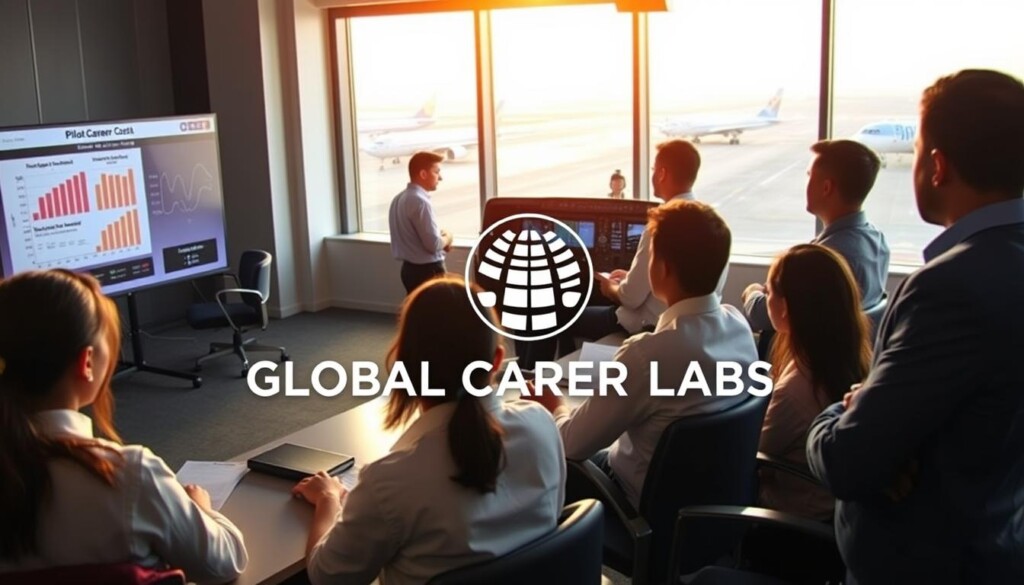
Thinking about a career in aviation? Knowing these costs and rules can guide your choice.
Air Hostess and Cabin Crew Training Programs
Thinking about a career in aviation? Air hostess and cabin crew training programs are perfect. They prepare you for the role of ensuring passenger safety and comfort.
Eligibility Criteria and Physical Standards
To join these programs, you need to meet certain criteria and physical standards.
- You must have finished your 12th standard from a recognized board.
- Age-wise, you should be between 18 to 25 years old. Some places might have different rules.
- Height and weight are important. You need to be at least 155 cm to 160 cm tall and have a proportionate weight.
- Good vision, either naturally or with glasses, is required.
Diploma vs. Degree Courses in Cabin Crew Management
For cabin crew training, you can choose between a diploma or a degree course.
- Diploma Courses: These are shorter, lasting from weeks to months. They focus on practical skills. Fees range from INR 50,000 to INR 1,50,000.
- Degree Courses: Degree programs, like a Bachelor’s in Aviation or Hospitality, offer a broader education. They include both theory and practical training.
Skills Required for Success in the Skies
To be successful as a cabin crew member, you need both hard and soft skills.
- Communication Skills: Being able to talk well with passengers and crew is key.
- Physical Stamina: The job demands standing for long hours, handling emergency gear, and dealing with turbulence.
- Customer Service Skills: Providing top-notch service is essential for passenger comfort and safety.
- Teamwork: Cabin crew members must work together to manage onboard situations.
When thinking about this career, remember the salary. Cabin crew salaries range from ₹40,000 to ₹1.2 lakh per month. This depends on the airline, your experience, and other factors.
Airport Management and Ground Staff Courses
The Indian aviation industry is growing fast. This means more people want to learn about airport management. It’s a field that needs skilled professionals to run smoothly.
There are many ways to start your career in this exciting field. Two popular paths are BBA and MBA in Aviation Management.
BBA and MBA in Aviation Management
A BBA in Aviation Management is an undergraduate degree. It focuses on business and the aviation industry. Schools like Jain University and Kristu Jayanti College in Bangalore offer these programs.
An MBA in Aviation Management is a postgraduate degree. It goes deeper into aviation business and operations. This degree can lead to senior roles in airports and airlines.
Key Highlights of BBA and MBA in Aviation Management:
- Comprehensive curriculum covering aviation law, airport management, and airline marketing
- Opportunities for internships and industry exposure
- Development of leadership and management skills
Diploma Programs in Airport Operations
Diploma programs in airport operations focus on managing airport activities. They cover airport security, ground handling, and air traffic control.
Institutions in India offer diploma courses in airport operations. These programs give you the skills needed for ground staff roles.
| Diploma Program | Duration | Key Topics Covered |
|---|---|---|
| Diploma in Airport Operations | 6-12 months | Airport security, ground handling, air traffic control |
| Diploma in Aviation Management | 1-2 years | Aviation law, airline marketing, airport management |
The Role of Ground Staff in Airport Efficiency
Ground staff are key to airport operations. They handle baggage, service aircraft, and assist passengers.
“The efficiency of ground staff is critical to the overall passenger experience and airport operations.”
To be great as ground staff, you need good communication skills. You also need to be detail-oriented and able to work well under pressure.
- Effective communication and customer service skills
- Ability to work in a fast-paced environment
- Attention to detail and problem-solving skills
Top Indian Institutions for Aviation Studies
India is home to many top institutions for aviation studies. You can find government-funded flying clubs, private universities, and cabin crew training academies. These places are great for starting your aviation career.
Government-Funded Flying Clubs and Institutes
Government-funded flying clubs and institutes offer affordable pilot training. Indira Gandhi Rashtriya Uran Akademi (IGRUA) is a top choice for flying training and aviation courses. The Madhya Pradesh Flying Club (MPFC) also provides detailed flying training programs.

Private Universities Offering Aviation Degrees
Private universities have greatly contributed to aviation education in India. They offer undergraduate and postgraduate programs in aviation management and aeronautics. These universities provide quality education and help students find jobs.
Some universities offer BBA and MBA in Aviation Management. This prepares students to manage airports, airlines, and other aviation businesses.
Reputed Cabin Crew Training Academies
For cabin crew roles, the Frankfinn Institute of Air Hostess Training is well-known. It offers tough training programs. Students learn about customer service, safety, and emergency procedures.
“The key to success in the aviation industry lies in choosing the right institution that aligns with your career goals and provides comprehensive training.”
Choosing the right institution is crucial. It ensures you get the best training and success in aviation.
Entrance Exams and Admission Processes
Entrance exams and admission processes are the first steps to your aviation career. Being ready is essential. If you want to be a pilot, air hostess, or airport manager, knowing these steps is vital.
Navigating University-Specific Entrance Tests
Many aviation schools in India need students to pass specific entrance tests. These tests check your aptitude, reasoning, and knowledge in certain subjects.
Key aspects to focus on:
- Know the exam pattern and syllabus
- Use the right study materials and practice tests
- Manage your time well during the exam
The Importance of CUET for Aviation Degrees
The Common University Entrance Test (CUET) is key for students applying to central universities in India. For aviation degrees, CUET scores are very important.
Benefits of CUET:
- Standardized test across universities
- Equal chance for students from all backgrounds
- Streamlined admission for many universities
Preparing for Aptitude Tests and Personal Interviews
Aptitude tests and personal interviews are big parts of getting into aviation courses. They check your skills, personality, and if you’re right for the aviation field.
Tips for preparation:
- Practice aptitude tests to boost your problem-solving
- Work on your communication skills for interviews
- Learn about the institution and course to show your interest
Career Prospects and Salary Expectations in India
A career in aviation offers a chance to reach new heights and attractive salaries. The Indian aviation industry is growing fast. It presents many opportunities for those looking for a rewarding career.
Starting Salaries for Pilots and Cabin Crew
Pilots and cabin crew in India start with good salaries. Pilots can earn between ₹1.5 to 2.5 lakhs per month. This depends on their experience and the airline.
Cabin crew salaries range from ₹40,000 to ₹1.2 lakh per month. These figures show the industry’s growth and demand for skilled workers.
Growth Trajectory in Airport Management Roles
For those interested in airport management, the career path is promising. Starting salaries range from ₹4 to 6 lakhs per year. Experienced professionals can earn up to ₹10 lakhs per year.
As the industry grows, so does the demand for skilled airport management professionals. This offers a stable and lucrative career path.
Long-term Career Stability in the Indian Market
The Indian aviation market is expected to keep growing. This is due to more passengers and government plans to expand airports. This growth means long-term career stability for aviation professionals.
Whether you’re a pilot, cabin crew, or in airport management, the industry offers a bright future. There are chances for advancement and professional growth.
Conclusion
You now know about the many chances in aviation, from flying to working in the cabin and managing airports. The industry is growing fast, making it a great time to start. With the right training and hard work, you can reach great heights in your career.
Are you interested in flying, working in the cabin, or managing airport operations? The Indian aviation industry is growing and needs skilled people. Start your journey today by looking into aviation courses after 12th. See the amazing opportunities waiting for you.
FAQs
What is the average pilot training India cost for a Commercial Pilot License?
Which stream is best for an air hostess course after 12th?
Is the DGCA exam difficult to pass for aspiring pilots?
What is the starting cabin crew salary in India for 2026?
What subjects are covered in an airport management course?
Can I start an aviation career in India without a Science background?
Are there any specific physical requirements for an air hostess course?
GlobalCareerLabs.com
Your Partner in Career Success
External Resources for You
- Directorate General of Civil Aviation
👉 https://dgca.gov.in
(Official authority for pilot licensing and aviation regulations in India) - Indira Gandhi Rashtriya Uran Akademi
👉 https://igrua.gov.in
(Premier pilot training institute in India) - Airports Authority of India
👉 https://www.aai.aero
(Information on airport operations and aviation infrastructure careers) - International Air Transport Association
👉 https://www.iata.org
(Global aviation industry standards, trends, and certifications)
Disclaimer:
The salary figures, course details, and career information provided in this article are for general reference only and may vary based on location, company, experience, and market conditions. Readers are advised to independently verify all information in the blog, from official and authentic sources. GlobalCareerLabs.com does not guarantee the accuracy or authenticity of this data. And so, Global Career Labs shall not be held responsible for any decisions made based on this information
Related posts:
 How to Become a Pilot in India: Your No.1 Guide for 2026
 Industrial Training: Importance, Types & How to Find One 2026
 BBA Course: Your Complete Guide – College List, Subjects, Fees & Career Options
 BBA 1st Year Subjects: Complete Syllabus & Subject List 2026
 Data Science Course After 12th: Best Options & Career Path
 Fashion Designing Courses After 12th: Best Colleges, Fees & Career Scope in India 2026
 Career Options After 12th in India: Know How to take The Right Decision
 Biotechnology Careers – Your Ultimate Guide to ₹10-30 Lakh Salaries
 Free Online Aptitude Test For All – Students, Freshers & Professionals
 Paramedical Courses After 12th: Complete List with Fees 2026
 Medical Courses After 12th Without NEET: 20+ Options 2026
 Forensic Science Courses After 12th: Eligibility, Top Colleges, Fees & Career 2026
 Which is the Best Stream After 10th for Girls? Career Options & Scope in India 2026
 Which Stream Has the Best Future After 10th? Scope & Salary Comparison 2026
 Journalism Courses After 12th: BJMC vs BA Journalism — Top Colleges & Career 2026
 Best Courses After 12th Commerce: Complete Guide 2026
 Which Stream is Best After 10th? Science vs Commerce vs Arts
 Subject Combination in Class 10: Complete Guide for Students
 Different Streams After 10th in India: Science, Commerce, Arts & Vocational — Full Breakdown
 Merchant Navy Courses After 12th: Eligibility, DNS vs BSc Nautical Science & Salary 2026
Powered by YARPP.